Introduction
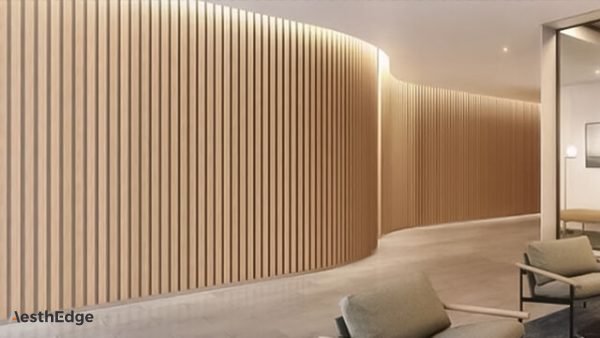
Bamboo charcoal wood veneer has become an increasingly popular decorative material in modern interior design and commercial construction. With its combination of composite core technology, decorative surface films, lightweight construction, and versatile appearance options, it offers an alternative to traditional wood veneer, MDF decorative boards, and other interior wall materials.
For international importers, building material wholesalers, furniture manufacturers, interior decoration contractors, and architectural material distributors, understanding the different surface treatment methods of bamboo charcoal wood veneer is essential. Surface treatment does more than determine the appearance of a panel. It also influences scratch resistance, stain resistance, surface hardness, gloss level, tactile experience, maintenance requirements, and the overall suitability of the product for different projects.
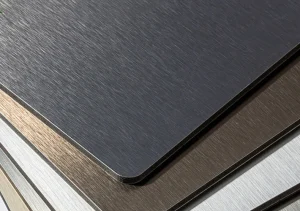
One particularly interesting development is the growing popularity of metallic finishes. Metal-effect bamboo charcoal wood veneer combines the visual appeal of brushed aluminum, stainless steel, champagne gold, titanium gray, or other metallic surfaces with the processing advantages of lightweight composite panels.
However, metallic finishes are only one part of the available surface treatment options. Depending on the decorative requirements and target applications, manufacturers can offer PVC film lamination, PET film lamination, UV coating, hot-press embossing, matte finishing, high-gloss finishing, and various special decorative textures.
As a professional China factory supplier of decorative interior materials, AesthEdge provides bamboo charcoal wood veneer solutions for international B2B buyers. Our product range focuses on combining attractive decorative surfaces with practical performance, helping distributors, contractors, and project buyers find suitable materials for different interior applications.
This article explains the major surface treatment methods for bamboo charcoal wood veneer, with particular attention to metallic finishes, manufacturing processes, performance differences, purchasing considerations, and commercial applications.
Understanding Bamboo Charcoal Wood Veneer and Its Surface Structure
Before comparing different surface treatment technologies, it is important to understand how bamboo charcoal wood veneer is constructed.
Bamboo charcoal wood veneer is a decorative composite panel generally manufactured using polymer resin, bamboo charcoal powder, wood-related fillers, and other functional additives. Depending on the manufacturer’s formulation, PVC or other polymer-based materials may form the primary structural component.
The composite mixture is processed through extrusion or other forming technologies to create a rigid or semi-rigid panel. A decorative surface layer is then applied to provide the desired color, pattern, texture, and protective performance.
Unlike traditional natural wood veneer, which relies on a thin layer of real timber, bamboo charcoal wood veneer usually uses an engineered decorative film or coating. This gives manufacturers greater flexibility in reproducing different visual effects.
A typical bamboo charcoal wood veneer structure may include the following layers:
- Protective surface layer: Provides additional protection against everyday wear, scratches, stains, and surface contamination, depending on the selected material.
- Decorative film layer: Creates the visual appearance, including wood grain, stone patterns, solid colors, fabric textures, and metallic effects.
- Adhesive or bonding layer: Connects the decorative film with the composite substrate.
- Composite core layer: Provides the panel’s thickness, structural stability, and physical properties.
- Optional backing layer: May be used in certain constructions to improve handling, dimensional balance, or bonding performance.
The actual layer structure varies according to the production technology and product series. Some manufacturers use PVC decorative films, while others offer PET films, co-extruded decorative layers, or additional surface coatings.
For example, AesthEdge bamboo charcoal wood veneer products include PVC film options and different decorative surface designs. Our product specifications also describe the material as a wood-plastic composite that can be processed through cutting, CNC machining, printing, sanding, routing, painting, and laminating.
The surface treatment is therefore not an independent decorative decision. It needs to be compatible with the core material, bonding process, manufacturing equipment, and intended application.
Why does surface treatment matter to B2B buyers?
For wholesalers and distributors, surface treatment determines which customer groups and project categories a product can serve.
A basic wood-grain finish may be suitable for general interior decoration, while a premium metallic finish can target luxury commercial interiors, hotel feature walls, office reception areas, and retail displays.
Similarly, matte surfaces are often preferred in minimalist environments, whereas high-gloss finishes may be more suitable for decorative areas where visual brightness and reflective effects are important.
When evaluating bamboo charcoal wood veneer, buyers should consider the decorative appearance and the technical performance of the entire surface system rather than focusing only on the printed pattern.
PVC Film Lamination: A Versatile and Cost-Effective Surface Treatment
PVC film lamination is one of the commonly used surface treatment methods for bamboo charcoal wood veneer.
In this process, a decorative PVC film is bonded to the surface of the composite panel using suitable adhesives, pressure, heat, or other lamination technologies.
The main advantage of PVC film is its design flexibility. Manufacturers can produce a wide range of decorative appearances without using natural timber, marble, or other expensive materials.
2.1 Wood Grain PVC Film
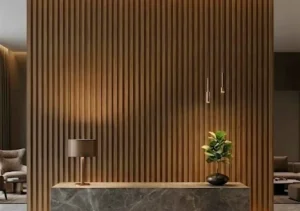
Wood-grain PVC film is widely used in interior decoration because it reproduces the appearance of natural timber.
Common designs include:
- American walnut.
- Natural oak.
- White oak.
- Teak.
- Ash wood.
- Dark walnut.
- Smoked wood.
- Rustic timber textures.
These patterns allow designers and contractors to achieve a warm, natural interior appearance while using an engineered composite panel.
For commercial buyers, wood-grain PVC film is particularly suitable for hotel guest rooms, apartment developments, office interiors, residential wall decoration, and furniture surface applications.
Another advantage is design consistency. Compared with natural wood, printed decorative films can provide more predictable color and pattern production within an approved manufacturing batch.
This is useful for large projects where multiple panels need to be installed in the same space.
2.2 Stone and Marble PVC Film
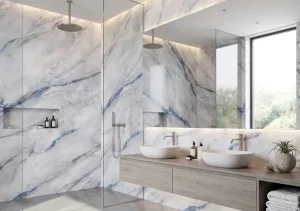
Stone-pattern PVC film provides another popular decorative option.
It can reproduce the visual characteristics of marble, granite, travertine, and other natural stone materials.
Common patterns include:
- White marble.
- Black marble.
- Calacatta-inspired stone.
- Grey stone.
- Beige travertine.
- Natural cement textures.
Compared with natural stone slabs, bamboo charcoal wood veneer with a stone-pattern film is generally lighter and easier to cut and handle.
It can be considered for decorative wall panels, hotel reception areas, commercial interiors, retail environments, and feature walls.
However, buyers should distinguish between a stone-effect decorative film and an actual stone surface. Their material structures, impact resistance, heat resistance, and long-term performance are different.
2.3 Advantages and Purchasing Considerations
PVC film lamination offers several commercial advantages:
- Wide design selection: A large range of colors, patterns, and textures can be produced.
- Flexible customization: Manufacturers can develop specific decorative designs according to project requirements.
- Lightweight construction: The composite panel is easier to transport and install than many traditional decorative materials.
- Easy maintenance: Most suitable surfaces can be cleaned with a soft cloth and an appropriate mild cleaning solution.
- Competitive production costs: PVC decorative film can provide attractive finishes without the cost of natural wood or stone.
For importers, it is important to check film thickness, color consistency, bonding quality, surface uniformity, and resistance to peeling.
A good-looking sample does not automatically guarantee consistent mass-production quality. Buyers should request samples manufactured using the same surface treatment process as the final order.
PET Film Lamination: A Premium Decorative Surface Solution
PET film lamination is another important surface treatment method for bamboo charcoal wood veneer.
PET, or polyethylene terephthalate, is widely used in decorative films and protective surface systems. Depending on the specific film formulation and coating technology, PET decorative surfaces can provide attractive visual effects and useful resistance to everyday wear.
PET film is often selected for products targeting premium furniture, modern wall decoration, commercial interiors, and projects requiring a refined surface appearance.
3.1 High-Gloss PET Finish
High-gloss PET finishes create a smooth, reflective appearance.
The surface reflects surrounding light, helping interior spaces appear brighter and more visually striking.
Typical applications include:
- Modern hotel reception walls.
- Decorative furniture panels.
- Retail display installations.
- Commercial feature walls.
- Modern office interiors.
- Decorative cabinet surfaces.
High-gloss finishes are particularly attractive in projects where designers want to create a clean, polished, and contemporary appearance.
However, the gloss level should be selected according to the application. Highly reflective surfaces can make fingerprints, dust, and minor scratches more noticeable under strong lighting.
For commercial applications, buyers should request information about the actual gloss level, surface hardness, cleaning requirements, and protective coating.
3.2 Matte PET Finish
Matte PET film provides a low-reflection surface.
Compared with high-gloss surfaces, matte finishes create a softer and more understated appearance.
They are commonly considered for:
- Minimalist office interiors.
- Hotel guest rooms.
- Modern apartments.
- Commercial reception areas.
- Furniture and cabinet decoration.
Some matte PET products are designed with anti-fingerprint or soft-touch properties.
However, these characteristics should not be assumed for every matte film. Anti-fingerprint performance depends on the actual surface formulation and protective coating.
For B2B procurement, it is advisable to request physical samples and test the surface under normal lighting conditions.
3.3 PET Decorative Film with Special Patterns
PET films can also reproduce various decorative effects, including wood grain, marble, solid colors, fabric textures, and metallic appearances.
The main benefit is the ability to combine different decorative styles with a consistent composite substrate.
For manufacturers, PET film selection involves more than choosing a pattern. Film compatibility, adhesive performance, temperature resistance, surface preparation, and lamination conditions all affect the final result.
A reliable factory should control these factors throughout production to reduce problems such as bubbles, wrinkles, poor adhesion, and uneven decorative surfaces.
3.4 PET Film vs. PVC Film
Both materials have advantages, and neither should be considered universally superior.
| Comparison | PVC Film | PET Film |
|---|---|---|
| Design flexibility | Wide range | Wide range |
| Surface appearance | Matte, gloss, textured | Matte, gloss, metallic, special effects |
| Processing | Flexible and widely used | Requires compatible lamination conditions |
| Surface performance | Depends on formulation | Depends on film and coating quality |
| Typical positioning | General decorative applications | General to premium decorative applications |
| Customization | Available | Available |
For buyers, the correct decision should be based on the intended project, product specification, target price, and expected service conditions.
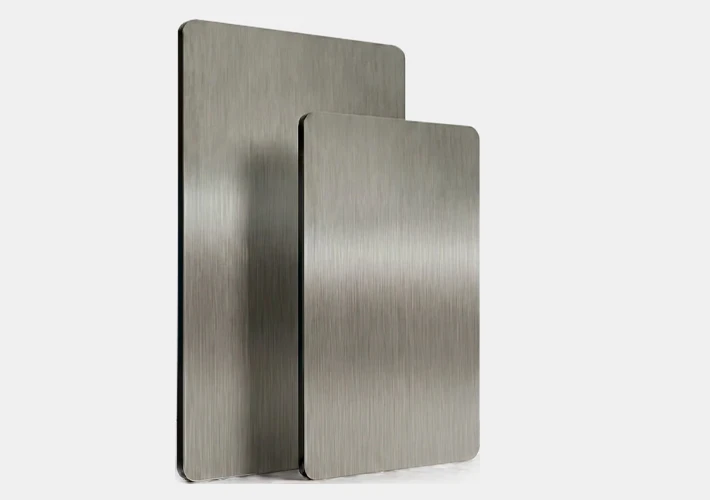
Metallic Surface Treatment: Brushed Metal, Mirror, and Decorative Metal Effects
Metallic bamboo charcoal wood veneer is an increasingly interesting option for modern interior decoration.
Traditional metal panels are used in commercial architecture because they offer a distinctive industrial appearance and a contemporary visual effect.
However, actual metal sheets may require additional fabrication, finishing, edge treatment, and installation work. They may also involve higher material and transportation costs depending on the metal type and thickness.
Metal-effect bamboo charcoal wood veneer provides an alternative by reproducing metallic appearances through decorative films, laminates, printing technologies, or specialized surface coatings.
It is important to understand that a metallic-effect bamboo charcoal wood veneer panel is not necessarily made from solid metal. In most decorative applications, the metallic appearance is created by the surface layer, while the main substrate remains a composite material.
4.1 Brushed Metal Finish
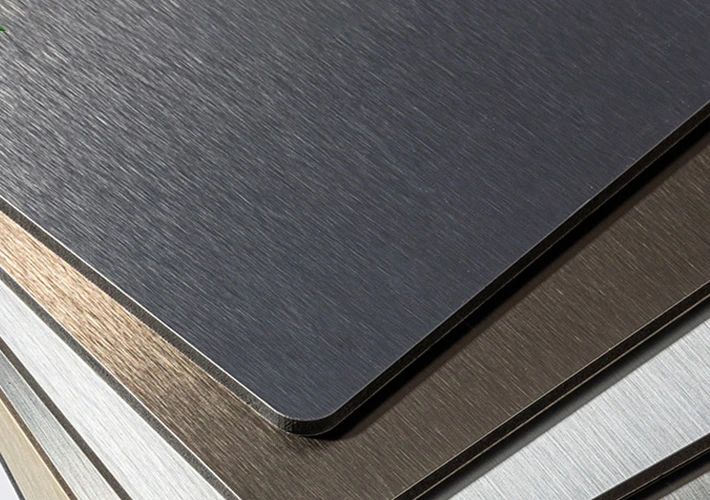
<PRIVATE_PERSON>Brushed metal finish is one of the most recognizable metallic decorative effects.
It reproduces the linear texture of brushed aluminum or stainless steel through specialized decorative films, embossing, or surface finishing technologies.
The visual characteristics include:
- Fine directional lines.
- Subtle metallic reflections.
- A sophisticated industrial appearance.
- A relatively understated reflective effect.
- A modern architectural style.
Common color options include silver, stainless steel gray, champagne gold, titanium gray, and dark metallic tones.
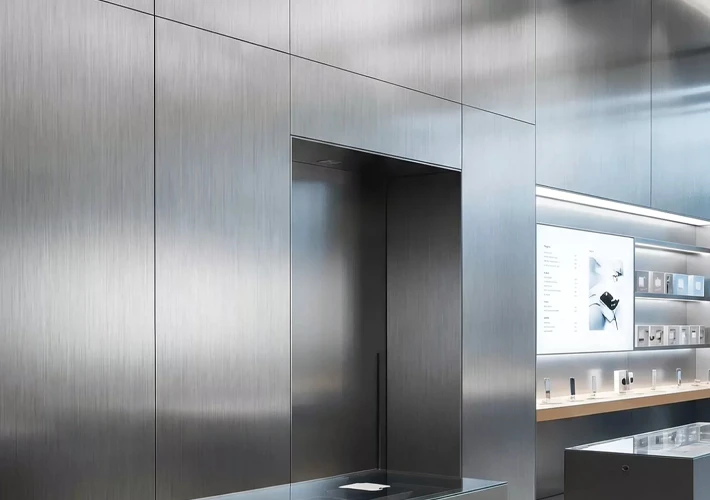
Brushed metallic finishes are suitable for office reception walls, hotel corridors, retail display backgrounds, commercial feature walls, and modern furniture decoration.
One important purchasing consideration is the direction of the brushed texture.
When multiple panels are installed together, the decorative grain direction should remain consistent. Otherwise, light reflection may differ between panels, creating an uneven appearance.
For large projects, buyers should confirm the installation direction and request samples from the same production batch.
4.2 Mirror Metallic Finish
Mirror metallic finishing creates a highly reflective decorative appearance.
It can reproduce the visual effect of polished stainless steel, reflective metal plates, and other mirror-like materials.
Common color choices include:
- Silver mirror.
- Gold mirror.
- Rose gold mirror.
- Champagne gold.
- Titanium black.
- Bronze mirror.
This finish is particularly suitable for luxury retail interiors, hotel decorative walls, showroom displays, commercial reception areas, and modern entertainment venues.
Mirror metallic panels can create a strong visual impression when combined with lighting, glass, stone-effect surfaces, and other decorative materials.
However, highly reflective finishes may show fingerprints, dust, and surface scratches more easily.
Therefore, buyers should check whether the selected film includes a suitable protective layer and whether the supplier can provide samples for cleaning and abrasion evaluation.
4.3 Champagne Gold and Rose Gold Metallic Finish
Gold-toned metallic surfaces are frequently used in luxury interior design.
Champagne gold generally provides a softer and more restrained metallic appearance than bright yellow gold.
Rose gold introduces a warmer tone and can create a more distinctive decorative effect.
These finishes are suitable for:
- Boutique hotel feature walls.
- Luxury apartment interiors.
- High-end retail stores.
- Restaurant decorative backgrounds.
- Reception counters and decorative furniture.
- Commercial display areas.
For wholesalers, gold-toned metallic finishes can help expand product collections beyond traditional wood-grain and stone-pattern panels.
They also allow distributors to offer more differentiated decorative materials to architects and interior designers.
4.4 Water Ripple Metallic Finish
Water ripple metallic finishing reproduces a flowing, irregular reflective pattern.
It is visually different from brushed metal because its surface appearance is more dynamic.
Depending on the decorative film or finishing process, the effect may resemble rippling water, textured metal, or an artistic reflective surface.
This style is especially suitable for feature walls, hotel reception areas, bars, restaurants, showrooms, and decorative commercial spaces.
It works particularly well when combined with carefully positioned lighting.
However, the final appearance depends on the quality of the decorative surface and the consistency of the pattern across different panels.
For project procurement, buyers should request multiple samples rather than evaluating only one small sample piece.
4.5 Titanium Gray and Dark Metallic Finishes
Dark metallic finishes offer a more restrained alternative to bright silver and gold.
Titanium gray, graphite, dark bronze, and black metallic surfaces can create a contemporary architectural appearance.
These finishes are commonly considered for:
- Corporate office interiors.
- Modern hotel interiors.
- Executive meeting rooms.
- Commercial wall decoration.
- Retail display systems.
- Contemporary furniture.
Dark metallic finishes can also be combined with walnut wood grain, black decorative trims, stone-effect surfaces, and glass.
This combination allows interior designers to create layered decorative effects without using several heavy construction materials.
4.6 Key Advantages of Metallic Bamboo Charcoal Wood Veneer
Metallic-effect bamboo charcoal wood veneer offers several advantages for commercial decorative applications.
First, it provides a metallic appearance without requiring a solid-metal substrate.
This can help reduce panel weight and simplify certain interior installation processes.
Second, it offers greater decorative flexibility.
Buyers can choose different metallic colors, reflective levels, and surface textures according to their project requirements.
Third, it supports coordinated interior design.
Metallic finishes can be combined with wood-grain, marble-pattern, matte, and solid-color panels from the same decorative material collection.
Fourth, it is suitable for large decorative surfaces.
Large-format panels can help reduce the number of visible joints compared with smaller decorative components, depending on the installation design.
Nevertheless, metallic decorative film should not be treated as equivalent to stainless steel or aluminum. It does not automatically provide the same fire performance, thermal resistance, impact strength, or corrosion characteristics as actual metal.
Buyers should specify the required performance rather than relying only on the appearance of the finished product.
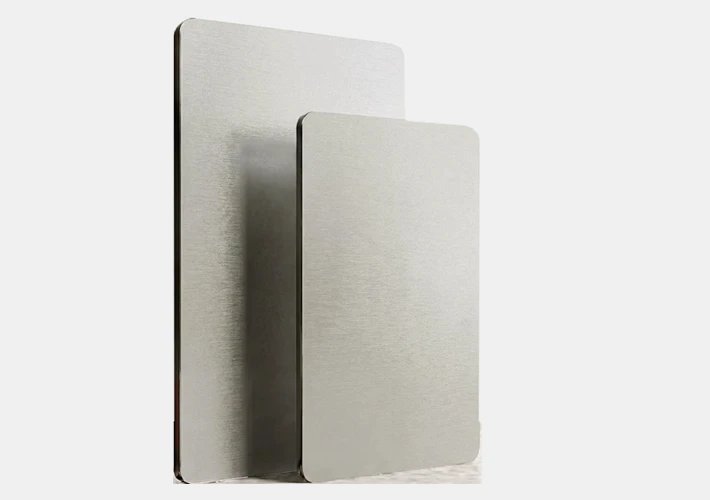
UV Coating, Embossing, Matte, and High-Gloss Surface Treatments
Besides decorative film lamination, additional surface treatment technologies can improve the appearance and practical performance of bamboo charcoal wood veneer.
These processes can be applied independently or combined with certain decorative film systems, depending on the manufacturer’s production capabilities.
5.1 UV Coating
UV coating uses ultraviolet light to cure a specially formulated coating applied to the panel surface.
The coating forms a hardened surface layer after curing.
Depending on the coating formulation, UV treatment may improve:
- Surface hardness.
- Scratch resistance.
- Abrasion resistance.
- Stain resistance.
- Gloss consistency.
- Cleaning performance.
UV coating can also be formulated to produce different visual effects.
For example, manufacturers can offer high-gloss UV finishes, semi-matte surfaces, and low-gloss decorative surfaces.
One of its main advantages is that it can help protect the decorative layer from everyday surface wear.
However, UV coating performance depends on coating thickness, formulation, curing conditions, and compatibility with the decorative film.
For importers, it is important to request test information instead of assuming that all UV-coated products have identical performance.
5.2 Embossing and Textured Surface Treatment
Embossing is a process that creates raised or recessed textures on a decorative surface.
It helps panels reproduce the tactile characteristics of natural materials.
Common embossed effects include:
- Wood grain.
- Brushed metal.
- Fabric texture.
- Stone texture.
- Leather texture.
- Linear geometric patterns.
Embossed surfaces are particularly useful when a flat printed image does not provide enough visual depth.
For example, a wood-grain decorative film with synchronized embossing can create a more realistic wood appearance because the visible grain and surface texture work together.
Similarly, metallic embossed finishes can create additional depth and light reflection.
Embossing is often selected for feature walls, hotel interiors, commercial furniture, and decorative architectural panels.
5.3 Matte Surface Treatment
Matte finishing reduces surface reflection and creates a softer appearance.
It is popular in modern commercial and residential interior design because it provides a calm and understated decorative effect.
Matte finishes are especially suitable for:
- Contemporary offices.
- Minimalist hotels.
- Apartment developments.
- Meeting rooms.
- Furniture panels.
- Commercial corridors.
The main consideration is surface maintenance.
Some matte surfaces are formulated to resist fingerprints, while others may show oil marks or handling stains more easily.
Therefore, buyers should confirm the specific surface characteristics before ordering large quantities.
5.4 High-Gloss Surface Treatment
High-gloss treatment creates a smooth surface with stronger light reflection.
It can make decorative panels appear brighter and more visually prominent.
Typical applications include hotel reception walls, luxury commercial interiors, retail displays, and modern furniture decoration.
High-gloss finishes are particularly effective when used together with lighting systems.
However, the reflective nature of the surface makes scratches, fingerprints, and installation imperfections more visible.
A stable substrate and careful handling are therefore important during transportation and installation.
5.5 Soft-Touch and Skin-Feel Finishes
Soft-touch finishing aims to create a smooth, pleasant tactile experience.
Unlike traditional hard and glossy surfaces, these finishes are designed to provide a more comfortable touch.
They are commonly used in premium furniture, cabinet surfaces, decorative wall panels, and modern commercial interiors.
Depending on the coating technology, soft-touch finishes may also offer improved fingerprint resistance.
However, the exact performance varies by product formulation, so testing is recommended for high-contact applications.
How to Choose the Right Surface Treatment for Different Applications
Selecting the correct surface treatment is not simply a matter of choosing the most attractive pattern.
B2B buyers should consider the project environment, decorative requirements, maintenance expectations, budget, and installation conditions.
The following comparison provides a practical reference.
| Surface Treatment | Main Characteristics | Recommended Applications |
|---|---|---|
| Wood Grain PVC Film | Natural timber appearance, flexible designs | Hotels, apartments, offices |
| Marble PVC Film | Stone-like decorative appearance | Reception walls, commercial interiors |
| PET High Gloss | Smooth and reflective | Retail, furniture, feature walls |
| PET Matte | Low reflection, understated appearance | Offices, hotels, modern interiors |
| Brushed Metallic | Linear metal texture | Office reception, commercial walls |
| Mirror Metallic | Strong reflective effect | Luxury retail, hotels, showrooms |
| Water Ripple Metallic | Dynamic decorative texture | Bars, restaurants, feature walls |
| UV Coating | Additional surface protection | Decorative panels requiring enhanced surface durability |
| Embossed Finish | Three-dimensional tactile texture | Feature walls, furniture, commercial interiors |
| Soft-Touch Finish | Smooth and comfortable surface | Premium furniture, modern interiors |
6.1 Hotel and Hospitality Projects
Hotels require decorative materials that balance visual appeal, maintenance requirements, installation efficiency, and project budgets.
Wood-grain finishes are suitable for guest room walls and decorative furniture.
Marble-effect finishes can be considered for reception backgrounds and selected public areas.
Metallic finishes are particularly useful for hotel lobbies, decorative columns, reception backgrounds, and modern feature walls.
For hospitality projects, buyers should pay attention to cleaning methods, surface durability, fire requirements, and the suitability of the complete panel assembly.
6.2 Office and Commercial Buildings
Office projects often require a professional and contemporary interior appearance.
Matte, brushed metallic, titanium gray, and natural wood-grain surfaces are popular options for these environments.
For reception areas, metallic finishes can create a more distinctive visual identity.
For meeting rooms and corridors, matte wood-grain or neutral solid-color surfaces may be more suitable.
The material selection should also consider the frequency of contact, cleaning requirements, and expected maintenance schedule.
6.3 Retail Stores and Showrooms
Retail environments place significant emphasis on visual presentation.
Mirror metallic, champagne gold, high-gloss, and special textured finishes can help create attractive display backgrounds.
For showrooms selling furniture, building materials, or decorative products, a combination of different finishes can demonstrate the flexibility of the material collection.
Distributors can also use decorative sample boards to help customers compare surface appearance and tactile differences.
6.4 Residential and Apartment Projects
For apartment developments and residential interiors, wood-grain, matte, marble-effect, and soft-touch finishes are practical decorative choices.
Light oak and natural wood colors can create a warm atmosphere.
Walnut and dark wood tones can provide a more luxurious appearance.
Matte and soft-touch surfaces are often considered for contemporary interior designs.
The final selection should be based on the room’s lighting, furniture colors, wall layout, and overall decorative style.
6.5 Furniture and Cabinet Manufacturing
Bamboo charcoal wood veneer can also be processed for certain furniture and cabinet applications, subject to the panel’s structural specifications.
PVC and PET films can provide different decorative finishes for cabinet surfaces, furniture components, and display units.
Metallic finishes may be particularly attractive for modern cabinet designs and decorative furniture elements.
Before using the material for furniture manufacturing, buyers should confirm its thickness, rigidity, machining performance, edge-finishing requirements, and compatibility with the intended fixing system.
Quality Control and Purchasing Considerations for International Buyers
For overseas importers and wholesalers, selecting the right surface treatment is only one part of the purchasing process.
A reliable supplier should also demonstrate stable production capacity, consistent quality control, and the ability to support customized requirements.
The following points can help buyers evaluate bamboo charcoal wood veneer products more effectively.
7.1 Check the Decorative Film Quality
The decorative film directly determines the panel’s appearance.
Buyers should check:
- Color consistency.
- Pattern clarity.
- Surface smoothness.
- Film thickness.
- Texture uniformity.
- Resistance to peeling.
- Resistance to everyday scratches.
- Stability under normal indoor lighting.
For metallic finishes, additional attention should be given to reflection consistency and directional patterns.
A brushed metallic surface may look different when installed vertically or horizontally because the direction of reflected light changes.
7.2 Evaluate Film Adhesion
Poor bonding between the decorative film and composite substrate may result in bubbles, edge lifting, wrinkles, or delamination.
These problems can affect both appearance and service life.
Professional manufacturers should control surface preparation, adhesive application, lamination pressure, temperature, and production speed.
For larger orders, buyers should request adhesion testing or relevant quality inspection records.
7.3 Verify Surface Durability
Different decorative films and coatings provide different performance levels.
Important evaluation items include:
- Scratch resistance.
- Abrasion resistance.
- Stain resistance.
- Cleaning resistance.
- Surface hardness.
- Impact resistance.
- Color stability.
These characteristics should be evaluated using appropriate test methods and agreed acceptance criteria.
For example, a decorative wall panel used in a hotel corridor may require better resistance to frequent contact than one installed in a low-traffic decorative area.
7.4 Confirm the Core Material Specifications
Surface quality is important, but the substrate also affects the overall performance of the finished panel.
Buyers should confirm:
- Core composition.
- Panel thickness.
- Density.
- Dimensional tolerance.
- Flatness.
- Moisture-related performance.
- Machining characteristics.
- Relevant fire and emission test documentation.
Different bamboo charcoal wood veneer products may use different formulations and manufacturing processes.
Therefore, specifications should be confirmed for each product rather than assumed to be identical across all suppliers.
7.5 Request Samples Before Bulk Orders
Sample evaluation is one of the most effective ways to reduce purchasing risks.
For wholesalers and project contractors, we recommend requesting samples of the actual surface finishes under consideration.
For metallic finishes, request more than one color or texture if the project requires several decorative options.
Buyers should evaluate samples under different lighting conditions and compare the appearance of multiple pieces.
It is also advisable to test cleaning performance, surface adhesion, and basic scratch resistance before confirming mass production.
7.6 Consider Packaging and International Transportation
Bamboo charcoal wood veneer panels are often supplied in large formats.
Improper packaging may lead to surface scratches, edge damage, bending, or film contamination during transportation.
For international orders, buyers should discuss:
- Protective film requirements.
- Corner protection.
- Moisture protection.
- Pallet or carton packaging.
- Loading arrangements.
- Container utilization.
- Product labeling.
- Spare quantities for installation.
Metallic and high-gloss surfaces may require additional protective measures to prevent visible damage.
The packaging method should match the product’s surface characteristics and transportation distance.
7.7 Work with a Manufacturer That Understands Customization
Different markets have different preferences.
Some distributors focus on natural wood-grain designs, while others target luxury commercial interiors and require metallic or mirror finishes.
A manufacturer with flexible production and customization capabilities can help buyers develop product collections that better match local market demand.
For B2B customers, useful customization options may include:
- Decorative film selection.
- Surface texture.
- Metallic color.
- Gloss level.
- Panel thickness.
- Panel dimensions.
- Customized packaging.
- Matching decorative accessories.
A supplier should also provide clear information about minimum order quantities, sample availability, production lead times, and quality inspection procedures.
Why Choose AesthEdge as Your Bamboo Charcoal Wood Veneer Factory Supplier in China?
Finding a reliable manufacturer is essential for importers, wholesalers, building material distributors, and commercial project contractors.
A supplier should offer more than a selection of decorative patterns. Consistent manufacturing, technical communication, product customization, and dependable order management are equally important.
AesthEdge is a professional China factory supplier specializing in decorative interior materials, including bamboo charcoal wood veneer, WPC wall panels, PVC marble sheets, acoustic panels, and other decorative solutions.
Our goal is to help international B2B buyers source suitable products for different interior decoration markets.
8.1 Multiple Decorative Surface Options
Different projects require different decorative effects.
AesthEdge offers bamboo charcoal wood veneer solutions with decorative surface options such as:
- Natural wood-grain finishes.
- PVC film finishes.
- PET decorative patterns.
- Matte surfaces.
- High-gloss surfaces.
- Stone and marble effects.
- Special decorative textures.
For buyers interested in metallic-style panels, the availability of specific brushed, mirror, or other metal-effect designs should be confirmed with our sales team according to the required product collection.
This allows distributors and project contractors to compare different decorative options when developing their product portfolios.
8.2 Manufacturing and Processing Capabilities
AesthEdge focuses on decorative material manufacturing and product supply.
Bamboo charcoal wood veneer is a highly workable decorative composite material. Depending on the product structure and specifications, it can be processed through cutting, CNC machining, routing, printing, sanding, painting, and lamination.
These processing options provide flexibility for different interior decoration requirements.
For B2B buyers, understanding the processing capabilities of a supplier is important because it can influence product customization, installation preparation, and the development of special decorative applications.
8.3 Customization for Different Markets
AesthEdge understands that international buyers may have different requirements according to their local market positioning.
A distributor targeting the residential renovation market may prefer natural wood-grain and matte finishes.
A supplier serving hotels and commercial contractors may need marble-effect, high-gloss, or metallic decorative panels.
We can discuss product specifications and decorative preferences with customers to help identify suitable options.
Customized sizes, colors, textures, and other product requirements can be discussed according to the production specifications and order quantity.
8.4 Solutions for Commercial and Interior Decoration Projects
Bamboo charcoal wood veneer can be used together with other decorative interior materials to create coordinated design solutions.
AesthEdge’s wider product portfolio includes WPC wall panels, PVC marble sheets, acoustic panels, and other decorative materials.
This gives B2B customers the opportunity to source complementary materials from one supplier when developing hotel interiors, office decoration projects, retail spaces, and other commercial applications.
For importers and wholesalers, a coordinated product range can also help simplify product selection and supplier communication.
8.5 Professional Support for International B2B Buyers
AesthEdge works with overseas customers seeking decorative interior materials from China.
We understand that successful cooperation requires clear product specifications and communication throughout the purchasing process.
Our support can include:
- Product information and specifications.
- Decorative surface recommendations.
- Sample coordination.
- Product customization discussions.
- Packaging and loading arrangements.
- Order communication.
- Product videos and visual references.
We aim to establish long-term business relationships with importers, wholesalers, distributors, architects, and project contractors.
8.6 Get in Touch with AesthEdge
If you are looking for bamboo charcoal wood veneer with wood-grain, matte, high-gloss, stone-effect, or metallic-style decorative surfaces, AesthEdge can help you explore suitable product options.
Whether you are expanding your decorative material distribution business or sourcing panels for a hotel, office, retail, or commercial interior project, selecting the right surface treatment is an important step toward achieving the desired appearance and performance.
Contact AesthEdge to discuss your requirements, request product information, and obtain samples for evaluation.
AesthEdge. Elevate every space!
Conclusion
The surface treatment of bamboo charcoal wood veneer plays a major role in determining its decorative appearance, tactile characteristics, durability, and commercial applications.
PVC film lamination offers a flexible and cost-effective decorative solution. PET film provides additional options for premium visual effects. UV coating can enhance surface protection, while embossing creates realistic textures and three-dimensional decorative details.
Metallic surface treatments are particularly attractive for modern commercial interiors. Brushed metal, mirror metallic, champagne gold, rose gold, water ripple, and titanium gray finishes provide different design possibilities without necessarily requiring a solid-metal substrate.
For international buyers, the best surface treatment depends on the intended application, target market, budget, performance requirements, and manufacturing quality.
Working with a professional China factory supplier such as AesthEdge can help importers, wholesalers, and project contractors explore suitable decorative options and develop competitive product collections.
If you are planning to source bamboo charcoal wood veneer from China, pay attention not only to the surface pattern but also to the film material, bonding quality, core specifications, protective coating, and supplier’s customization capabilities. These factors together determine the quality and commercial value of the finished decorative panel.