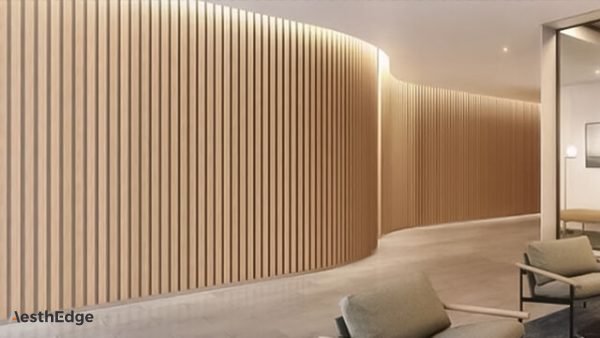
China has become an important sourcing destination for MDF acoustic sound panels, wooden acoustic wall panels, and decorative sound-absorbing materials. With the rapid development of commercial interiors, hospitality projects, office renovations, educational facilities, and modern residential construction, demand for decorative acoustic solutions continues to grow across international markets.
For importers, wholesalers, distributors, contractors, and architectural material suppliers, choosing the right MDF acoustic panel manufacturer in China is an important purchasing decision. A reliable supplier should offer more than attractive product designs. Manufacturing consistency, raw material quality, acoustic performance, surface finishing, customization capabilities, production capacity, packaging standards, and export experience all influence the long-term success of a sourcing partnership.
China has numerous manufacturers specializing in acoustic materials. Some focus on MDF slat acoustic panels, while others manufacture perforated wooden panels, grooved acoustic boards, PET-backed acoustic systems, and integrated wall decoration products.
In this guide, we introduce five Chinese brands and manufacturers worth considering when sourcing MDF acoustic panels: AesthEdge, Kingkus, Leeyin Acoustic, Tiange Acoustic, and Hanghe. Each company has a different product focus and potential advantages for international buyers.
Rather than presenting an unsupported ranking based on sales volume or market share, this article provides a practical supplier overview to help professional buyers identify suitable manufacturing partners.
What Are MDF Acoustic Panels and Why Are They Popular?
MDF acoustic panels are decorative sound-absorbing or sound-diffusing products manufactured using medium-density fiberboard as their primary structural material. They are widely used in commercial and residential interiors because they combine decorative flexibility with functional acoustic properties.
Unlike ordinary decorative wall panels, MDF acoustic panels are designed with specific surface structures, openings, grooves, or combinations of acoustic backing materials to help manage sound reflections and improve the acoustic environment.
Understanding the Structure of MDF Acoustic Panels
A typical MDF acoustic panel may consist of several components:
1. MDF Substrate
Medium-density fiberboard is the main structural material. It provides a stable surface for machining, grooving, perforating, and decorative finishing.
2. Decorative Surface
The MDF surface can be finished with natural wood veneer, melamine paper, PVC film, or other decorative materials. Common appearances include oak, walnut, teak, black, grey, and contemporary wood-grain textures.
3. Acoustic Backing Material
Many modern MDF slat acoustic panels use PET felt or another porous acoustic backing. This backing helps absorb sound energy and reduces sound reflections within an interior space.
4. Acoustic Openings and Gaps
Grooves, perforations, and spaces between wooden slats allow sound waves to interact with the absorptive backing and the air cavity behind the panel.
The actual acoustic performance depends on the entire assembly, including MDF thickness, slat dimensions, gap width, backing density, mounting method, and wall cavity configuration.
Why Are MDF Acoustic Panels Popular in Commercial Projects?
MDF acoustic panels offer several advantages for architectural and interior decoration projects.
- Decorative flexibility: Available in multiple wood finishes, colors, patterns, and surface treatments.
- Acoustic improvement: Properly designed systems can reduce sound reflections and improve indoor acoustic comfort.
- Modern appearance: Linear slat designs create a clean, sophisticated architectural appearance.
- Installation flexibility: Many systems can be installed on walls and ceilings using suitable mounting structures.
- Project versatility: Suitable for offices, hotels, conference rooms, schools, restaurants, and public buildings.
- Customization potential: Manufacturers can develop different dimensions, finishes, profiles, and packaging specifications for different markets.
For B2B buyers, MDF acoustic panels are particularly attractive because they can be included in larger interior material supply programs. Importers can offer decorative acoustic solutions alongside wall panels, flooring, ceiling materials, and other architectural products.
It is important to distinguish sound absorption from sound insulation. MDF acoustic panels can improve room acoustics, but they should not automatically be considered soundproofing products. Buyers requiring sound insulation between rooms should evaluate the complete wall or ceiling construction.
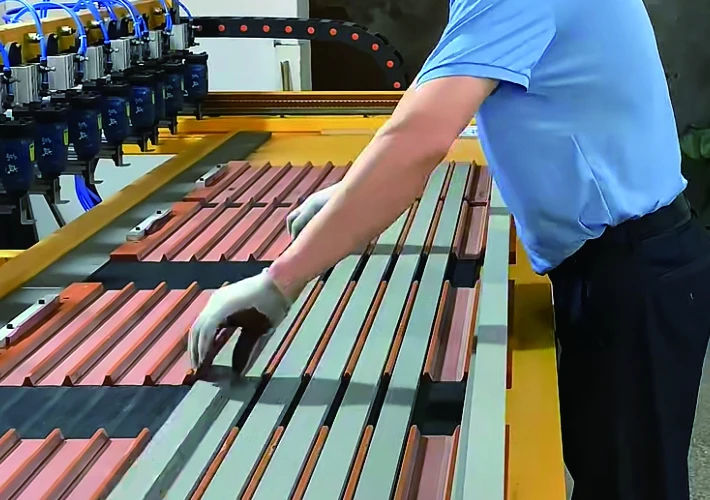
Five Chinese MDF Acoustic Panel Manufacturers and Brands to Consider
China has a broad manufacturing base for decorative acoustic products. The following five brands and manufacturers represent different sourcing options for international buyers.
The selection considers publicly available product information, manufacturing specialization, acoustic product categories, and relevance to commercial building-material procurement.
1. AesthEdge – Decorative Acoustic Panels and Integrated Interior Materials
AesthEdge is a China-based decorative interior materials supplier serving international B2B customers. The brand focuses on providing decorative wall materials and architectural interior solutions for importers, wholesalers, project contractors, and building-material distributors.
Its product portfolio includes acoustic panels, WPC wall panels, bamboo charcoal wood veneer, PVC marble sheets, SPC wall panels, and other decorative interior materials.
For buyers sourcing MDF acoustic panels, AesthEdge is worth considering because it combines acoustic decoration with a broader interior material supply range.
Key Product and Supply Advantages
1. Decorative MDF Acoustic Panel Options
MDF acoustic panels are widely used in modern commercial interiors. Buyers can explore different wood-grain appearances, decorative finishes, and panel configurations according to project requirements.
Common design directions include:
- Natural oak-style finishes.
- Walnut wood-grain surfaces.
- Dark wood decorative panels.
- Contemporary grey and neutral colors.
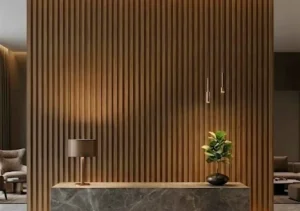
- Linear acoustic slat designs.
- Decorative wall systems for feature walls and ceilings.
For projects requiring a coordinated interior appearance, the ability to source multiple decorative wall materials from one supplier can simplify purchasing and material coordination.
2. Multiple Interior Decoration Product Categories
One of AesthEdge’s practical advantages is its broader decorative materials portfolio.
In addition to acoustic panels, the company supplies:
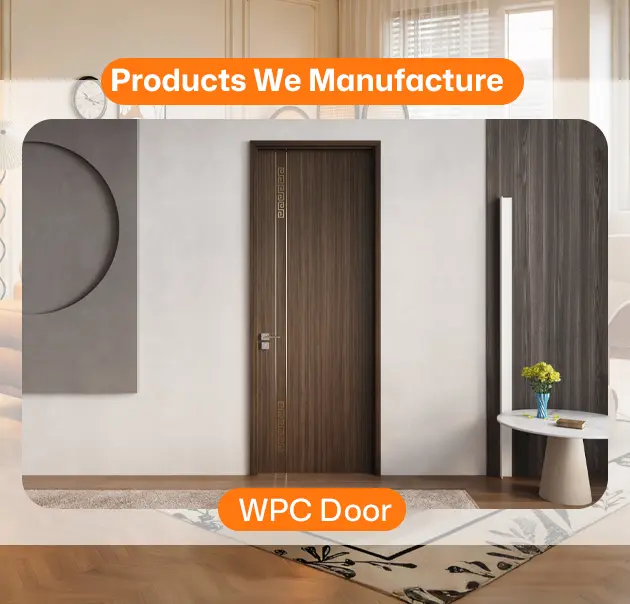
- WPC wall panels.
- Bamboo charcoal wood veneer.
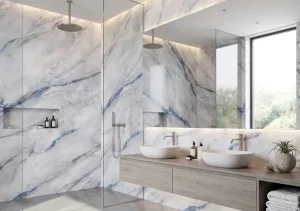
- PVC marble sheets.
- SPC wall panels.
- Decorative wall and ceiling materials.
This allows importers and contractors to discuss different material categories with one supply partner rather than managing every product independently.
For hotel renovations, office fit-outs, commercial developments, and large-scale interior decoration projects, consolidated sourcing can help simplify communication, sample coordination, and container planning.
3. Factory-Oriented B2B Supply
AesthEdge operates its manufacturing base in Linyi, Shandong Province, China.
As a China factory supplier, the brand focuses on serving international business customers rather than positioning itself as a retail-oriented home decoration seller.
For professional buyers, factory cooperation can provide opportunities to discuss product specifications, surface finishes, order quantities, packaging, and customized requirements directly with the supplier.
4. Product Customization and Project Coordination
Different markets have different preferences regarding acoustic panel dimensions, decorative colors, surface textures, and installation methods.
AesthEdge can work with buyers on product selection and customization discussions based on project requirements.
For distributors developing their own product catalogs, this type of cooperation is useful when building a consistent decorative material range for local customers.
5. A Broader Decorative Material Supply Strategy
AesthEdge is particularly relevant to buyers who source multiple categories of interior decorative materials.
Instead of purchasing only one type of acoustic board, importers can explore a coordinated product selection covering wall decoration, flooring-related materials, and other interior applications.
This is useful for wholesalers, building-material distributors, and contractors who need multiple materials for commercial projects.
Best For:
- Importers of decorative interior materials.
- Wholesale building-material distributors.
- Hotel and office renovation contractors.
- Architectural material suppliers.
- Buyers looking for multiple interior decoration categories from one China supplier.
Why Consider AesthEdge?
AesthEdge offers a combination of decorative material categories and factory-oriented B2B cooperation. For importers who want to expand their product portfolio beyond traditional acoustic panels, the brand provides an opportunity to explore several complementary interior material solutions through one supplier.
Website: https://aesthedgewallpanel.com/、https://wpcspc.com/
2.Kingkus – Acoustic Materials and Decorative Sound-Absorbing Products
Kingkus is another Chinese brand worth considering when researching acoustic panel suppliers.
The company has a background in construction and decorative materials and entered the sound-absorbing board industry in 2010. Its product development includes acoustic panels and decorative sound-absorbing materials under the Kingkus and Kingacoustic names.
Its publicly available company profile describes manufacturing and supply activities involving acoustic materials, including wooden acoustic panels and polyester fiber acoustic products.
Main Product Categories
- Wooden acoustic panels.
- Polyester fiber acoustic panels.
- Wood wool acoustic panels.
- Fabric acoustic panels.
- Acoustic diffusers.
- Decorative acoustic wall panels.
- Acoustic screens and partitions.
For buyers sourcing MDF-related acoustic products, Kingkus is relevant because of its wooden acoustic panel offering and broader acoustic material experience.
Key Advantages for B2B Buyers
1. Multiple Acoustic Material Categories
Kingkus offers several types of acoustic materials. This can be useful for distributors who want to develop a comprehensive acoustic product catalog rather than focusing on only MDF panels.
For example, a distributor may source wooden acoustic panels for decorative walls, polyester fiber panels for office partitions, and other acoustic products for ceiling applications.
2. Experience in the Acoustic Materials Industry
The company states that it entered the sound-absorbing board industry in 2010.
Industry experience can be valuable when discussing product construction, material selection, and application requirements with commercial project buyers.
3. Decorative and Functional Product Positioning
Modern acoustic products need to satisfy both architectural design requirements and acoustic objectives.
Wooden acoustic panels are particularly attractive for projects where natural-looking finishes and sound absorption are both important.
4. Applications Across Different Interior Projects
Potential applications include:
- Office meeting rooms.
- Hotel public areas.
- Educational facilities.
- Conference centers.
- Commercial interiors.
- Residential entertainment rooms.
Best For:
Importers and project suppliers seeking a manufacturer with a broad acoustic material portfolio, particularly those interested in combining wooden acoustic panels with other sound-absorbing products.
Before ordering, buyers should confirm whether the selected product uses MDF as its actual substrate and request the corresponding construction details and test documentation.
3. Leeyin Acoustic – Professional Architectural Acoustic Panel Solutions
Leeyin Acoustic is a Chinese manufacturer specializing in architectural acoustic materials.
The company publicly presents a broad range of acoustic products, including PET acoustic panels, wooden acoustic panels, grooved wood panels, perforated wood panels, fabric-wrapped products, and other acoustic solutions.
Its company information describes manufacturing activities dating back to 2006 and a production base in Foshan, Guangdong.
Leeyin is relevant to MDF acoustic panel buyers because grooved and perforated wooden acoustic panels are important product categories in its portfolio.
Main Product Categories
- Grooved wooden acoustic panels.
- Perforated wooden acoustic panels.
- PET acoustic panels.
- Fabric-wrapped acoustic panels.
- Wood wool acoustic panels.
- Acoustic ceiling systems.
- Acoustic diffusers.
- Custom architectural acoustic products.
Key Advantages for B2B Buyers
1. Specialized Acoustic Product Manufacturing
Unlike suppliers that focus mainly on decorative wall materials, Leeyin has a product portfolio centered on architectural acoustics.
This makes it relevant to contractors and distributors who need to evaluate several acoustic product configurations for commercial applications.
2. Grooved and Perforated Wooden Panels
Grooved and perforated wooden panels are common solutions for professional interior acoustic applications.
Their performance depends on the opening design, backing material, mounting conditions, and the overall assembly.
For buyers handling office, educational, or hospitality projects, having access to different panel structures can help match products to different design and acoustic requirements.
3. Broad Product Selection
A diversified product portfolio is useful for importers serving multiple customer segments.
For example, a building-material distributor may need decorative wood panels for hotel projects, PET panels for office partitions, and acoustic ceiling products for public buildings.
A supplier with several product categories can potentially support a more complete sourcing program.
4. Project-Oriented Product Development
Architectural acoustic projects often involve specifications that differ from standard decorative wall panel orders.
Buyers may need customized dimensions, surface finishes, panel configurations, and technical documentation.
A specialized acoustic manufacturer can be a useful partner when discussing these requirements.
Best For:
- Acoustic material distributors.
- Commercial interior contractors.
- Architectural acoustic specialists.
- Buyers requiring grooved and perforated wood panels.
- Projects involving different acoustic product categories.
4. Tiange Acoustic – Wooden Acoustic Panels and Integrated Acoustic Solutions
Foshan Tiange Acoustic & Deco Materials Co., Ltd. is another Chinese manufacturer to consider when sourcing architectural acoustic materials.
The company is based in Foshan, Guangdong, an important manufacturing region for construction and interior decoration products.
Its publicly available supplier information lists grooved wooden acoustic panels, perforated wooden acoustic panels, acoustic panels, movable partitions, and soundproof ceiling products.
Main Product Categories
- Grooved wooden acoustic panels.
- Perforated wooden acoustic panels.
- Acoustic wall panels.
- Acoustic ceiling panels.
- Sound-diffusing products.
- Movable partitions.
- Decorative acoustic products.
Key Advantages for B2B Buyers
1. Focus on Architectural Acoustic Applications
Tiange’s product range is relevant to projects that require coordinated acoustic wall and ceiling materials.
This is important for commercial buildings where the acoustic treatment of walls, ceilings, and partitions needs to be considered together.
2. Wooden Acoustic Panel Options
Wooden acoustic panels are popular in contemporary commercial interiors because they provide a combination of architectural texture and functional acoustic treatment.
Different groove patterns, perforation designs, and decorative finishes can help architects achieve different visual effects.
3. Additional Acoustic Product Categories
The availability of movable partitions and other acoustic products may be useful for contractors handling meeting rooms, conference facilities, and multifunctional commercial spaces.
4. Suitable for Commercial Interior Projects
Potential applications include:
- Conference rooms.
- Hotels.
- Office buildings.
- Educational institutions.
- Public halls.
- Commercial entertainment facilities.
Best For:
Commercial project contractors, architectural acoustic material distributors, and buyers who require wooden acoustic panels alongside other acoustic systems.
5. Hanghe – MDF Acoustic Panels with Documented Environmental Product Information
Jiangsu Hanghe Soundproof Material Co., Ltd. is particularly relevant to buyers looking specifically for MDF acoustic slat panels.
One reason it stands out in this comparison is the availability of published Environmental Product Declaration (EPD) information for its MDF acoustic products.
According to the published EPD documentation, the company was established in 2020 and manufactures veneered MDF acoustic panels and melamine-faced MDF acoustic panels.
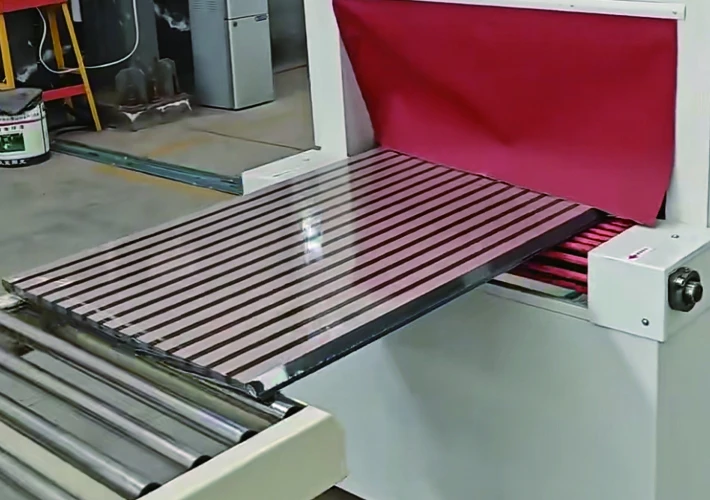
Its products consist of MDF slats mounted on a 9 mm black polyester felt backing made from recycled plastic bottles. The MDF surfaces are finished with wood veneer or melamine-impregnated paper.
Main Product Categories
- Veneered MDF acoustic panels.
- Melamine-faced MDF acoustic panels.
- Wooden slat acoustic panels.
- Decorative acoustic wall systems.
Key Advantages for B2B Buyers
1. Clearly Identified MDF Construction
For importers specifically searching for MDF acoustic panels, product construction is an important purchasing factor.
Hanghe’s published EPD identifies the MDF substrate and describes the decorative surface and polyester felt backing.
This provides buyers with a useful starting point for understanding the product structure.
2. Environmental Product Documentation
Environmental performance is becoming increasingly important in international construction projects.
An EPD can help architects, contractors, and project procurement teams evaluate environmental information throughout a product’s life cycle.
However, buyers should always verify the validity, scope, product model, and applicable manufacturing entity of the specific declaration.
3. Wood Veneer and Melamine Finishes
The availability of different surface finishes provides flexibility for commercial interior design.
Wood veneer can provide a more natural wood appearance, while melamine finishes offer additional decorative options.
4. PET Felt Backing
The documented product construction uses a polyester felt backing made partly from recycled plastic bottles.
The backing plays an important role in the acoustic behavior of the panel system.
Buyers should still request acoustic test reports for the exact panel assembly and mounting configuration being purchased.
Best For:
- MDF acoustic panel importers.
- European building-material buyers.
- Distributors interested in documented environmental product information.
- Contractors sourcing veneered and melamine-faced MDF slat panels.
The published EPD documentation identifies Jiangsu Hanghe Soundproof Material Co., Ltd. as the product manufacturer and provides specific information about its MDF acoustic panel construction.
Comparison of Five Chinese MDF Acoustic Panel Suppliers
The five companies introduced above have different product portfolios and manufacturing specializations.
For international buyers, the most suitable supplier depends on whether the purchasing priority is decorative design, MDF construction, acoustic engineering, environmental documentation, or integrated interior material sourcing.
The following table summarizes their positioning.
| Brand / Manufacturer | Main Product Focus | Potential B2B Advantage | Suitable Buyers |
|---|---|---|---|
| AesthEdge | Decorative acoustic and interior wall materials | Multiple decorative material categories and factory-oriented supply | Importers, wholesalers, contractors |
| Kingkus | Wooden and polyester fiber acoustic materials | Broad acoustic product portfolio | Acoustic distributors and project suppliers |
| Leeyin Acoustic | Grooved, perforated, PET and wooden acoustic panels | Specialized architectural acoustic product range | Acoustic contractors and distributors |
| Tiange Acoustic | Wooden acoustic panels and integrated acoustic products | Acoustic wall, ceiling and partition solutions | Commercial project suppliers |
| Hanghe | Veneered and melamine-faced MDF acoustic panels | Published MDF product construction and EPD information | MDF panel importers and specification-driven buyers |
This comparison should be treated as a sourcing reference rather than an independently audited performance ranking.
There is no single manufacturer that is automatically the best choice for every project.
For example, an importer looking for a broad interior material portfolio may prioritize AesthEdge. A contractor requiring specialized grooved or perforated acoustic systems may investigate Leeyin or Tiange. A buyer prioritizing published environmental product information for MDF acoustic panels may consider Hanghe.
The best decision comes from comparing actual product samples, technical documents, quotations, and production capabilities.
How to Choose a Reliable MDF Acoustic Panel Manufacturer in China
Selecting a manufacturer is one of the most important steps in an international sourcing project.
A supplier may offer attractive product images and competitive prices, but professional buyers need to evaluate the complete manufacturing and supply process.
The following factors can help importers and distributors identify a suitable long-term partner.
1. Verify the Actual MDF Substrate
Not every product marketed as a wooden acoustic panel is made from MDF.
Some products use solid wood, plywood, particleboard, PET felt, or other composite materials.
Before requesting a quotation, clarify:
- Whether the substrate is MDF.
- MDF thickness and density.
- Moisture content requirements.
- Surface treatment.
- Slat dimensions.
- Edge treatment.
- Backing material.
This is especially important when comparing quotations from multiple manufacturers.
Two panels with similar appearances may have completely different material structures and production costs.
2. Evaluate Acoustic Performance
Acoustic performance is one of the most important technical factors.
However, buyers should not rely on general marketing claims such as excellent sound absorption or superior soundproofing.
Ask manufacturers for relevant acoustic test reports.
Important technical indicators include:
Noise Reduction Coefficient (NRC):
NRC is a single-number rating commonly used to describe sound absorption performance. The reported value should be supported by a recognized test method.
Sound Absorption Coefficient:
This indicates how much sound energy a material absorbs at different frequencies.
Frequency Response:
A panel may perform differently at low, medium, and high frequencies. Buyers should evaluate performance according to the intended application.
Installation Conditions:
Acoustic results depend on the complete assembly, including the panel, backing, air cavity, insulation, and mounting method.
A test report for one installation configuration should not automatically be applied to another.
For projects requiring sound insulation, additional testing of the complete wall or ceiling construction may be necessary.
3. Check Fire Safety and Environmental Documentation
Fire safety requirements vary between countries and project types.
Hotels, hospitals, schools, shopping centers, and other public buildings may have specific fire-performance requirements.
Ask the manufacturer for documentation relevant to the destination market.
Potential documents include:
- Fire classification reports.
- Formaldehyde emission test reports.
- Relevant environmental certifications.
- Material safety documentation.
- EPD documentation, where applicable.
- Quality management certificates.
A particularly important point is that certifications must correspond to the actual product being supplied.
A general company certificate does not prove that every MDF acoustic panel has passed a particular fire or acoustic test.
Always check the manufacturer name, product description, testing standard, report date, and specimen configuration.
4. Evaluate Surface Finishing and Product Consistency
Decorative quality is critical for MDF acoustic panels.
In large commercial projects, even small differences in color, texture, or surface gloss can become noticeable after installation.
Buyers should examine:
- Wood-grain consistency.
- Surface scratches.
- Lamination quality.
- Edge finishing.
- Color variation between batches.
- Slat spacing.
- Dimensional accuracy.
- Panel flatness.
Request production samples before placing a large order.
For repeat purchasing programs, it is also useful to establish approved reference samples and written quality specifications.
5. Confirm Customization Capabilities
Different markets have different preferences for acoustic panel dimensions, wood colors, and decorative patterns.
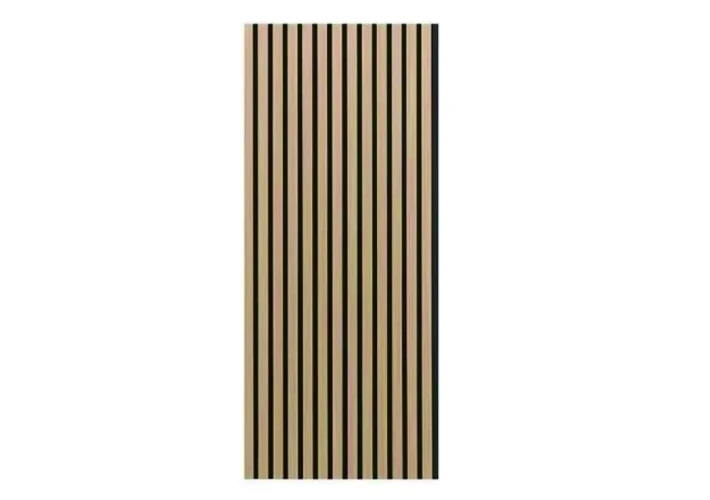
Some buyers prefer standard black-backed acoustic slat panels, while others require customized dimensions and finishes for specific architectural projects.
A reliable manufacturer should be able to explain which specifications can be customized.
Typical customization requirements include:
- Panel length and width.
- MDF thickness.
- Slat width and spacing.
- Wood veneer options.
- Melamine colors.
- Surface textures.
- Backing thickness and color.
- Special packaging.
- Private-label branding.
Before production, confirm whether customized specifications affect minimum order quantities, production lead times, and tooling costs.
6. Assess Manufacturing Capacity and Quality Control
For B2B buyers, stable manufacturing capacity is often more important than a low initial quotation.
A factory should have a clear production process and inspection system.
Important questions include:
- Does the supplier manufacture the product directly?
- Which production processes are completed in-house?
- How are MDF substrates inspected?
- How is surface finishing controlled?
- How are finished panels measured?
- What inspection procedures are followed before packing?
- Can the manufacturer provide production photographs or inspection records?
For large orders, buyers may consider arranging a third-party inspection before shipment.
7. Review Export Packaging and Logistics
MDF acoustic panels can be vulnerable to moisture, impact, and surface damage during transportation.
Packaging is therefore an important part of supplier evaluation.
Ask whether the manufacturer provides:
- Protective film where appropriate.
- Corner protection.
- Moisture-resistant inner packaging.
- Reinforced export cartons.
- Palletized packing.
- Clear product labels.
- Container-loading photographs.
For international shipments, buyers should also confirm carton dimensions, gross weight, net weight, loading quantities, and shipping arrangements.
These details help calculate landed costs more accurately.
Main Applications of MDF Acoustic Panels in Commercial Projects
MDF acoustic panels are increasingly used in commercial interiors because they can combine decorative wall treatments with acoustic improvements.
Different applications require different product specifications.
Office Buildings and Meeting Rooms
Modern offices often contain open working areas, meeting rooms, reception areas, and collaborative spaces.
Hard surfaces such as glass, concrete, and tile can contribute to excessive sound reflections.
MDF acoustic panels can be installed on selected walls or ceilings to help create a more comfortable acoustic environment.
Common applications include:
- Conference room feature walls.
- Executive office walls.
- Reception backgrounds.
- Meeting room ceilings.
- Collaborative workspaces.
Natural oak and walnut finishes are popular choices for offices because they create a warm architectural appearance.
Hotels and Hospitality Projects
Hotels need to balance interior aesthetics, guest comfort, durability, and project budgets.
MDF acoustic panels can be used in:
- Hotel reception areas.
- Guest room feature walls.
- Corridors.
- Restaurants.
- Conference facilities.
- Lounge areas.
- Entertainment spaces.
For hotel projects, buyers should pay particular attention to fire classification, cleaning requirements, moisture exposure, and installation details.
The selected acoustic system should comply with the project’s specifications and applicable local building regulations.
Educational Facilities
Schools, universities, libraries, and training centers often require improved acoustic conditions.
Excessive reverberation can make communication more difficult, particularly in classrooms and lecture rooms.
MDF acoustic panels may be used in:
- Classrooms.
- Libraries.
- Lecture rooms.
- Training centers.
- Administrative offices.
- Study spaces.
The acoustic performance of the complete installation should be evaluated against the room’s intended function.
Fire safety and indoor air quality documentation are also important purchasing considerations.
Restaurants and Commercial Dining Spaces
Restaurants often contain hard flooring, glass windows, and decorative wall finishes.
These materials may contribute to high noise levels when many customers are talking simultaneously.
MDF acoustic wall panels can help manage sound reflections while creating attractive interior feature walls.
Common design directions include vertical wood slats, dark walnut finishes, natural oak, and contemporary geometric patterns.
For restaurants, buyers should also consider cleaning requirements and the suitability of the panel surface for the installation environment.
Cinemas, Studios, and Entertainment Facilities
Certain entertainment environments require more specialized acoustic solutions.
MDF grooved and perforated panels can be used as part of professionally designed acoustic systems.
Potential applications include:
- Small recording rooms.
- Media rooms.
- Conference studios.
- Private screening rooms.
- Entertainment venues.
However, these projects require more than decorative acoustic wall panels.
The complete room design may need additional bass absorption, diffusion, sound insulation, and specialized ceiling treatments.
A qualified acoustic consultant should determine the appropriate configuration.
MDF Acoustic Panel Trends and Opportunities in the International Market
The international market for decorative acoustic materials is influenced by several important trends.
For Chinese manufacturers and international distributors, understanding these developments can help identify new product opportunities.
1. Natural Wood Appearance
Natural-looking interior materials remain popular in commercial architecture.
Wood-grain MDF acoustic panels offer an alternative to solid wood products while providing greater flexibility in decorative surface design.
Common finishes include:
- Natural oak.
- American walnut appearance.
- Smoked oak.
- Teak-inspired colors.
- Dark brown.
- Light grey wood grain.
For distributors, maintaining a carefully selected range of popular finishes can help reduce inventory complexity.
2. Linear Slat Acoustic Designs
Wood slat acoustic panels have become a recognizable decorative feature in contemporary interiors.
Their vertical or horizontal lines create visual rhythm and can make walls and ceilings appear more structured.
These designs are commonly specified for hotel reception areas, office interiors, restaurants, and commercial meeting rooms.
Manufacturers that can maintain consistent slat dimensions and spacing have an advantage when supplying large projects.
3. Sustainable Material Selection
Environmental considerations are increasingly relevant to international building-material procurement.
Importers may ask about recycled backing materials, MDF emissions, responsible wood sourcing, and environmental product documentation.
Manufacturers should be prepared to provide accurate technical information rather than relying only on general statements such as eco-friendly or green materials.
For projects with sustainability requirements, buyers should check the specific certificates and declarations requested by the project team.
4. Integrated Interior Material Procurement
Large construction and renovation projects often require multiple material categories.
Instead of purchasing acoustic panels, wall cladding, flooring, and decorative sheets from separate suppliers, some buyers prefer working with suppliers that offer a broader product portfolio.
This creates opportunities for manufacturers such as AesthEdge, whose product range includes acoustic panels and other decorative interior materials.
For wholesalers and importers, integrated sourcing can simplify product selection, communication, and procurement coordination.
5. Customization for Regional Markets
Different regions have different preferences.
For example, European commercial projects may emphasize environmental documentation and fire classifications, while hospitality projects in the Middle East may prioritize decorative finishes, customized dimensions, and coordinated interior design.
Distributors in North America and Australia may have their own requirements for product labeling, testing, and building-code compliance.
Chinese manufacturers that can respond to different market requirements have more opportunities to develop long-term B2B partnerships.
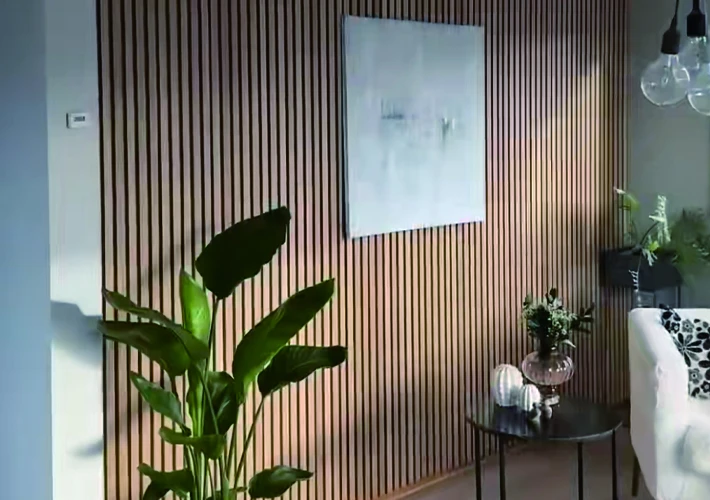
Frequently Asked Questions About MDF Acoustic Panel Manufacturers in China
Q1: Who Are the Leading MDF Acoustic Panel Manufacturers in China?
Several Chinese companies are worth considering when sourcing MDF acoustic panels and related architectural acoustic materials.
These include AesthEdge, Kingkus, Leeyin Acoustic, Tiange Acoustic, and Hanghe.
They have different product specializations. AesthEdge focuses on decorative interior materials and B2B supply, Kingkus offers a broad acoustic materials portfolio, Leeyin and Tiange provide architectural acoustic products, and Hanghe has documented veneered and melamine-faced MDF acoustic panel products.
The best manufacturer depends on the buyer’s specifications, target market, and purchasing requirements.
Q2: What Is the Difference Between MDF Acoustic Panels and PET Acoustic Panels?
MDF acoustic panels use medium-density fiberboard as their main structural or decorative component.
PET acoustic panels are primarily manufactured from polyester fiber.
MDF panels are often selected for their wood-like appearance, structured surface designs, and decorative architectural applications.
PET panels are valued for their lightweight construction, flexible shapes, and broad color options.
Some acoustic products combine MDF slats with PET felt backing, creating a hybrid system that uses both materials.
Q3: Are MDF Acoustic Panels Soundproof?
MDF acoustic panels are generally designed to improve room acoustics through sound absorption or sound diffusion.
They can help reduce sound reflections and reverberation when properly designed and installed.
However, they are not automatically soundproofing materials.
Sound insulation requires a complete construction system that may include insulated wall cavities, additional layers, sealing systems, and appropriate structural design.
Q4: What Is the Best MDF Thickness for Acoustic Panels?
There is no universal MDF thickness suitable for every application.
The appropriate thickness depends on the panel design, slat dimensions, surface finish, structural requirements, and mounting system.
Buyers should request the manufacturer’s technical specifications and evaluate the complete panel construction before selecting a thickness.
Q5: Can MDF Acoustic Panels Be Customized?
Yes. Many manufacturers offer customization options.
Common requirements include panel dimensions, slat widths, surface finishes, wood colors, backing materials, and private-label packaging.
However, customization capabilities and minimum order quantities vary between manufacturers.
Buyers should confirm the available options before requesting a final quotation.
Q6: Are MDF Acoustic Panels Suitable for Hotels and Offices?
Yes. MDF acoustic panels are widely used in commercial interior applications.
They can be installed in hotel reception areas, meeting rooms, offices, restaurants, corridors, and other interior spaces.
The selected product must meet the project’s fire, acoustic, emissions, and installation requirements.
Q7: What Documents Should Importers Request from Chinese Manufacturers?
Professional buyers should request relevant technical and commercial documentation, including:
- Product specifications.
- MDF substrate details.
- Acoustic test reports.
- Fire classification reports.
- Formaldehyde emission documentation.
- Environmental certificates, where required.
- Quality inspection records.
- Packaging specifications.
- Commercial quotations and lead-time information.
All reports should be checked against the actual product model and manufacturing entity.
Q8: How Can Importers Find a Reliable MDF Acoustic Panel Factory in China?
Importers should compare multiple manufacturers based on product quality, production capabilities, technical documentation, customization, export experience, and communication efficiency.
Requesting samples is an important first step.
For larger orders, buyers should consider factory verification, production inspections, and pre-shipment quality checks.
Working directly with a suitable manufacturer can also make it easier to discuss specifications, packaging, and long-term purchasing arrangements.
Conclusion: Find the Right MDF Acoustic Panel Supplier for Your Business
China offers a wide selection of manufacturers specializing in MDF acoustic panels, wooden acoustic panels, and decorative sound-absorbing systems.
AesthEdge, Kingkus, Leeyin Acoustic, Tiange Acoustic, and Hanghe represent five different options for international buyers looking to develop their acoustic materials supply chain.
Each supplier has its own product focus and potential advantages.
For buyers seeking specialized architectural acoustic products, Leeyin and Tiange are worth evaluating. Kingkus offers a broader acoustic material portfolio, while Hanghe is particularly relevant to buyers interested in veneered and melamine-faced MDF acoustic panels with published environmental product information.
For importers and wholesalers looking for decorative acoustic panels alongside other interior building materials, AesthEdge offers a broader product sourcing opportunity.
As a China-based factory supplier, AesthEdge focuses on serving professional B2B customers with decorative interior material solutions, including acoustic panels, WPC wall panels, bamboo charcoal wood veneer, PVC marble sheets, and SPC wall panels.
If you are planning to expand your acoustic panel product range or source decorative interior materials directly from China, contact AesthEdge to discuss product specifications, samples, customization options, and wholesale cooperation.