3D white wall panels have become increasingly popular in residential, commercial, hospitality, retail, and office interior projects. Their three-dimensional textures can transform an ordinary wall into a strong visual feature without requiring complicated traditional decorative techniques. White is especially popular because it creates a clean, modern, bright, and versatile appearance that works well with many interior design styles.
However, like any decorative wall material, 3D white wall panels also have disadvantages. They are not automatically the best choice for every project. Buyers, contractors, architects, interior designers, and distributors should consider installation requirements, cleaning, durability, lighting effects, design limitations, and long-term maintenance before making a purchasing decision.
The disadvantages of 3D white wall panels depend greatly on the panel material, surface finish, texture depth, installation environment, and product quality. A well-manufactured panel installed correctly can perform very well, while a low-quality product may create problems such as color inconsistency, difficult cleaning, deformation, or visible joints.
For B2B buyers, understanding these limitations is particularly important because large commercial projects require consistent quality, predictable installation costs, reliable supply, and stable long-term performance.
AesthEdge is a China-based manufacturer and supplier of decorative wall panels, providing solutions for international wholesalers, distributors, contractors, developers, architects, and interior projects. In this article, we explain the major disadvantages of 3D white wall panels and how buyers can reduce potential risks when selecting products.
Textured Surfaces Can Be More Difficult to Clean
One of the biggest disadvantages of 3D white wall panels is that their textured surfaces can require more cleaning attention than flat wall panels.
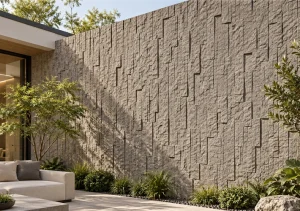
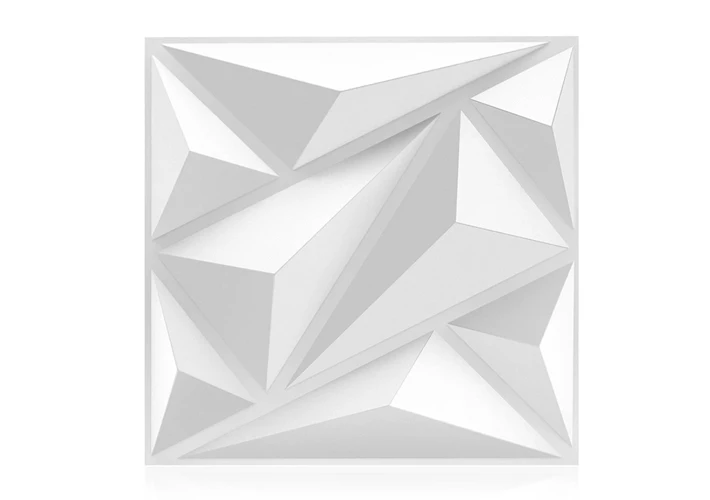
The three-dimensional design creates raised areas, grooves, recessed sections, geometric patterns, or decorative profiles. While these details provide visual depth, they can also collect dust and other contaminants.
This issue is particularly noticeable with white panels. A dark or heavily patterned surface may hide small amounts of dust, while a white decorative wall can make dirt more visible.
For example, deep grooves in a 3D wall panel may accumulate:
- Household dust
- Fine particles
- Grease
- Fingerprints
- Hair and fibers
- Smoke residue
- Dirt from high-traffic environments
In residential applications, regular dusting may be enough. However, commercial environments such as hotels, restaurants, retail stores, offices, reception areas, and public facilities may require more frequent cleaning.
The cleaning difficulty depends heavily on the texture design. Panels with shallow and relatively open patterns are usually easier to maintain than panels with extremely deep or narrow grooves.
For B2B projects, buyers should therefore evaluate the depth, shape, and accessibility of the 3D texture, rather than considering appearance alone.
A good solution is to select designs that combine visual depth with practical cleaning requirements. For hospitality and commercial applications, relatively simple geometric patterns can often provide a better balance between aesthetics and maintenance.
The surface coating is also important. A smooth, durable, easy-clean finish can significantly improve the practical performance of white 3D panels.
White Surfaces Can Show Dirt and Damage More Easily
Another disadvantage of 3D white wall panels is that white surfaces tend to make certain types of dirt and damage more visible.
White is popular because it creates a bright and spacious appearance. It can also work with modern, minimalist, Scandinavian, contemporary, and luxury interior designs.
However, this visual advantage also creates a maintenance challenge.
Marks that may be difficult to notice on darker walls can become obvious on white surfaces. For example, scratches, stains, fingerprints, dust, or discoloration may stand out more clearly.
This is especially important in:
- Hotel corridors
- Restaurant interiors
- Retail stores
- Commercial offices
- Schools
- Showrooms
- Reception areas
- High-traffic public spaces
In these environments, walls are more likely to experience contact with furniture, luggage, equipment, cleaning tools, or people.
Therefore, the actual performance of a white 3D wall panel depends not only on its decorative appearance but also on its surface quality.
When purchasing in bulk, B2B buyers should request samples and evaluate:
- Surface hardness
- Scratch resistance
- Stain resistance
- Color consistency
- Cleaning performance
- Resistance to common household or commercial cleaning products
It is also important to distinguish between surface discoloration and structural damage. A high-quality panel may maintain its appearance much longer than a low-cost product with poor surface treatment.
Deep 3D Patterns May Make Installation More Complicated
Flat wall panels are generally straightforward to align because their surfaces are relatively uniform. By comparison, 3D white wall panels require greater attention to alignment and pattern continuity.
If the design consists of repeating geometric shapes, waves, flutes, lines, or other three-dimensional patterns, adjacent panels need to be positioned accurately.
Small installation errors can become visually obvious.
For example, if one panel is installed slightly higher than another, the three-dimensional pattern may not connect correctly. A minor alignment error can therefore affect the overall appearance of the wall.
Installation challenges may include:
- Accurate wall measurement
- Proper substrate preparation
- Panel cutting
- Pattern alignment
- Joint treatment
- Corner finishing
- Adhesive application
- Expansion considerations
- Electrical outlet and switch cutting
This means installers may need more time and experience compared with installing simple flat decorative boards.
For large B2B projects, installation efficiency can directly affect labor costs. Buyers should therefore consider not only the panel price but also the total installed cost.
Manufacturers can help reduce installation difficulties by offering panels with standardized dimensions, installation accessories, matching trims, clear instructions, and suitable joint solutions.
Some Designs Can Look Too Busy
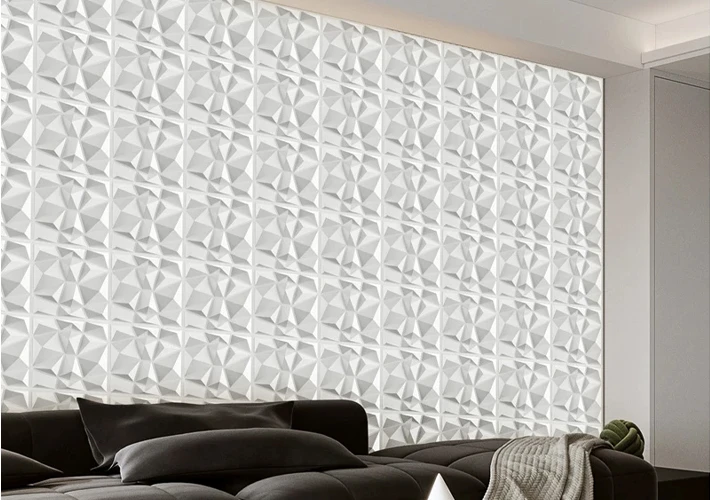
Although 3D textures can create an attractive feature wall, excessive texture can sometimes make an interior look visually crowded.
This is one of the disadvantages that is more related to design selection than the basic material itself.
A three-dimensional wall naturally attracts attention. If the pattern is too complicated, the wall may dominate the entire room.
This can be a problem when designers want a calm, minimalist, or understated interior.
White does reduce some of this visual intensity because it provides a relatively neutral appearance. Nevertheless, strong shadows created by deep textures can make the wall appear more dramatic than expected.
Lighting can make this effect even stronger.
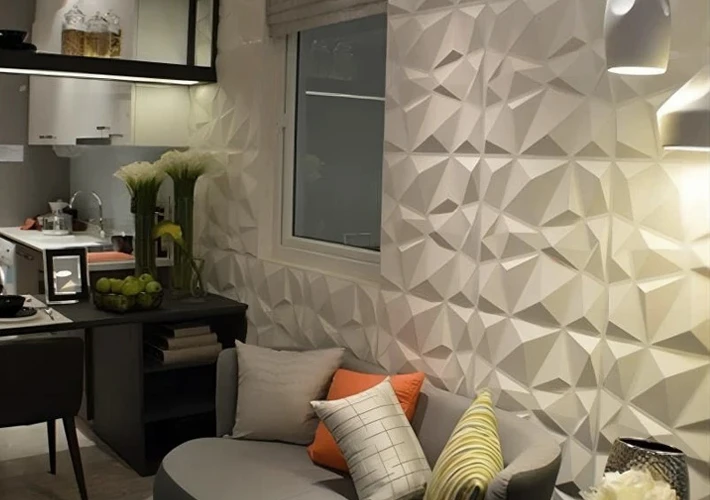
For example, spotlights or directional lighting placed close to a deeply textured wall may create strong highlights and shadows. Depending on the design, this can either enhance the wall or make the surface look uneven and overly dramatic.
Therefore, selecting a 3D white wall panel should involve consideration of the complete interior design rather than looking at the panel sample alone.
Architects and designers should evaluate:
- Room size
- Ceiling height
- Natural lighting
- Artificial lighting
- Furniture style
- Wall dimensions
- Desired visual effect
For smaller spaces, simpler 3D patterns may provide a more balanced appearance.
Lighting Can Change the Appearance of 3D White Panels
The interaction between 3D wall panels and lighting is both an advantage and a potential disadvantage.
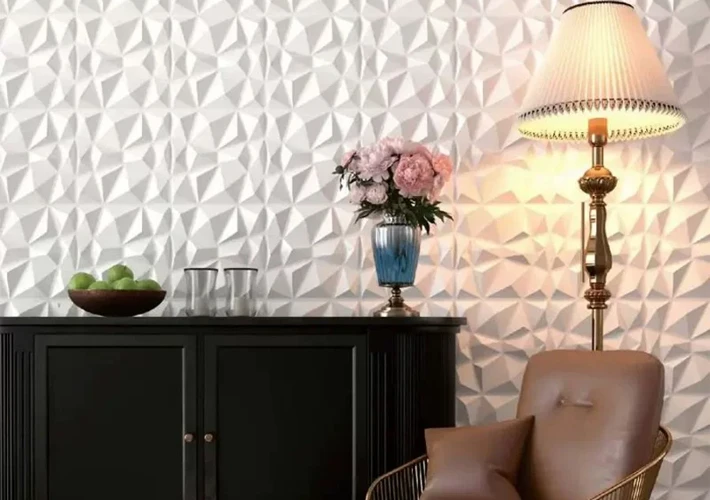
Three-dimensional textures naturally create shadows. Under soft and evenly distributed lighting, these shadows can add depth and sophistication.
However, under strong directional lighting, the same texture may create dramatic shadow lines.
This can make some surfaces appear darker or more uneven than expected.
For example, wall panels installed near spotlights, wall washers, LED strips, or large windows may have significantly different visual effects during different times of the day.
The white color reflects a large amount of light, while the recessed sections absorb or shade light. As a result, the surface can have significant contrast between raised and recessed areas.
This is not necessarily a defect. In fact, it is often part of the intended design. But it means designers should test the panel under actual project lighting conditions.
For high-end commercial projects, obtaining a physical sample is strongly recommended before ordering a large quantity.
A small sample can help designers evaluate:
- Texture depth
- Shadow formation
- White color
- Surface reflection
- Lighting compatibility
- Overall visual balance
Product Quality Can Vary Significantly Between Suppliers
One of the most important disadvantages from a B2B purchasing perspective is that the quality of 3D white wall panels can vary considerably between manufacturers.
Different factories may use different raw materials, production processes, surface treatments, densities, backing structures, and quality-control standards.
Two panels may look similar in photographs but perform differently after installation.
Potential quality problems can include:
- Uneven thickness
- Inconsistent dimensions
- Poor surface finishing
- Color variation
- Weak structural strength
- Warping
- Poor adhesion
- Surface cracking
- Inconsistent texture
- Difficult cutting
This is particularly important for importers and distributors because quality problems can create complaints after products reach the end customer.
For wholesale purchasing, buyers should not evaluate suppliers based solely on price.
A reliable supplier should be able to provide product specifications, samples, packaging information, production details, quality-control procedures, and export experience.
AesthEdge focuses on supplying decorative wall panel solutions for international B2B customers. For overseas buyers, factory-direct communication can help make specifications, packaging, customization, and quality requirements clearer before mass production.
Repairs and Replacement May Be Noticeable
Another potential disadvantage is that repairing one damaged 3D white wall panel may be more noticeable than repairing a conventional flat wall.
The reason is that decorative panels have specific patterns and textures. A replacement panel needs to match the surrounding panels in terms of:
- Color
- Texture
- Dimensions
- Pattern
- Surface finish
- Production batch
Even if the replacement panel has the same product model, slight differences between production batches can sometimes become visible.
This issue becomes more important several years after the original installation, when the original product may no longer be available.
For commercial projects, buyers can reduce this risk by ordering a reasonable quantity of spare panels at the initial purchase stage.
Keeping spare panels in storage can make future repairs faster and easier.
For distributors, maintaining detailed records of product codes, specifications, colors, and production batches can also help with future replacement orders.
Material Selection Determines Performance
It is important to understand that “3D white wall panel” describes an appearance rather than one specific material.
Different products can be manufactured from different materials, including PVC-based materials, WPC, MDF, gypsum, PU, PS, bamboo fiber composites, and other engineered materials.
Their performance can be very different.
For example, one product may be designed mainly for lightweight decorative applications, while another may offer greater moisture resistance or impact resistance.
Therefore, buyers should never assume that all 3D white wall panels have the same properties.
Before purchasing, B2B customers should confirm:
- Core material
- Panel density
- Thickness
- Weight
- Surface treatment
- Moisture resistance
- Fire performance
- Dimensional stability
- Recommended installation environment
- Cleaning requirements
The application should determine the product specification.
A decorative wall panel intended for a dry bedroom does not necessarily need the same performance characteristics as a panel used in a hotel corridor, commercial lobby, restaurant, or other high-use environment.
How Can Buyers Reduce the Disadvantages of 3D White Wall Panels?
The disadvantages of 3D white wall panels do not mean that they are unsuitable for commercial or residential projects. In many applications, they remain an efficient and attractive alternative to traditional wall decoration.
The key is selecting the right product and supplier.
Choose the Right Texture
For high-traffic projects, choose patterns that are visually attractive but relatively easy to clean.
Extremely deep grooves may create more maintenance work than shallow geometric patterns.
Request Physical Samples
Do not rely only on website photographs.
A physical sample allows buyers to inspect:
- Color
- Texture
- Thickness
- Surface quality
- Edge quality
- Cutting performance
- Overall appearance
It also allows designers to test the product under actual project lighting.
Confirm Technical Specifications
Before placing a bulk order, confirm all critical specifications with the manufacturer.
This includes panel dimensions, thickness, material composition, weight, packaging, surface treatment, installation method, and applicable performance certifications.
Evaluate the Supplier’s Production Capability
For B2B buyers, supplier reliability is just as important as product appearance.
A capable factory should have stable production, quality control, export packaging, and sufficient capacity to support repeat orders.
This is particularly important for distributors who need consistent product quality across multiple shipments.
Consider the Total Project Cost
The cheapest panel is not necessarily the most economical solution.
Buyers should consider:
Panel cost + shipping + installation labor + accessories + maintenance + replacement cost
A slightly higher-quality product may provide better overall value if it reduces installation problems, complaints, and replacement requirements.
Are 3D White Wall Panels Still a Good Choice?
Yes. Despite their disadvantages, 3D white wall panels can be an excellent decorative solution when the product is correctly selected for the application.
Their major advantages include visual depth, modern appearance, design flexibility, relatively fast installation, and the ability to create feature walls without complicated traditional construction techniques.
White also provides excellent design flexibility. It can be combined with wood tones, metal, stone, glass, neutral colors, and modern furniture.
For hotels, offices, restaurants, retail stores, residential developments, showrooms, and other commercial interiors, 3D white wall panels can help create a distinctive visual identity.
The important point is that buyers should understand both the advantages and disadvantages before making a decision.
For B2B projects, product quality, supplier consistency, installation requirements, and long-term maintenance should be evaluated together.
Conclusion
So, what are the disadvantages of 3D white wall panels?
The main disadvantages include more difficult cleaning for deep textures, greater visibility of dirt and scratches on white surfaces, potentially more complicated installation, strong visual effects under directional lighting, possible design limitations, and quality differences between suppliers. Depending on the material, there may also be limitations related to moisture resistance, impact resistance, dimensional stability, or long-term maintenance.
However, these disadvantages can often be managed through proper product selection and professional installation.
For importers, wholesalers, distributors, contractors, and project buyers, the most important step is to work with a reliable manufacturer that can provide consistent quality, clear technical specifications, stable production, suitable packaging, and customization support.
AesthEdge is a China-based decorative wall panel manufacturer serving global B2B customers. We provide decorative wall solutions for residential, commercial, hospitality, retail, and other interior projects, with factory-direct supply and OEM/ODM support.
If you are sourcing 3D white wall panels from China, contact AesthEdge to discuss your project requirements, product specifications, samples, packaging, and wholesale orders. Choosing the right panel and the right factory can help you enjoy the visual benefits of 3D wall decoration while minimizing its potential disadvantages.