Introduction: Why Semi Circle WPC Wall Panels Are Gaining Popularity in Commercial Interior Design
Commercial interior design is evolving beyond flat walls, conventional paint, and standard decorative finishes. Hotels, office buildings, shopping centers, restaurants, retail stores, and mixed-use developments increasingly use three-dimensional wall surfaces to create distinctive visual identities. Among the decorative materials attracting attention from architects, interior designers, importers, and building material distributors, semi circle WPC wall panels offer an appealing combination of dimensional texture, modern aesthetics, and practical installation possibilities.
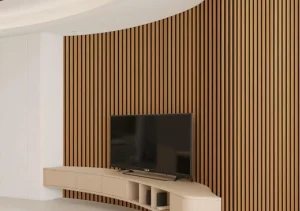
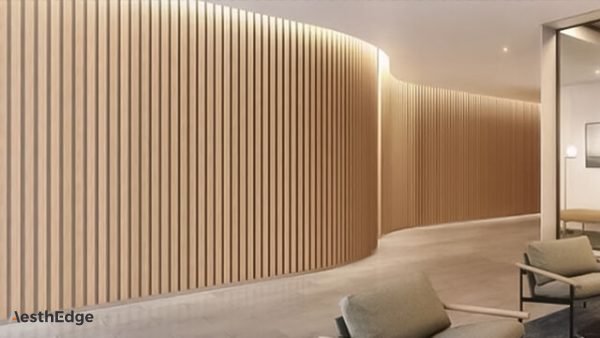
Semi circle WPC wall panels feature a distinctive rounded profile that creates repeating curves across a wall surface. Unlike traditional flat wall panels, their semi-circular design introduces depth, soft shadows, and a sense of movement. Depending on the panel diameter, spacing, color, and installation direction, the same basic profile can create a minimalist contemporary background, a warm wood-inspired feature wall, or a bold architectural statement.
For commercial projects, this visual flexibility matters. A hotel reception wall must communicate quality and establish the character of the property. A retail environment needs materials that reinforce brand identity. An office lobby should look professional while remaining practical to maintain. Restaurants and cafés often require decorative surfaces that make the space recognizable in photographs and memorable to visitors.
WPC, or wood-plastic composite, provides a practical material option for achieving these design objectives. By combining wood-based components with polymer materials and suitable additives, manufacturers can produce decorative profiles with consistent shapes, a range of surface finishes, and multiple color options. Actual performance depends on the formulation, manufacturing process, product structure, and installation conditions.
For importers and project contractors, choosing the right supplier is just as important as choosing the right design. A suitable manufacturer should be able to provide consistent product quality, customization options, technical information, export packaging, and dependable communication throughout the purchasing process.
AesthEdge is a China-based decorative building materials factory brand supplying WPC wall panels and related interior finishing solutions for international B2B customers. This guide explains how to evaluate semi circle WPC wall panels, customize them for commercial projects, and work with a Chinese factory to develop a practical procurement plan.
What Are Semi Circle WPC Wall Panels?
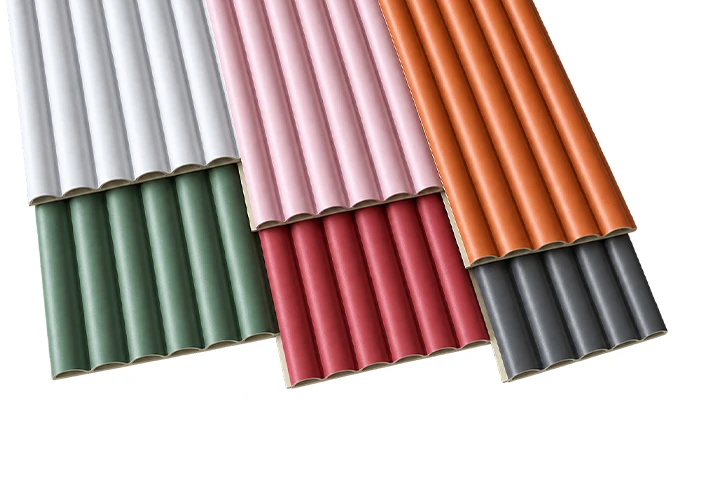
Semi circle WPC wall panels are decorative wall cladding products characterized by rounded, half-cylinder-like or semi-circular surface profiles. Multiple rounded sections are arranged side by side to create a continuous three-dimensional surface.
Although the exact geometry differs between product series, the main design principle is straightforward: the curved profile creates a more tactile and visually interesting surface than a conventional flat panel.
Understanding the Structure of Semi Circle WPC Panels
A typical semi circle WPC wall panel consists of a formed WPC body with a decorative surface finish. Depending on the manufacturer’s design, the product may use a solid, hollow, or specially engineered profile.
The main components and features can include:
- WPC base material: A composite formulation containing wood-based material, polymer, and other additives selected for the intended application.
- Semi-circular profile: The rounded surface that gives the panel its characteristic appearance.
- Decorative finish: A surface designed to provide a wood-grain effect, solid color, or another specified appearance.
- Installation structure: A mounting arrangement that may use compatible battens, framing, clips, screws, or other approved fixing methods.
- Edge and joint design: Features that help adjoining panels form a neat and visually consistent wall surface.
These details should be confirmed with the manufacturer because not all semi circle WPC wall panels share the same structure or installation requirements.
For example, a panel designed for a hotel feature wall may prioritize decorative consistency and visual depth. A panel intended for a large commercial corridor may also require careful consideration of cleaning, impact exposure, installation speed, and replacement procedures.
Semi Circle WPC Wall Panels vs. Flat WPC Wall Panels
Both product types can serve as decorative wall coverings, but they produce different visual effects.
| Comparison | Semi Circle WPC Wall Panels | Flat WPC Wall Panels |
|---|---|---|
| Surface appearance | Rounded, dimensional, sculptural | Smooth or lightly textured |
| Visual depth | Pronounced curves and shadows | Generally more restrained |
| Design character | Contemporary, decorative, architectural | Minimalist, versatile, understated |
| Feature-wall suitability | Excellent for creating focal points | Suitable for large, clean surfaces |
| Lighting interaction | Highlights curves and surface depth | Emphasizes color and surface finish |
| Cleaning considerations | Curves may require attention to dust collection | Usually easier to wipe, depending on texture |
| Design flexibility | Profile, color, spacing, and direction | Color, texture, size, and layout |
Neither product is universally better. The appropriate selection depends on the project brief, budget, desired visual effect, and maintenance expectations.
For instance, a hotel reception may benefit from semi circle WPC wall panels behind the front desk, while adjacent walls could use flat decorative panels to maintain visual balance. This combination allows designers to establish a focal point without making the entire interior feel overly complex.
Why WPC Is Used for Decorative Wall Applications
WPC is widely used in decorative building products because it can be manufactured into repeatable profiles and finished in different colors and textures.
Potential benefits of a suitable interior WPC wall panel include:
- Consistent decorative profiles across multiple panels.
- Wood-inspired finishes without relying entirely on natural timber.
- Multiple colors and surface treatments.
- Convenient modular installation when the product and fixing system are properly designed.
- Reduced dependence on natural wood grain consistency.
- Flexible design possibilities for contemporary commercial interiors.
However, buyers should not assume that every WPC product is waterproof, fire-resistant, UV-resistant, or suitable for every commercial environment. These properties depend on the specific product construction, test results, installation method, and intended use.
For B2B procurement, obtaining the manufacturer’s technical specifications before placing a bulk order is essential.
Key Benefits of Semi Circle WPC Wall Panels for Commercial Projects
Commercial building projects must balance appearance, durability, installation efficiency, maintenance, and cost. Semi circle WPC wall panels can contribute to these objectives when the product is selected and specified correctly.
Creating Distinctive Architectural Feature Walls
The most recognizable advantage of semi circle WPC wall panels is their three-dimensional surface.
Rounded profiles create alternating highlights and shadows as light moves across the wall. This effect can make a relatively simple background visually engaging without requiring complicated decorative components.
In hotel lobbies, the panels can frame the reception desk or emphasize the main entrance. In retail environments, they can distinguish branded display areas from ordinary shelving. In office buildings, a carefully selected profile can provide a contemporary background for reception signage.
Architects can also combine semi circle panels with indirect lighting, metal trims, stone surfaces, glass, or other decorative materials. The resulting design can be customized to suit different commercial positioning, from budget-conscious hospitality projects to premium retail interiors.
The key is to coordinate the panel profile with the surrounding materials. Very large profiles can create a bold visual statement, while smaller profiles may deliver a more subtle effect.
Supporting Consistent Design Across Multiple Locations
Hotel groups, retail chains, restaurant franchises, and commercial property developers often need consistent interior finishes across several locations.
A standardized semi circle WPC wall panel specification can help establish a recognizable visual identity. By specifying the same profile, color, finish, and installation direction, project teams can reproduce a similar appearance in different buildings.
For distributors and contractors, this also simplifies material planning. Once a particular panel has been approved, future orders can refer to the same technical specification and color reference.
Nevertheless, buyers should confirm batch-to-batch color consistency with the manufacturer and request physical samples before large-scale production. Lighting, screen settings, production conditions, and surface finishes can all influence perceived color.
Supporting Efficient Installation Planning
Modular wall panels can make installation planning more straightforward than some individually assembled decorative systems.
Where compatible with the product design, installers can prepare the supporting structure, establish reference lines, and install panels according to a defined sequence.
Potential project advantages include:
- Easier estimation of panel quantities.
- More systematic cutting and installation.
- Better coordination between material deliveries and construction schedules.
- More predictable alignment across large wall areas.
- Simplified replacement planning when spare materials are available.
These advantages depend on accurate dimensions, appropriate installation details, and competent workmanship. Curved decorative profiles may require extra care at corners, around outlets, and where panels meet doors, ceilings, or other finishes.
For large projects, it is advisable to complete a sample installation before proceeding with the full installation.
Providing a Wood-Inspired Decorative Appearance
Many commercial interiors use wood tones to create a warmer atmosphere. However, natural timber can introduce challenges related to grain variation, moisture conditions, maintenance, sourcing, and coordination between different batches.
Semi circle WPC wall panels can provide wood-inspired finishes with a more standardized decorative appearance.
Depending on the available collection, buyers may consider light oak, natural oak, walnut-inspired brown, teak-inspired shades, grey wood tones, or contemporary solid colors.
These finishes can complement hotel furniture, reception desks, decorative lighting, metal elements, and other interior materials.
Importers should confirm the actual surface finish offered by the manufacturer rather than relying only on a product photograph. A printed wood grain, coated surface, and through-colored profile may have different appearance and maintenance characteristics.
Helping Manage Long-Term Maintenance
Commercial wall finishes experience different levels of exposure depending on their location.
A feature wall behind a reception desk may mainly require routine dust removal. A restaurant corridor may experience more frequent contact, while retail displays can be affected by handling, cleaning, and frequent layout changes.
The maintenance requirements of semi circle WPC wall panels depend on the material formulation, finish, profile depth, and environmental conditions.
Before specifying a product, project teams should confirm:
- The manufacturer’s recommended cleaning method.
- Whether common commercial cleaning products are suitable.
- The surface’s resistance to expected abrasion and impact.
- Whether the product is appropriate for the anticipated humidity and temperature.
- How damaged panels can be removed and replaced.
- Whether the manufacturer recommends spare panels for future maintenance.
For high-traffic projects, request relevant test information and conduct a practical sample evaluation where necessary.
Evaluating Total Project Cost Rather Than Purchase Price Alone
For wholesalers and contractors, the lowest unit price does not always produce the lowest completed project cost.
The total installed cost can include the panel price, packaging, international freight, import duties, installation accessories, labor, cutting waste, maintenance, and replacement requirements.
A product with a slightly higher purchase price may offer better value if its dimensions reduce waste, its installation details suit local labor practices, or its finish meets the project specification more effectively.
AesthEdge encourages B2B buyers to evaluate semi circle WPC wall panels according to the complete project requirement rather than comparing quotations on price alone.

Commercial Applications: Where Can Semi Circle WPC Wall Panels Be Used?
Semi circle WPC wall panels are especially suitable for projects where the visual appearance of a wall plays an important role. Their use should always be evaluated against the product’s approved application, local building regulations, and any relevant fire, moisture, or indoor-air-quality requirements.
Hotel Lobbies and Reception Areas
The reception area is one of the most important visual spaces in a hotel. It establishes the first impression and helps communicate the property’s design identity.
Semi circle WPC wall panels can be used behind the reception counter, around selected architectural features, or on walls that connect the lobby to elevators and lounge areas.
A light wood finish may support a relaxed hospitality atmosphere, while a darker finish can create a more formal and sophisticated appearance.
For hotel projects, buyers should consider the following:
- Whether the profile complements the reception desk and furniture.
- Whether the panel color works with the lighting scheme.
- How the panels meet stone flooring, metal trims, and ceiling finishes.
- Whether the selected product satisfies applicable fire-safety requirements.
- How the surface will be cleaned and maintained during hotel operations.
For large hospitality projects, sample approval and mock-up installation are particularly valuable because the final appearance depends heavily on lighting and surrounding materials.
Hotel Corridors and Guestroom Background Walls
Guestroom background walls and selected corridor walls can benefit from dimensional decorative surfaces.
Semi circle WPC wall panels may be used behind a headboard, around a decorative niche, or on a feature wall near a lounge or seating area. Their rounded profiles can soften the appearance of an interior dominated by straight lines and flat surfaces.
However, the design must account for furniture clearance, electrical outlets, bedside lighting, headboard dimensions, and maintenance access.
Hotel corridors require additional attention to cleaning, impact exposure, escape-route requirements, and fire performance. Decorative suitability alone is not sufficient to establish that a panel is appropriate for these areas.
Office Buildings and Corporate Reception Areas
Modern offices frequently use decorative walls to communicate company identity and create a professional atmosphere.
Semi circle WPC wall panels can be incorporated into reception backgrounds, meeting-room entrance walls, collaboration areas, and selected common spaces.
Corporate projects may favor neutral grey, natural oak, muted brown, or other colors that work with glass partitions and metal framing.
For multi-floor developments, standardizing the profile and finish can help maintain visual consistency while allowing individual spaces to use different layouts.
Where panels are installed near workstations or meeting rooms, buyers should also evaluate the complete wall assembly’s acoustic performance rather than assuming that a decorative WPC surface will provide meaningful sound insulation.
Shopping Malls and Retail Stores
Retail design depends on creating recognizable display areas and guiding customers through a space.
Semi circle WPC wall panels can be used behind product displays, around selected brand signage, or in feature areas near store entrances.
The rounded profile can create a contrasting background for merchandise without requiring the entire store to use expensive custom millwork.
Retail projects also benefit from flexible color coordination. A distributor may offer neutral finishes for general retail developments and more distinctive colors for branded stores.
Where displays change frequently, consider how fixtures will be mounted, whether the panels can support the intended loads, and whether the installation system permits future alterations.
Heavy merchandise, shelving, and suspended equipment should be fixed to suitable structural supports rather than relying on a decorative panel unless the system has been specifically engineered for that purpose.
Restaurants, Cafés, and Hospitality Venues
Restaurants and cafés use wall finishes to establish atmosphere and reinforce brand identity.
Semi circle WPC wall panels can create a warm background behind seating areas, counter fronts, waiting areas, and selected feature walls. Their rounded geometry may also work well with curved furniture, pendant lighting, and contemporary interior layouts.
For food-service environments, maintenance is especially important. Panels near preparation areas, sinks, or other wet zones must be selected according to their actual moisture resistance and approved installation conditions.
Do not assume that an interior decorative WPC panel is appropriate for direct water exposure, commercial kitchens, or areas subject to frequent grease and chemical cleaning.
Commercial Apartments, Clubhouses, and Mixed-Use Developments
Residential-style amenities within commercial developments often require a balance between appearance, durability, and cost control.
Semi circle WPC wall panels may be considered for clubhouse reception areas, lounge backgrounds, shared meeting spaces, and selected common areas.
Developers can establish a standard material palette for multiple buildings while using different colors or panel orientations to distinguish individual zones.
The best approach is to establish a project specification early, approve physical samples, and maintain a record of the selected product, color, dimensions, and installation details.
Custom Semi Circle WPC Wall Panels: Design Options for B2B Buyers
Customization is an important consideration when purchasing semi circle WPC wall panels directly from a Chinese manufacturer.
Commercial buyers rarely need only a decorative panel in a generic color. They may require a particular profile, coordinated finishes, specific lengths, packaging labels, or technical documents that align with a project specification.
The exact customization options depend on the manufacturer’s existing molds, production capabilities, order quantity, and material requirements.
At AesthEdge, B2B buyers can discuss project-specific requirements for WPC wall panels and related decorative materials. The following areas provide a practical framework for preparing a customization inquiry.
Profile Design and Semi-Circular Dimensions
The dimensions of the rounded profile influence the overall appearance of the wall.
A deeper profile may produce stronger shadows and a more pronounced three-dimensional effect. A smaller profile can create a finer, more repetitive texture.
Important dimensions to confirm include:
- Overall panel width.
- Overall panel thickness or depth.
- Length of each panel.
- Width and radius of the rounded section.
- Spacing between profiles.
- Joint and edge dimensions.
- Weight per panel or per square meter.
These measurements affect not only aesthetics but also packaging, transportation, installation, and material consumption.
For example, a hotel designer may prefer a pronounced semi-circular profile for a reception wall, while an office developer may choose a shallower design for a more restrained finish.
If a project requires a non-standard profile, ask whether an existing product can satisfy the design brief before requesting a new mold. Existing profiles may help reduce development costs and shorten lead times.
Color and Surface Finish Customization
Color is one of the most influential decisions in commercial interior design.
The same profile can produce very different visual results when finished in pale oak, walnut brown, charcoal grey, white, or a contemporary neutral shade.
Common design directions include:
| Design direction | Typical color choices | Potential applications |
|---|---|---|
| Natural and warm | Light oak, natural wood, teak-inspired shades | Hotels, cafés, lounges |
| Premium and formal | Walnut brown, dark wood tones | Reception areas, executive spaces |
| Contemporary and neutral | Grey, greige, charcoal | Offices, commercial corridors |
| Bright and minimalist | White, pale neutral shades | Retail interiors, modern common areas |
| Brand-led design | Approved custom color references | Franchises, branded commercial projects |
Actual availability must be confirmed with AesthEdge.
For projects requiring color matching, provide a physical reference sample or an agreed color specification. Digital images alone are not sufficient for precise color approval because screen calibration, lighting, and photography can change the perceived appearance.
For large orders, buyers should approve a production sample and agree on acceptable color variation before mass production begins.
Panel Length and Project-Specific Sizing
Standard panel dimensions can simplify procurement and production. However, commercial projects may have different wall heights, room layouts, ceiling details, and shipping restrictions.
Customized lengths can potentially reduce cutting waste and installation joints, depending on the project.
When evaluating panel sizes, consider:
- Finished wall height and width.
- Direction of panel installation.
- Number and location of internal and external corners.
- Door openings, windows, outlets, and other obstructions.
- Packaging dimensions and container-loading efficiency.
- The local installer’s ability to handle and cut the panels safely.
Longer panels may reduce visible joints but can also be more difficult to handle, package, and transport. Shorter panels may be easier to manage in confined spaces but can increase the number of joints.
The optimal size is therefore a balance between appearance, logistics, and installation conditions.
Surface Texture and Decorative Coordination
A semi circle WPC wall panel’s finish can be selected to coordinate with other interior materials.
For example, a wood-inspired curved panel may complement a smooth stone-look wall, a metal trim, or a neutral-colored decorative board. Alternatively, a solid-color profile can provide contrast against a timber-effect reception counter.
When developing a material palette, project teams should evaluate the actual samples together under representative lighting conditions.
AesthEdge can discuss coordinated decorative material selections with B2B customers, helping buyers consider how WPC wall panels fit within a broader interior finishing package.
The purpose of coordination is not to make every surface identical. It is to establish a consistent design language while allowing individual materials to perform different visual roles.
OEM, ODM, and Private-Label Requirements
Importers and established building material distributors may wish to develop their own product range rather than sell only standard factory products.
Depending on project requirements and production capabilities, OEM or ODM discussions may cover:
- Agreed profile and product specifications.
- Custom color selections.
- Product labels and packaging artwork.
- Carton markings and shipping labels.
- Product codes and specification sheets.
- Sample development and approval procedures.
- Repeat-order specifications.
Buyers should distinguish between a standard customization and a genuinely new product-development project. A new profile may require tooling, testing, trial production, and additional approvals.
Before confirming an order, establish the minimum order quantity, sample costs, tooling costs if applicable, production lead time, and ownership or permitted use of any custom designs.
These details help prevent misunderstandings and provide a clearer basis for long-term cooperation.
How to Choose a Reliable Semi Circle WPC Wall Panel Manufacturer in China
Selecting a reliable manufacturer is a critical step for importers, wholesalers, contractors, and project procurement teams.
China offers a broad range of decorative building material suppliers, but product appearance, technical performance, customization capability, and export service can differ substantially.
A competitive quotation is useful only when the proposed product matches the project requirement.
Confirm the Manufacturer’s Product Expertise
Start by identifying whether the supplier actually manufactures the relevant WPC wall panel or only trades products sourced from other factories.
Ask for current product specifications, photographs of production or inspection processes, samples, and clear explanations of the manufacturing arrangements.
A capable supplier should be able to explain the product structure, material options, dimensions, installation requirements, and limitations.
For semi circle profiles, it is particularly important to confirm that the manufacturer can consistently reproduce the rounded geometry and decorative finish required by the project.
Buyers should also distinguish between factory capability and the performance of an individual product. A supplier’s general experience does not replace the need for product-specific technical documentation.
Review Product Quality and Technical Documentation
Commercial projects may require documentation related to dimensions, material composition, emissions, fire performance, or other properties.
The required documents depend on the market, building type, project specification, and applicable regulations.
A practical review checklist includes:
- Product technical data sheet.
- Agreed dimensions and dimensional tolerances.
- Material and finish description.
- Relevant test reports or certificates, where applicable.
- Installation instructions.
- Cleaning and maintenance recommendations.
- Packaging and handling details.
- Warranty terms and exclusions.
Where fire performance is required, verify the exact classification and supporting test documentation for the product and, where relevant, the complete installed assembly. Do not assume that a general certificate for a different product establishes compliance.
Likewise, a moisture-resistant surface does not automatically make the complete wall system suitable for showers, exterior use, or permanently wet conditions.
Evaluate Sampling and Pre-Production Approval
Samples allow buyers to evaluate the actual product rather than relying solely on digital images.
A proper sample review should cover color, profile geometry, finish consistency, dimensional accuracy, and compatibility with adjacent materials.
For a large hotel or commercial development, a mock-up is often more informative than a small loose sample because it shows how the panels look when installed together.
The approval process can include:
- Requesting samples of the proposed profile and finish.
- Reviewing the samples with the designer or project owner.
- Checking the installation method and accessories.
- Approving a reference sample.
- Recording the accepted product specification.
- Confirming inspection criteria before mass production.
If several batches will be supplied over time, retain an approved reference sample and agree on a procedure for evaluating any differences.
Check Production Capacity and Order Management
A large commercial project may require several deliveries, coordinated packaging, and consistent product specifications.
Ask the supplier how production schedules are planned, how raw materials and finished products are inspected, and how any nonconforming items are handled.
Other questions worth addressing include:
- Can the factory support the required order quantity?
- Is the product a standard item or a custom development?
- What is the normal production lead time?
- How are repeat orders matched to the approved specification?
- Can cartons be labeled by color, size, or project area?
- Are spare panels available for future maintenance?
- What happens if goods are damaged or specifications are not met?
A clear process reduces the likelihood of delays and helps project teams coordinate deliveries with installation schedules.
Consider Export Packaging and Logistics
Decorative panels can be vulnerable to surface damage, pressure, moisture during transit, and mishandling.
Packaging should protect the finished surface and the edges while remaining practical for loading, unloading, and warehouse storage.
For bulk orders, confirm the following with the manufacturer:
- Number of panels per carton or package.
- Net and gross weight.
- Package dimensions.
- Pallet or protective packing arrangements, where required.
- Container-loading plan.
- Product labels and shipping marks.
- Inspection arrangements before dispatch.
International buyers should also confirm the applicable trade terms, destination port, shipping arrangements, insurance responsibilities, customs requirements, and import taxes.
These costs can materially affect the landed price and should be considered when comparing suppliers.
Why Work with AesthEdge?
AesthEdge serves international B2B customers looking for decorative building materials from China. Its product focus includes WPC wall panels and other interior finishing solutions.
For importers, wholesalers, architects, and commercial project contractors, the value of working directly with a factory supplier can include closer communication about product specifications, coordination of samples, discussion of customized requirements, and clearer production planning.
When discussing a semi circle WPC wall panel project with AesthEdge, buyers should provide their target dimensions, color preferences, estimated order quantity, destination market, and intended application.
This information helps establish whether an existing product is suitable or whether additional customization needs to be evaluated.
Rather than choosing a supplier on price alone, B2B buyers should assess the complete combination of product fit, manufacturing consistency, documentation, packaging, and communication.
Semi Circle WPC Wall Panel Specifications, Installation, and Quality Control
Successful commercial procurement requires more than selecting a color and agreeing on a price. The technical details of the panel and its installation must be suitable for the building environment.
The following considerations can help project teams prepare a clearer specification.
Essential Product Specifications
The exact specifications of semi circle WPC wall panels vary by product model. Buyers should request a model-specific data sheet rather than relying on generic industry descriptions.
| Specification | Why it matters |
|---|---|
| Panel width | Determines coverage and material quantity |
| Panel length | Influences joint placement, cutting, and handling |
| Overall depth | Affects wall projection and visual impact |
| Rounded profile dimensions | Determines the semi-circular appearance |
| Material composition | Helps evaluate intended use and product consistency |
| Surface finish | Determines color, texture, and cleaning requirements |
| Weight | Affects handling and support-system design |
| Installation method | Determines fixing details and labor requirements |
| Fire-performance documentation | Supports compliance checks where required |
| Warranty conditions | Clarifies coverage and product limitations |
If the project requires specific acoustic, environmental, or fire-related performance, request the appropriate evidence before product approval.
Decorative WPC wall panels should not automatically be described as soundproof, fireproof, or environmentally certified without supporting product-specific information.
How to Estimate the Quantity Required
Accurate quantity estimation helps avoid unnecessary material costs and project delays.
For a simple rectangular wall, the gross wall area can be calculated as:

For example, a wall measuring 12 meters wide and 3 meters high has a gross area of 36 square meters.
If the specified panel system provides an effective coverage width of 0.2 meters and each panel is 3 meters long, the theoretical coverage of each panel is:

The theoretical requirement would therefore be:

This calculation is illustrative only. The effective coverage width must be confirmed from the manufacturer’s actual installation specification, and the final quantity should account for openings, panel orientation, joints, edge details, and cutting waste.
For a complex feature wall, prepare a panel layout or shop drawing before placing the final order.
A suitable waste allowance should be based on the layout and installation conditions rather than applying the same percentage to every project.
Installation Preparation and Supporting Structure
The installation method depends on the panel design, wall substrate, product weight, and local requirements.
Before installation, the contractor should confirm that the substrate is suitable, stable, and sufficiently level for the specified mounting system.
Typical preparation tasks may include:
- Checking wall dimensions and alignment.
- Identifying electrical outlets, pipes, doors, and other obstructions.
- Confirming the approved fixing method.
- Establishing reference lines.
- Checking the moisture condition of the substrate.
- Preparing compatible tools and accessories.
- Verifying that panels have been stored according to the manufacturer’s instructions.
Where a batten or framing system is used, the spacing and fixing details must follow the product instructions and the requirements of the project.
Do not assume that adhesive alone is sufficient for every substrate or application. Similarly, do not select screws, anchors, or other fasteners without checking compatibility with the panel and supporting wall.
Installation Details Around Corners and Openings
The finished appearance of semi circle WPC wall panels depends heavily on detailing.
Corners, door frames, ceilings, skirting, and transitions to other materials should be planned before installation begins.
Potential solutions may include compatible trims, carefully cut panel edges, coordinated profiles, or project-specific detailing.
Installers should pay attention to:
- Consistent alignment of the rounded profiles.
- Uniform joint appearance.
- Neat terminations at ceilings and floors.
- Accurate cuts around electrical outlets.
- Proper support near panel edges.
- Required expansion clearances, if specified.
- Compatibility between the panel finish and trim materials.
A sample installation can help identify detailing problems before they affect a large area.
For high-visibility reception walls, it is particularly useful to agree on the joint layout and edge treatment with the architect or interior designer.
Quality Control Before Shipment
A structured quality-control process helps reduce the risk of receiving panels that do not match the approved sample.
Buyers can agree on inspection criteria with AesthEdge before production begins.
A practical inspection plan may cover:
- Appearance: Check surface finish, color consistency, scratches, and visible defects.
- Dimensions: Measure panel length, width, and depth against the approved specification.
- Profile geometry: Verify the rounded shape and consistency across the batch.
- Packaging: Check whether panels are adequately protected for the intended transport conditions.
- Quantity: Confirm the number of cartons and units against the packing list.
- Documentation: Ensure that the agreed product data and shipping documents are available.
Where the order is large or the project has strict acceptance requirements, buyers may arrange a pre-shipment inspection by an agreed internal or third-party inspection provider.
Inspection criteria, sampling procedures, and acceptable defect levels should be defined before the order is manufactured.
Maintenance and Replacement Planning
A maintenance plan helps commercial property operators preserve the appearance of decorative wall surfaces.
For most decorative panel products, the manufacturer’s cleaning recommendations should be followed closely. Avoid assuming that harsh solvents, abrasive pads, or strong chemicals are compatible with the surface finish.
Project teams should also record the product model, color reference, batch information, and installation location.
Keeping a reasonable quantity of spare panels can simplify repairs if damage occurs after handover. This is especially valuable for hotel operators, retail chains, and commercial property managers who need to maintain a consistent appearance over many years.
Bulk Purchasing Guide: MOQ, Pricing, Lead Time, and Import Considerations
For international B2B buyers, the purchasing process should be structured around the commercial requirements of the project.
The price of semi circle WPC wall panels cannot be determined accurately from the product name alone. Profile dimensions, material formulation, finish, panel length, customization, order quantity, and packaging can all affect the quotation.
What Determines the Price of Semi Circle WPC Wall Panels?
The following factors commonly influence the factory quotation.
| Cost factor | Potential impact |
|---|---|
| Profile design | Complex or non-standard profiles may require additional development |
| Material formulation | Different material compositions and performance requirements affect cost |
| Panel dimensions | Length, thickness, and profile geometry influence material consumption |
| Surface finish | Specialized colors and finishes may affect production costs |
| Order quantity | Larger orders may improve production and packaging efficiency |
| Customization | New tooling, special colors, or custom labeling may add costs |
| Packaging | Export protection and special packing requirements affect the quotation |
| Logistics | Freight, insurance, duties, and local handling affect landed cost |
For a fair comparison, ask each supplier to quote against the same product specification, quantity, packaging requirements, and trade terms.
A lower price is not necessarily a better offer if the profile dimensions, material quality, effective coverage, or documentation differ.
MOQ and Sample Orders
Minimum order quantity depends on the manufacturer’s product range and the degree of customization.
For standard products, a factory may have different quantity requirements than for a new profile or special color. Custom manufacturing may involve additional setup costs or minimum production batches.
Before requesting a quotation, buyers should clarify whether they need:
- A small sample for design evaluation.
- A pilot order for a local market test.
- A bulk order for a single commercial project.
- Repeat shipments for a distributor’s inventory.
- A customized product for a private-label collection.
Samples are particularly important when the product will be installed in a hotel, office building, retail store, or other high-visibility commercial environment.
If the project is still in the design stage, request the estimated costs and lead times for both standard and customized options.
Production Lead Time and Delivery Scheduling
Production lead time depends on the product, order quantity, factory schedule, raw material availability, and whether customization is required.
A standard product may follow a different schedule from a new profile that needs tooling and trial production.
For commercial projects, it is important to coordinate the delivery schedule with the installation plan. Panels that arrive too early may require additional storage, while late deliveries can delay contractors and other trades.
A procurement schedule should allow time for:
- Sample preparation and delivery.
- Design and color approval.
- Final quantity confirmation.
- Production and quality inspection.
- Packaging and export documentation.
- International transportation and customs clearance.
- Local delivery to the project site.
Do not rely on a generic lead-time estimate when planning a fixed opening date. Obtain a project-specific production and shipping schedule from the supplier.
How Importers Should Compare Factory Quotations
When comparing Chinese WPC wall panel manufacturers, use a consistent request-for-quotation format.
Include the following information:
- Product type: semi circle WPC wall panel.
- Required profile dimensions.
- Panel length and effective coverage.
- Preferred color and finish.
- Estimated quantity.
- Intended application.
- Destination country and port.
- Packaging requirements.
- Required test reports or certifications.
- Delivery deadline.
- Requested trade terms.
- Customization and labeling requirements.
Then compare the quotations on an equivalent basis.
For example, a quotation based on standard packaging and a different panel coverage should not be compared directly with a customized quotation that includes additional export protection.
Ask suppliers to identify exclusions and additional charges clearly. This makes it easier to calculate the total landed cost and evaluate the overall commercial value.
What Information Should You Send to AesthEdge?
To help AesthEdge evaluate your requirements and prepare a more useful quotation, provide as much of the following information as possible:
| Information | Example |
|---|---|
| Buyer type | Importer, wholesaler, contractor, or project developer |
| Application | Hotel reception, office lobby, retail feature wall |
| Product requirement | Semi circle WPC wall panel |
| Dimensions | Target width, depth, and length |
| Color | Oak, walnut, grey, or custom reference |
| Quantity | Estimated square meters or number of panels |
| Customization | Standard profile, custom finish, or private label |
| Destination | Country and destination port |
| Delivery schedule | Required arrival or installation date |
| Documentation | Applicable technical or regulatory requirements |
If the exact specifications are not yet finalized, start with the project drawings, reference photographs, approximate wall dimensions, and preferred design direction.
The factory can then assess which existing products may be suitable and identify any specifications that require further confirmation.
Why a Long-Term Factory Relationship Matters
For importers and distributors, a reliable supply relationship can be more valuable than a one-time low-price purchase.
Consistent specifications, repeatable colors, clear communication, and coordinated shipping arrangements help buyers manage inventory and support their own customers.
For contractors, the main benefits may include clearer technical coordination, timely sample approval, and more predictable deliveries.
For architects and developers, a direct line of communication with the supplier can help resolve questions about profile dimensions, finish options, and installation details earlier in the design process.
AesthEdge aims to support international B2B customers looking for decorative building materials from China. Buyers should establish clear specifications and written approval procedures from the beginning to support a productive long-term relationship.
Conclusion: Choose AesthEdge for Semi Circle WPC Wall Panel Project Discussions
Semi circle WPC wall panels provide commercial designers with a distinctive way to introduce curved profiles, three-dimensional texture, and wood-inspired finishes into contemporary interiors.
Their potential applications include hotel reception areas, guestroom feature walls, office lobbies, retail displays, restaurants, cafés, and selected common areas within commercial developments.
For importers, wholesalers, and project contractors, the main purchasing considerations extend beyond appearance. Profile dimensions, material formulation, surface finish, installation requirements, relevant technical documentation, packaging, production lead time, and total landed cost all influence whether a product is suitable for a particular project.
Customization can provide additional flexibility. By coordinating the panel profile, color, length, and finish with the overall interior design, buyers can create a more consistent result across individual buildings or multi-location developments.
As a China factory brand focused on decorative building materials, AesthEdge welcomes inquiries from international B2B buyers interested in semi circle WPC wall panels and related interior finishing products.
Whether you are sourcing materials for a hotel renovation, a commercial construction project, a wholesale product range, or a private-label collection, begin by defining your technical requirements and approving a representative sample.
Contact AesthEdge to discuss your project specifications, customization requirements, and bulk purchasing needs.