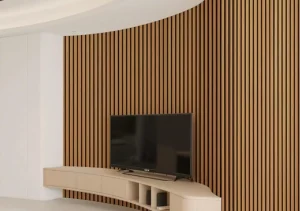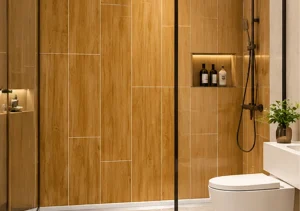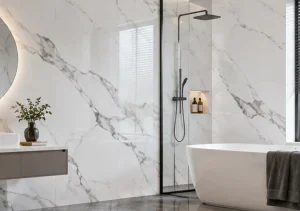
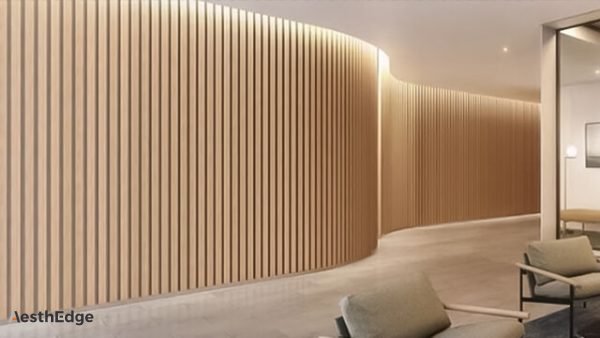
PU stone wall panels have become increasingly popular in commercial interiors, hospitality projects, residential developments, feature walls, retail spaces, and lightweight architectural decoration. Compared with traditional natural stone, PU stone panels offer a combination of lightweight construction, realistic stone textures, easier installation, and comparatively lower transportation and labor requirements.
For importers, wholesalers, distributors, contractors, and project buyers, however, one question remains important: How has the price of PU stone wall panels changed over the past five years, and what is the expected price per square meter today?
The answer is not as simple as looking at one fixed factory price. PU stone wall panel prices are affected by polyurethane raw material costs, mold and texture complexity, panel thickness, surface finishing, production volume, packaging, freight, exchange rates, and order quantity. Current Chinese wholesale listings show that PU stone panels can occupy a relatively broad price range depending on specification and purchasing volume. For example, some China suppliers currently list products from around USD 4–7/m² for higher-volume standard products, while other hospitality-oriented products are quoted around USD 8–18/m² depending on thickness, mold quality, and order size.
This article examines the PU stone wall panel price per square meter from 2021 through 2025, explains the major factors behind price movements, and discusses what buyers should consider when sourcing from a China factory such as AesthEdge.
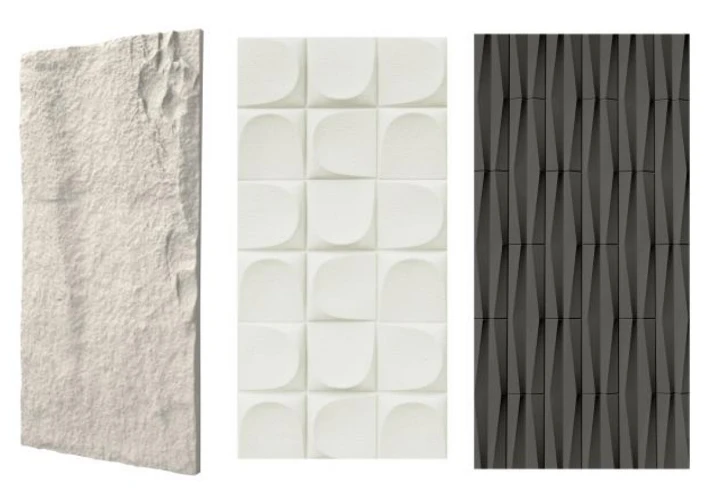
PU Stone Wall Panel Price per Square Meter: A Five-Year Overview
There is no universally published global price index specifically for finished PU stone wall panels. This is because PU stone panels are manufactured in many different specifications and are commonly quoted directly by factories rather than through a standardized commodity exchange.
Therefore, when analyzing five-year price trends, it is more useful to separate raw-material trends from finished-panel pricing.
The following table provides a practical sourcing-oriented overview rather than claiming a single global market price:
| Year | General PU Stone Panel Price Trend | Typical China Factory Price Direction | Main Influencing Factors |
|---|---|---|---|
| 2021 | Rising | Low to moderate | Raw material recovery, logistics pressure |
| 2022 | Relatively high/volatile | Moderate to high | Energy, feedstock, freight and supply-chain disruption |
| 2023 | Correction/stabilization | Moderate | Lower freight pressure and softer raw-material prices |
| 2024 | Relatively stable | Moderate | Manufacturing competition and stable supply |
| 2025 | Gradual movement upward in some specifications | Moderate | PU-related input costs, labor and customized products |
| 2026 | Specification-dependent | Broad range | Raw material, logistics, design, order volume and market demand |
A recent PU soft-stone price guide gives factory-level reference ranges of approximately USD 5.50–7.50/m² for 3 mm panels, USD 6–8/m² for 5 mm, USD 7–10/m² for 8 mm, and USD 9–12/m² for 10 mm panels. These figures should be treated as reference ranges rather than universal quotations because actual prices vary by design, order quantity, surface treatment, packaging, and destination.
The most important point for B2B buyers is that the price of PU stone wall panels has not moved in a simple straight line over the past five years.
Instead, the market experienced periods of rapid cost increases, correction, stabilization, and renewed cost pressure.
2021: The Beginning of Strong Cost Pressure
The 2021 construction-material market was significantly affected by the global recovery following the initial COVID-19 disruption.
Manufacturers faced rising costs for several categories of materials, while international logistics became increasingly expensive and less predictable. These factors affected not only finished building materials but also polyurethane-related products.
For PU stone wall panels, the major cost components include:
- Polyurethane raw materials
- Pigments and additives
- Surface coatings
- Molds and tooling
- Labor
- Electricity
- Packaging
- Domestic transportation
- Export logistics
Polyurethane raw material pricing also experienced a noticeable increase during this period. U.S. producer-price data for polyurethane foam products, for example, shows a significant increase during 2021, with the index moving from approximately 150 in early 2021 to more than 170 later in the year.
Another important issue was logistics.
A factory could manufacture a panel at a relatively stable cost while the final export quotation still increased because container availability, shipping rates, and delivery uncertainty were becoming more challenging.
For B2B buyers, this meant that comparing only the factory price per square meter could be misleading.
A lower product price could be offset by:
- Higher freight costs
- Larger packaging volume
- Higher minimum order requirements
- Longer lead times
- Higher damage rates during transportation
Therefore, 2021 marked an important period when buyers began paying more attention to total landed cost, rather than simply the ex-factory PU stone panel price.
2022: High and Volatile PU Stone Panel Pricing
In 2022, cost pressure remained significant.
Polyurethane foam and related raw materials were affected by energy costs, feedstock availability, transportation conditions, and international supply-chain disruptions. Industry analysis also identified MDI and TDI as important factors influencing polyurethane foam production costs.
For PU stone wall panels, this created several effects.
First, the cost of polyurethane-related inputs remained relatively elevated.
Second, energy-intensive production and transportation became more expensive.
Third, many factories needed to adjust quotations more frequently because input costs were changing faster than long-term project contracts.
This was particularly important for large commercial projects.
Imagine an importer ordering 5,000 m² of PU stone wall panels.
A price difference of only USD 1/m² represents:
5,000 m² × USD 1 = USD 5,000
Therefore, even a small change in the panel quotation could materially affect project purchasing costs.
At the same time, buyers should not assume that every PU stone panel experienced the same percentage increase.
A basic 3–5 mm decorative panel and a heavily textured 8–10 mm architectural panel have different material consumption, mold requirements, packaging volumes, and labor costs.
Consequently, the price trend for one PU stone design cannot automatically be applied to another.
2023: Price Correction and Market Stabilization
After the extreme volatility of the previous period, 2023 brought greater stabilization to many polyurethane-related markets.
U.S. producer-price data for polyurethane foam products shows the index moving downward during much of 2023 after reaching higher levels in the previous year.
This created an opportunity for manufacturers to stabilize quotations.
Freight conditions also became less extreme compared with the earlier supply-chain disruption.
For PU stone wall panel buyers, the result was a market in which:
- Factory quotations became easier to compare
- Shipping became more predictable
- Raw-material volatility moderated
- Manufacturers faced stronger price competition
- Buyers became more price-sensitive
However, a lower raw-material or freight cost did not necessarily translate into an equally large reduction in the finished product price.
Manufacturers still had to account for:
- Labor
- Factory overhead
- Mold maintenance
- Quality control
- Packaging materials
- Equipment depreciation
- Warehousing
- Administrative costs
- Product development
In addition, PU stone panels are not simply commodities. A significant portion of their value comes from appearance and manufacturing consistency.
For example, a realistic stacked-stone texture with precise color variation and consistent dimensions requires more production control than a basic flat decorative panel.
Therefore, 2023 was better described as a period of price normalization rather than a universal collapse in PU stone panel prices.
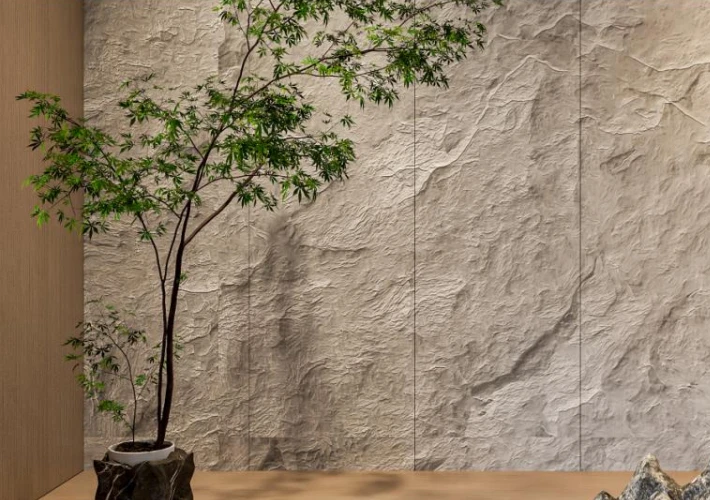
2024: Stable Pricing with Greater Product Differentiation
By 2024, the PU stone wall panel market had become increasingly differentiated.
Rather than having one simple “PU stone price,” buyers could find products positioned at different levels:
Economy PU Stone Panels
These are generally designed for high-volume decorative applications.
Typical characteristics include:
- Standard textures
- Standard colors
- Relatively thin construction
- Large production runs
- Simple packaging
These products compete heavily on price.
Mid-Range PU Stone Panels
These products typically offer:
- More realistic textures
- Better surface finishing
- More color choices
- Improved dimensional consistency
- Better packaging
They are commonly used for hotels, restaurants, commercial interiors, villas, and feature walls.
Premium PU Stone Panels
Premium products can include:
- More complex molds
- Deeper three-dimensional textures
- Customized colors
- Special coatings
- Project-specific designs
- Higher quality-control requirements
These products can command substantially higher prices per square meter.
This differentiation explains why two factories can quote very different prices for products that are both described as “PU stone wall panels.”
A low quotation is not necessarily comparable with a high quotation unless the buyer confirms:
thickness + density + dimensions + texture + coating + accessories + packaging + quantity.
2025: What Happened to PU Stone Wall Panel Prices?
In 2025, polyurethane-related pricing showed a more mixed picture.
For example, one recent market analysis estimated global polyurethane pricing at approximately USD 1,920/MT in Q1 2025 and around USD 2,090/MT by Q4, representing a gradual increase during the year. For China, the same source estimated an increase from slightly above USD 1,780/MT to just under USD 1,900/MT during 2025.
Polyol pricing also varied by region and quarter. An industry update reported China polyol pricing at approximately USD 1,261/MT in Q3 2025, with a quarter-on-quarter decrease of 1.48%, illustrating why a single annual price number does not fully describe procurement conditions.
This distinction is important.
The price of finished PU stone wall panels depends on more than the PU component alone.
If raw-material prices increase by 5%, the finished product does not automatically increase by 5%.
For example, assume a factory’s cost structure is approximately:
| Cost Component | Example Share |
|---|---|
| PU-related materials | 40% |
| Surface treatment | 10% |
| Labor | 15% |
| Packaging | 8% |
| Factory overhead | 12% |
| Other costs | 15% |
If PU-related material costs increase by 10%, the direct impact on the total production cost would be much lower than 10%.
This is why buyers should examine the complete cost structure instead of using raw polyurethane prices as a direct predictor of panel prices.
What Is the Current PU Stone Wall Panel Price per Square Meter?
For B2B sourcing, there is no single universal price.
Current China factory quotations can vary significantly depending on product specification. Published China supplier listings show examples around USD 4.39–6.89/m² for higher-volume standard products, while another current hospitality-oriented reference gives approximately USD 8–18/m² depending on thickness, mold quality, and order volume.
A practical sourcing framework can therefore look like this:
| Product Type | Indicative China Factory Price |
|---|---|
| Basic thin PU stone panel | About USD 5–8/m² |
| Standard decorative PU stone panel | About USD 7–12/m² |
| Thicker/deeper texture panel | About USD 9–15/m² |
| Premium/custom PU stone panel | About USD 12–18+/m² |
These are indicative market references, not fixed AesthEdge quotations.
For a real project, buyers should request a quotation based on:
- Panel thickness
- Panel size
- Texture
- Color
- Quantity
- Packaging
- Destination
- Incoterm
- Accessories
- Customization requirements
This approach produces a much more useful price comparison.
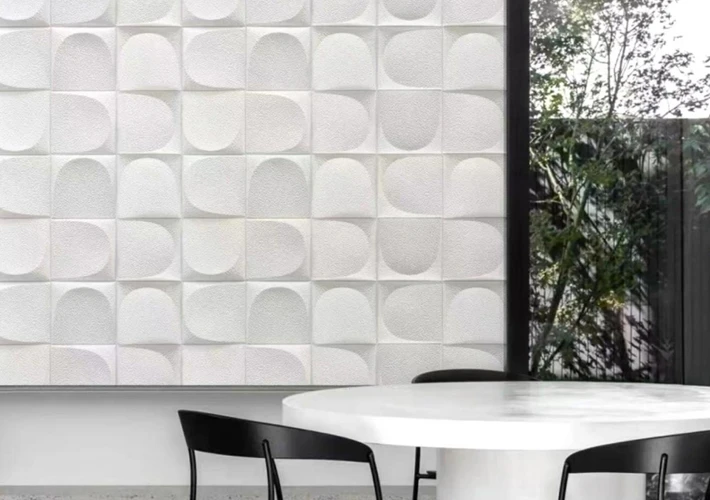
What Factors Will Affect PU Stone Wall Panel Prices?
1. Panel Thickness
Thickness is one of the most straightforward pricing factors.
A thicker PU stone wall panel generally requires more material and may require different molding and production parameters.
For example, a 3 mm decorative panel cannot be directly compared with a 10 mm deep-texture panel.
When comparing quotations, always ask for the exact thickness.
2. Surface Texture
Texture complexity also affects manufacturing cost.
Simple brick patterns can generally be manufactured more efficiently than highly detailed stone textures with irregular three-dimensional surfaces.
Complex molds may require more development time and greater quality control.
3. Panel Density
Density affects both material consumption and physical performance.
Two panels with the same thickness can have different weights because their densities are different.
Therefore, a buyer comparing only USD/m² without checking weight per square meter may not be comparing equivalent products.
4. Color and Surface Finish
Standard colors are generally easier to produce in volume.
Custom colors can require:
- New color matching
- Trial production
- Additional quality inspection
- Minimum order quantities
Special surface coatings can also increase the cost.
5. Order Quantity
Quantity has a major influence on factory pricing.
A buyer ordering 200 m² may receive a significantly different quotation from a buyer ordering 5,000 m².
Large orders allow manufacturers to distribute:
- Mold costs
- Setup costs
- Packaging costs
- Production management costs
across more units.
This is particularly relevant for wholesalers and distributors.
6. Packaging
PU stone panels are lightweight but relatively bulky.
This means packaging efficiency can have a meaningful effect on shipping economics. One current industry source notes that PU stone panels can have relatively low container weight while still consuming considerable container volume.
For international buyers, ask the factory:
How many square meters can be loaded into a 20GP or 40HQ container?
This question may be more useful than asking only for the product price.
7. Destination and Freight
The final delivered cost depends on:
Product Price + Inland Freight + Port Charges + Ocean Freight + Insurance + Import Costs + Local Delivery
A factory offering a lower FOB price may not necessarily provide the lowest landed cost.
For project purchasing, landed cost per square meter should therefore be calculated before making a supplier decision.
How Can B2B Buyers Control PU Stone Wall Panel Costs?
The first step is to standardize the specification.
Instead of asking several factories:
“How much is your PU stone wall panel?”
send the same technical requirements to each supplier.
For example:
- Product: PU stone wall panel
- Thickness: 5 mm
- Size: Customized
- Texture: Stacked stone
- Color: Grey
- Surface: Matte
- Quantity: 2,000 m²
- Packaging: Export carton
- Destination: Named port
- Required documents: Commercial invoice, packing list and relevant product documentation
This creates an apples-to-apples comparison.
The second step is to separate product cost from logistics cost.
Request both:
FOB price per m²
and
Estimated landed cost per m²
The third step is to consider annual purchasing volume.
A distributor with recurring orders may negotiate better pricing by establishing an annual purchasing agreement rather than negotiating every shipment independently.
Why Buying Directly from a China PU Stone Wall Panel Factory Can Matter
For B2B buyers, purchasing directly from a factory can provide advantages beyond the basic product price.
A direct manufacturer can potentially provide:
- Factory pricing
- Custom textures
- Custom colors
- OEM services
- ODM development
- Flexible packaging
- Production scheduling
- Quality inspection
- Sample development
- Technical support
AesthEdge operates as a China-based manufacturer and supplier of decorative wall materials, serving B2B customers looking for architectural and interior finishing solutions.
For importers, wholesalers, contractors, hotel procurement teams, and distributors, direct factory communication can make it easier to discuss technical specifications before placing a large order.
For customized PU stone wall panels, this is especially important because the quotation depends heavily on the exact design.
A buyer may initially request a price for “PU stone,” but the final quotation can change after confirming thickness, texture, dimensions, color, coating, packaging, and quantity.
PU Stone Wall Panel Price Forecast: What Should Buyers Expect?
Predicting an exact PU stone wall panel price five years into the future is difficult because finished-panel pricing is influenced by several independent variables.
However, buyers can monitor several indicators.
Polyurethane Raw Materials
PU-related feedstocks remain one of the most important cost variables.
Changes in MDI, TDI, polyol, energy, and chemical feedstock prices can eventually affect production costs. Industry research specifically identifies MDI and TDI as important inputs in polyurethane foam production.
Labor Costs
China’s manufacturing sector continues to experience changes in labor costs and automation levels.
Higher labor costs may increase production expenses, while automated production and improved manufacturing efficiency can partially offset them.
Logistics
International freight can significantly influence the delivered price of lightweight, high-volume products.
For PU panels, container volume can be more important than container weight.
Product Upgrading
As buyers demand more realistic textures, better finishes, improved fire performance, customized designs, and more consistent quality, premium PU stone products may command higher prices than basic decorative panels.
Market Competition
China has a large manufacturing base for decorative construction materials.
Strong competition can limit the ability of manufacturers to increase prices even when some input costs rise.
Therefore, future PU stone panel pricing is likely to remain specification-dependent rather than following one universal upward or downward trend.
How to Get an Accurate PU Stone Wall Panel Price from AesthEdge
If you are sourcing PU stone wall panels for a commercial project, distribution business, or import program, the most useful approach is to request a project-specific quotation.
AesthEdge can evaluate pricing based on:
- Product design
- Panel dimensions
- Thickness
- Texture
- Color
- Surface treatment
- Required quantity
- Packaging requirements
- OEM/ODM requirements
- Shipping destination
For larger projects, buyers can also request samples before confirming mass production.
This allows the buyer to compare not only price per square meter, but also texture quality, dimensional consistency, surface appearance, packaging, and overall product suitability.
FAQ: PU Stone Wall Panel Price per Square Meter
How much do PU stone wall panels cost per square meter?
China factory prices vary by specification. Current market references show standard products in approximately the USD 5–12/m² range, while thicker, customized, or premium products can reach approximately USD 12–18/m² or more. Actual quotations depend on thickness, texture, order quantity, and packaging.
Why do two PU stone suppliers offer different prices?
Because the products may not have the same thickness, density, texture, mold quality, coating, dimensions, or packaging. Always compare complete specifications rather than only the USD/m² quotation.
Does thicker PU stone always mean better quality?
Not necessarily. Thickness is only one factor. Density, raw material formulation, surface treatment, dimensional stability, texture quality, and production consistency also matter.
Can PU stone wall panels be customized?
Yes. Depending on the factory, customization may include colors, textures, dimensions, packaging, and OEM/ODM designs. Minimum order quantities may apply.
Is PU stone cheaper than natural stone?
The product price alone does not tell the complete story. PU stone can reduce weight, transportation requirements, and installation complexity compared with many traditional stone solutions. The appropriate comparison should include material, freight, labor, installation, and project time.
Should buyers compare FOB or CIF prices?
Both can be useful. FOB is useful for comparing factory-level purchasing prices, while CIF can help buyers estimate the delivered cost to a destination port. For project budgeting, landed cost per square meter is usually the more meaningful figure.
Will PU stone wall panel prices continue increasing?
There is no reliable basis for assuming a single continuous direction. PU-related raw-material prices, freight, labor, energy, competition, and demand can move differently. Buyers should monitor the complete cost structure rather than relying on a simple annual percentage increase.
Conclusion
The price of PU stone wall panels has changed considerably over the past five years, but the market does not follow a simple linear trend.
From the supply-chain and raw-material pressure of 2021–2022 to the stabilization seen in 2023–2024 and the mixed input-cost environment of 2025, manufacturers and buyers have had to respond to changing material, logistics, and production conditions. Current China factory references show that PU stone wall panels can range from roughly USD 5–12/m² for many standard specifications, with premium, thicker, or customized products reaching USD 12–18/m² or more.
For B2B buyers, the most important lesson is that price per square meter should never be evaluated independently of product specifications.
Thickness, density, texture, surface treatment, quantity, packaging, and shipping terms can all materially change the final cost.
As a China factory, AesthEdge can work with importers, wholesalers, contractors, distributors, and project buyers to develop PU stone wall panel solutions based on specific project requirements. Instead of using a generic market price, buyers can request samples and a customized quotation based on their actual specifications and purchasing volume.