Bathrooms are among the most demanding spaces in any residential or commercial building. Constant exposure to moisture, steam, temperature changes, cleaning chemicals, and daily wear means that wall materials must do much more than simply look attractive. They need to be practical, durable, easy to maintain, and suitable for long-term use in humid environments.
For homeowners, contractors, hotel developers, wholesalers, and building material distributors, one common question is:
Is PVC wall panel good for a bathroom?
The short answer is yes. PVC wall panels can be an excellent option for bathrooms because they are water-resistant, lightweight, easy to install, low-maintenance, and available in a wide range of decorative designs. Compared with traditional ceramic tiles, PVC wall panels can also reduce installation time and simplify bathroom renovation projects.
However, not all PVC wall panels are the same. Product quality, panel thickness, installation method, sealing performance, wall conditions, and the intended application can all affect the final result.
This guide explains the advantages and limitations of PVC wall panels in bathrooms, where they can be used, how they compare with traditional materials, and what buyers should consider when sourcing PVC bathroom wall panels from a manufacturer.
As a China-based manufacturer and supplier of decorative wall materials, AesthEdge provides PVC wall panel solutions for distributors, contractors, wholesalers, and international building projects.
Why Are PVC Wall Panels Suitable for Bathrooms?
Bathrooms create a challenging environment for wall decoration. Hot showers generate steam, water can splash directly onto wall surfaces, and poor ventilation may create long-term humidity.
Traditional wall materials such as painted drywall, wallpaper, or untreated wood may absorb moisture or deteriorate over time. This is why moisture-resistant materials are increasingly preferred for bathroom renovation and new construction projects.
PVC, or polyvinyl chloride, is a plastic material commonly used in construction applications. When manufactured as wall panels, PVC offers several characteristics that make it suitable for humid spaces.
Moisture resistance
One of the biggest advantages of PVC wall panels is that the material itself does not absorb water in the same way as wood, gypsum board, or many porous decorative materials.
This makes PVC panels particularly suitable for:
- Bathroom walls
- Toilet areas
- Shower room walls
- Washroom renovation
- Hotel bathrooms
- Apartment bathrooms
- Rental properties
- Mobile homes
- Prefabricated buildings
- Commercial restroom projects
When properly installed and sealed, PVC wall panels can help create a smooth and moisture-resistant wall surface.
Easy-to-clean surface
Bathroom walls require regular cleaning because of soap residue, water stains, toothpaste, shampoo, and other everyday substances.
PVC wall panels typically have a smooth surface that can be cleaned with water and mild cleaning products. Unlike tiled walls, there are usually fewer grout lines to maintain.
For hotels, rental apartments, and commercial buildings, easier maintenance can be an important advantage.
Fast installation
Installing ceramic tiles often requires multiple steps, including surface preparation, adhesive application, tile positioning, grouting, and drying.
PVC wall panels can provide a faster alternative. Depending on the panel design and installation system, they may be installed using adhesive, mechanical fasteners, or interlocking systems.
This can make PVC wall panels particularly attractive for renovation projects where reducing installation time is important.
Lightweight construction
PVC panels are generally lighter than ceramic tiles, stone, or cement-based wall systems.
This can offer several benefits:
- Easier transportation
- Easier handling during installation
- Lower labor intensity
- Reduced load on existing walls
- Convenient use in renovation projects
For distributors and importers, lightweight products can also offer logistical advantages when compared with heavier decorative materials.
What Are the Main Advantages of PVC Wall Panels in Bathrooms?
PVC wall panels are not simply a replacement for ceramic tiles. They provide a different combination of performance, appearance, installation convenience, and cost efficiency.
1. Water-resistant performance
Bathrooms are exposed to both direct water and airborne moisture.
High-quality PVC wall panels are designed to resist moisture, making them suitable for humid environments. However, it is important to understand that the overall waterproof performance of the finished wall depends not only on the panel itself but also on the installation system.
For example, joints, corners, edges, and areas around pipes must be properly sealed.
A waterproof panel installed with poorly sealed joints may still allow water to enter behind the decorative surface.
Therefore, buyers should evaluate both the product and the recommended installation method.
2. No grout maintenance
One of the most common maintenance problems associated with ceramic tile walls is grout.
Over time, grout may become stained, cracked, or difficult to clean. In humid environments, poorly maintained grout may also create an unfavorable surface for mold growth.
PVC wall panels can reduce the number of visible joints on a wall, especially when large-format panels are used.
This creates several potential advantages:
- Less surface maintenance
- Faster cleaning
- Fewer grout lines
- A cleaner visual appearance
- Faster renovation
For commercial properties with multiple bathrooms, reducing maintenance requirements can be especially valuable.
3. Quick bathroom renovation
PVC wall panels can often be installed over certain existing wall surfaces, provided that the underlying wall is stable and suitable for installation.
This can be useful when renovating:
- Old tiled bathrooms
- Hotel guest bathrooms
- Rental apartments
- Residential properties
- Commercial washrooms
Instead of completely removing existing wall finishes, contractors may be able to prepare the surface and install panels directly over it.
This can potentially reduce demolition work, construction waste, and project time.
However, the existing surface should always be inspected before installation. Loose tiles, severe moisture damage, structural problems, or unstable wall surfaces should be repaired before adding new panels.
4. Wide range of decorative designs
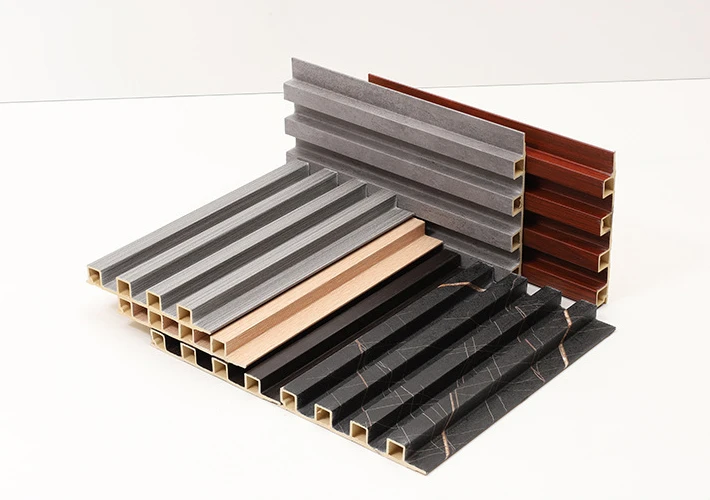
Modern PVC wall panels are available in many decorative styles.
Popular options include:
- Marble designs
- Stone patterns
- Wood grain finishes
- Concrete textures
- Solid colors
- Glossy surfaces
- Matte finishes
- Modern geometric patterns
This gives designers and buyers more flexibility when creating different bathroom styles.
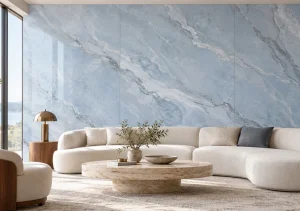
For example, a marble-look PVC wall panel may provide the appearance of natural stone while avoiding the weight and installation complexity associated with real marble.
A wood-look PVC panel can also help create a warmer bathroom design without using natural wood directly in a wet environment.
5. Cost-effective material option
The total cost of a bathroom wall system involves more than the material price.
Buyers should also consider:
- Material cost
- Shipping cost
- Installation labor
- Adhesives and accessories
- Surface preparation
- Maintenance
- Renovation time
PVC wall panels can offer a cost-effective alternative for projects where fast installation and simplified maintenance are important.
For wholesalers and distributors, PVC wall panels may also provide opportunities to serve customers looking for affordable alternatives to ceramic tiles or natural stone.
6. Lightweight and easy to handle
Large ceramic tiles and stone slabs can be heavy and fragile. They may require specialized transportation and careful handling.
PVC wall panels are generally easier to cut, transport, and install.
This can be particularly beneficial for:
- DIY renovation projects
- Remote construction sites
- High-rise renovation
- Modular buildings
- Export distribution
The lightweight nature of PVC panels may also help reduce installation complexity.
Are PVC Wall Panels Completely Waterproof?
This is an important question because the terms water-resistant and waterproof are sometimes used interchangeably.
PVC itself is highly resistant to water, but the performance of an installed bathroom wall depends on the entire system.
A bathroom wall installation includes:
- The PVC panel
- Panel joints
- Adhesive or fixing system
- Corner trims
- Edge trims
- Pipe openings
- Silicone or waterproof sealant
- The condition of the wall behind the panel
If all joints and edges are properly sealed, PVC wall panels can provide an effective moisture-resistant wall finish suitable for bathrooms.
However, installation quality is critical.
For areas exposed to direct and continuous water, such as shower enclosures, buyers should carefully confirm whether the specific PVC panel and installation system are recommended for that application.
AesthEdge recommends selecting products according to the actual project environment rather than assuming that every PVC wall panel is suitable for every wet-area application.
Can PVC Wall Panels Be Used Inside a Shower Area?
PVC wall panels can be used in shower areas when the product is specifically designed for wet applications and installed correctly.
The most important consideration is preventing water from penetrating through joints or edges.
For shower installations, attention should be given to:
Panel joint design
Interlocking panels or properly sealed joints can help reduce water penetration.
Sealant quality
High-quality waterproof sealant should be used around:
- Corners
- Panel joints
- Shower fixtures
- Pipes
- Wall edges
- Floor connections
Wall preparation
The wall behind the panel should be structurally stable and protected against existing moisture problems.
PVC wall panels should not be used to hide serious water damage or leaking pipes. Any existing plumbing or structural problems should be repaired first.
Proper installation
Following the manufacturer’s installation guidelines is essential.
For commercial projects, professional installation is generally recommended to ensure consistent sealing and finishing.
PVC Wall Panels vs Ceramic Tiles for Bathrooms
Ceramic tiles remain one of the most widely used bathroom wall materials. However, PVC wall panels offer an alternative that may be more suitable for certain projects.
| Feature | PVC Wall Panels | Ceramic Tiles |
|---|---|---|
| Water resistance | High, depending on installation | High |
| Installation speed | Generally faster | Usually slower |
| Weight | Lightweight | Heavy |
| Grout required | Usually minimal | Yes |
| Maintenance | Easy to clean | Grout requires maintenance |
| Design options | Wide variety | Wide variety |
| Cutting difficulty | Generally easier | Requires tile-cutting tools |
| Renovation suitability | Good for many projects | May require more demolition |
| Labor requirements | Lower in some projects | Often higher |
PVC wall panels may be particularly suitable for renovation projects where speed, weight, and installation convenience are priorities.
Ceramic tiles may still be preferred for projects requiring traditional finishes, high-impact resistance, or specific architectural requirements.
The best choice depends on the budget, design, installation environment, and long-term project expectations.
What Are the Disadvantages of PVC Wall Panels in Bathrooms?
Although PVC wall panels offer many advantages, they are not perfect for every project.
Buyers should also understand their potential limitations.
Lower impact resistance than some hard materials
PVC panels may be more easily damaged by strong impacts compared with ceramic tiles, stone, or certain metal wall systems.
For high-traffic commercial environments, buyers should select panels with appropriate thickness and structural strength.
Heat sensitivity
PVC is a thermoplastic material and can be affected by excessive heat.
Bathroom applications are generally suitable because normal bathroom temperatures are within an acceptable range. However, PVC panels should not be installed directly next to extreme heat sources unless the product has been specifically tested and approved for that environment.
Quality differences between suppliers
PVC wall panel quality can vary significantly.
Low-quality products may have problems such as:
- Thin panel structure
- Weak interlocking systems
- Surface discoloration
- Poor printing quality
- Low impact resistance
- Warping
- Inconsistent dimensions
This is why importers and distributors should evaluate suppliers carefully before placing large orders.
Requesting samples and product specifications can help buyers assess the product before bulk purchasing.
Installation quality affects performance
Even a high-quality PVC wall panel can perform poorly if installed incorrectly.
Common installation problems include:
- Inadequate wall preparation
- Poor adhesive selection
- Improper sealing
- Incorrect expansion allowance
- Unsealed joints
- Improper cutting around pipes
A complete product solution should therefore include not only the panels but also appropriate accessories and installation guidance.
How Long Do PVC Wall Panels Last in a Bathroom?
The lifespan of PVC wall panels depends on several factors, including product quality, thickness, installation, environmental conditions, maintenance, and usage.
A well-manufactured PVC wall panel installed correctly in a normal bathroom environment can provide years of service.
Factors that can influence longevity include:
Product thickness
Thicker panels may provide better structural stability, depending on the product design.
Raw material quality
High-quality PVC formulations can contribute to better durability and surface performance.
Surface treatment
The decorative surface should be resistant to normal bathroom cleaning and everyday wear.
Installation quality
Proper sealing and fixing are essential for preventing moisture from entering behind the panels.
Ventilation
Even moisture-resistant wall materials benefit from good bathroom ventilation.
Proper ventilation can help reduce condensation and maintain a healthier bathroom environment.
For large projects, buyers should discuss expected service requirements with the supplier based on the specific application.
How to Choose the Best PVC Wall Panel for a Bathroom
Not every PVC wall panel is suitable for every project. Importers, contractors, and distributors should consider several factors before purchasing.
1. Check the panel thickness
Thickness can influence panel rigidity and handling performance.
Different PVC wall panels are designed for different applications. Buyers should select the appropriate specification based on the project requirements rather than choosing based only on the lowest price.
2. Evaluate the panel structure
PVC wall panels may be solid, hollow, or designed with internal structural ribs.
The structure can affect:
- Strength
- Weight
- Installation
- Impact resistance
- Thermal performance
The best option depends on the intended application.
3. Inspect the decorative surface
For bathroom applications, the surface should be easy to clean and suitable for humid environments.
Buyers should inspect:
- Surface consistency
- Color accuracy
- Printing quality
- Scratch resistance
- Edge finishing
For export markets, maintaining consistent color and design between production batches can also be important.
4. Consider panel size
Larger panels can reduce the number of joints on the wall.
Fewer joints may provide:
- Faster installation
- A cleaner appearance
- Reduced sealing requirements
- Easier maintenance
However, large panels may also require more careful handling during transportation and installation.
5. Ask about accessories
A complete bathroom wall system may require:
- Internal corner trims
- External corner trims
- End caps
- Connecting profiles
- Adhesives
- Sealants
Working with a supplier that can provide matching accessories can simplify procurement and installation.
6. Request samples
Before placing a container order or large project order, buyers should request samples.
A sample can help evaluate:
- Surface appearance
- Material quality
- Thickness
- Rigidity
- Color
- Installation system
For distributors, samples can also be used for showroom displays and customer presentations.
PVC Wall Panels for Residential and Commercial Bathrooms
PVC wall panels can be used in many different types of projects.
Residential bathrooms
Homeowners may choose PVC panels because they are easy to install and maintain.
Popular designs include:
- White marble
- Grey stone
- Wood grain
- Modern concrete
- Minimalist solid colors
PVC panels can be especially attractive for fast bathroom renovation projects.
Hotels
Hotels require wall materials that combine appearance with practical maintenance.
PVC wall panels can be used for:
- Guest room bathrooms
- Public restrooms
- Staff facilities
- Renovation projects
For hotel renovation, faster installation can help reduce the amount of time that rooms remain unavailable.
Apartments and rental properties
Property owners often look for materials that are easy to replace and maintain.
PVC wall panels can offer a practical solution for apartment renovation because they are lightweight and available in many affordable decorative styles.
Commercial washrooms
Restaurants, offices, shopping centers, and other commercial buildings may use PVC wall panels in selected wet areas.
For commercial applications, product selection should consider traffic levels, cleaning frequency, and project requirements.
Prefabricated and modular buildings
Because PVC wall panels are lightweight and relatively easy to install, they can also be suitable for certain prefabricated construction systems.
This may include:
- Modular homes
- Mobile homes
- Temporary buildings
- Site accommodation
- Container houses
How to Install PVC Wall Panels in a Bathroom
Installation methods may vary depending on the panel design and the condition of the existing wall.
A typical installation process may include the following steps.
Step 1: Inspect and prepare the wall
The wall should be:
- Stable
- Clean
- Dry
- Reasonably flat
- Free from loose materials
Existing moisture problems should be repaired before installation.
Step 2: Measure the installation area
Measure the wall height and width carefully.
Also identify:
- Pipes
- Electrical outlets
- Shower fixtures
- Windows
- Corners
Accurate measurements can help reduce material waste.
Step 3: Cut the panels
PVC panels can generally be cut using appropriate tools according to the panel type.
Careful cutting is particularly important around pipes and fixtures.
Step 4: Apply adhesive or install the fixing system
Depending on the product, panels may be installed using construction adhesive, screws, battens, or an interlocking system.
Always follow the recommended installation method for the specific product.
Step 5: Connect the panels
If the product uses a tongue-and-groove or interlocking system, make sure each panel is properly connected.
Avoid forcing panels into position, as this may damage the edges.
Step 6: Seal the joints and edges
For bathroom applications, waterproof sealing is one of the most important steps.
Seal areas around:
- Shower zones
- Corners
- Pipe penetrations
- Floor edges
- Ceiling edges where necessary
Step 7: Install finishing accessories
Install matching trims and profiles to create a clean and professional appearance.

Are PVC Wall Panels Better Than Waterproof Paint?
Waterproof paint can be a simple solution for some bathrooms, but it offers a different level of performance compared with wall panels.
PVC wall panels provide a physical decorative surface over the wall, while paint is applied directly to the wall substrate.
PVC panels may offer advantages such as:
- Faster visual transformation
- Decorative patterns
- Easier cleaning
- Reduced wall surface exposure
- Fewer repainting requirements
Paint may still be suitable for low-moisture areas or projects with limited budgets.
For bathrooms that require a more significant visual renovation, PVC wall panels can provide a more complete decorative solution.
Are PVC Wall Panels a Good Choice for Bathroom Renovation?
For many renovation projects, the answer is yes.
PVC wall panels are particularly useful when the project requires:
- Fast installation
- Moisture-resistant surfaces
- Easy maintenance
- Lightweight materials
- Modern decorative designs
- Reduced grout maintenance
- Cost-effective renovation
They can be especially attractive for wholesalers and contractors serving the residential renovation, hotel, apartment, and commercial building markets.
However, buyers should not select PVC panels based only on price.
A successful bathroom wall project requires the right combination of:
Product quality + suitable specifications + proper installation + effective sealing.
Why Choose AesthEdge as Your PVC Wall Panel Supplier?
For importers, distributors, wholesalers, contractors, and project buyers, selecting a reliable supplier is just as important as selecting the right product.
AesthEdge is a China-based supplier of decorative building materials, providing wall panel solutions for global markets.
We understand that B2B buyers often need more than a single standard product. Different markets may require different sizes, colors, packaging, and product specifications.
What AesthEdge Can Offer
Wide product selection
AesthEdge provides decorative wall material solutions for different interior applications, helping buyers build a more complete product portfolio.
Factory-based supply
Working directly with a China-based manufacturer and supplier can help buyers improve sourcing efficiency and develop more competitive product offerings.
Multiple decorative designs
From marble-look surfaces to wood grain and modern decorative patterns, buyers can select designs based on local market preferences.
Support for wholesale and project orders
Whether you are a building materials distributor, contractor, importer, or project purchaser, AesthEdge can support bulk sourcing requirements.
OEM and customization possibilities
Depending on the product and order requirements, customization options may include dimensions, colors, surface designs, packaging, and branding.
Export-oriented service
AesthEdge works with international customers and understands the importance of product specifications, packaging, container loading, and long-distance transportation.
For new buyers, requesting samples before placing a bulk order is recommended.
Frequently Asked Questions About PVC Wall Panels for Bathrooms
Can PVC wall panels be installed over existing tiles?
In many cases, yes. If the existing tiles are firmly attached and the surface is reasonably flat, PVC wall panels may be installed over them using an appropriate installation method.
However, loose or damaged tiles should be repaired or removed first.
Do PVC wall panels get moldy?
PVC itself does not absorb water like many porous materials. However, mold can still develop in a bathroom if moisture becomes trapped behind panels or if the room has poor ventilation.
Proper installation, sealing, and ventilation are important.
Can PVC wall panels be used around a bathtub?
Yes, suitable PVC wall panels can be used around bathtub areas when properly installed and sealed.
Buyers should ensure that the selected product is appropriate for wet-area applications.
Are PVC wall panels easy to clean?
Yes. Most PVC wall panels have smooth surfaces that can be cleaned with water and mild cleaning products.
Avoid using excessively abrasive materials that may damage the decorative surface.
Do PVC wall panels crack easily?
The durability depends on the panel quality, thickness, and structure.
Higher-quality products with appropriate specifications are generally more suitable for long-term use.
Can PVC wall panels replace bathroom tiles?
For many applications, yes. PVC wall panels can provide an alternative to ceramic tiles, particularly for renovation projects where installation speed and easy maintenance are priorities.
However, the best material depends on the specific project requirements.
Final Thoughts: Is PVC Wall Panel Good for a Bathroom?
Yes, PVC wall panels can be a good choice for bathrooms.
Their combination of moisture resistance, lightweight construction, easy cleaning, fast installation, and decorative flexibility makes them suitable for many residential and commercial bathroom applications.
Compared with traditional ceramic tiles, PVC wall panels can reduce installation complexity and eliminate much of the grout maintenance associated with tiled walls.
However, product quality and installation should never be overlooked.
For the best results, buyers should choose a suitable PVC wall panel designed for humid environments, use the correct installation system, and ensure that all joints and edges are properly sealed.
For importers, wholesalers, distributors, contractors, and project buyers looking for reliable decorative wall solutions, working with an experienced supplier can also simplify product sourcing and customization.
AesthEdge is a China-based decorative wall material supplier supporting global customers with wholesale, project, and customized wall panel solutions.
If you are looking for PVC wall panels for bathroom projects, contact AesthEdge to discuss available designs, specifications, samples, customization options, and bulk order requirements.
Upgrade your bathroom wall product range with practical, modern, and easy-to-maintain PVC wall panel solutions from AesthEdge.