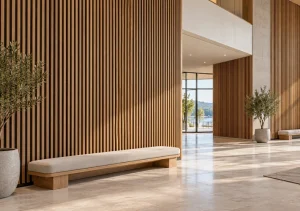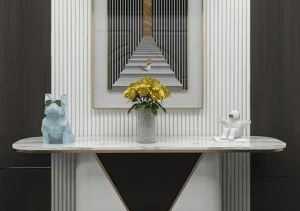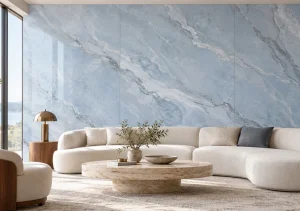
If you are planning to buy WPC wall panels for a residential, commercial, hotel, office, or renovation project, one of the first questions is usually: How much do WPC wall panels cost per square meter?
The short answer is that there is no single fixed price. In 2026, the wholesale price of WPC wall panels generally ranges from around USD $8 to $35 per square meter for most interior applications, while premium exterior or co-extruded WPC wall panels can reach USD $20 to $45 or more per square meter depending on specifications, surface treatment, structure, and order quantity.
For international buyers purchasing directly from a Chinese manufacturer, the factory price can be significantly lower than the final retail price in Europe, North America, Australia, or other markets. However, buyers should also consider packaging, shipping, import duties, accessories, installation, and wastage when calculating the actual project cost.
Recent 2026 market references place basic indoor WPC panels at approximately $8–$15/m², decorative fluted and 3D panels around $12–$25/m², premium solid panels around $20–$35/m², and outdoor/co-extruded products around $20–$45/m².
As a professional WPC wall panel manufacturer in China, AesthEdge provides factory-direct WPC wall panel solutions for importers, distributors, contractors, architects, interior designers, and commercial projects.
WPC Wall Panel Price per Square Meter: Quick Overview
The easiest way to understand WPC wall panel pricing is to divide products into different quality and application levels.
| WPC Wall Panel Type | Typical Wholesale Price | Common Application |
|---|---|---|
| Basic Indoor WPC Panel | $8–$15/m² | Homes, offices, bedrooms |
| Decorative Fluted WPC Panel | $12–$25/m² | Feature walls, hotels, restaurants |
| 3D WPC Wall Panel | $15–$30/m² | Commercial and residential interiors |
| Premium Solid WPC Panel | $20–$35/m² | Luxury interiors, hospitality |
| Exterior WPC Cladding | $20–$45/m² | Facades, balconies, outdoor walls |
| Co-Extruded WPC Panel | $25–$45+/m² | Exterior and high-performance applications |
| Customized OEM WPC Panel | $30+/m² | Private-label and special projects |
These figures should be treated as general market reference prices rather than fixed quotations. Actual factory pricing depends on the exact product specification, material formulation, panel thickness, density, dimensions, surface finish, packaging, order volume, and delivery terms.
For example, two products may both be advertised as “WPC wall panels,” but one may be an economical hollow panel for indoor decoration while the other is a dense, co-extruded panel designed for exterior exposure. Their manufacturing costs and performance can be very different.
This is why professional buyers should always compare price together with specification, rather than selecting a supplier based only on the lowest price per square meter.
For Chinese factory sourcing, published 2026 references also show that factory-direct pricing can be considerably lower than retail or distributor pricing, although freight and other import costs need to be added to determine the landed cost.
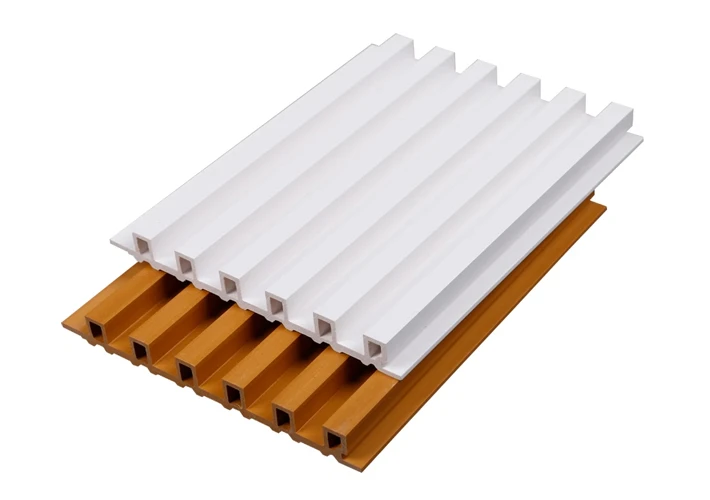
Why Is There Such a Large Price Difference?
Several factors can change the price of WPC wall panels:
- Raw material composition
- Panel thickness
- Panel density
- Hollow or solid structure
- WPC formulation
- Surface treatment
- Wood-grain or 3D texture
- UV protection
- Co-extrusion technology
- Fire-performance requirements
- Custom colors
- Panel dimensions
- Order quantity
- Packaging requirements
- OEM/ODM customization
Therefore, asking a supplier only for “WPC wall panel price per square meter” is usually not enough.
A better inquiry would specify the panel type, thickness, dimensions, surface finish, quantity, application, destination port, and required certifications.
What Determines the Cost of WPC Wall Panels?
The material itself is the largest component of the price, but it is not the only factor.
1. Material Composition
WPC stands for Wood Plastic Composite. Depending on the product, manufacturers may use wood fiber or wood powder combined with polymers and other additives.
The formulation affects:
- Density
- Strength
- Flexibility
- Moisture resistance
- Surface quality
- Dimensional stability
- Processing performance
- Overall durability
Lower-cost panels may use a formulation optimized primarily for price, while premium products can use higher-quality raw materials and more controlled production processes.
For B2B buyers, the important question is not simply “How cheap is the panel?” but what material specification is included at that price?
2. Panel Thickness and Density
Generally, thicker and denser WPC panels require more raw material and therefore cost more.
For example, a lightweight decorative interior panel may have a lower price than a high-density panel designed for demanding commercial applications.
When comparing two suppliers, always ask for:
- Thickness
- Width
- Length
- Weight per square meter
- Density
- Core structure
Weight per square meter is particularly useful because it helps buyers understand whether two panels with similar dimensions actually contain a similar amount of material.
3. Surface Finish
The surface is another important price factor.
Popular WPC wall panel finishes include:
- Wood grain
- Walnut
- Oak
- Teak
- Marble effect
- Solid colors
- Matte finishes
- Embossed textures
- Fluted designs
- 3D patterns
Simple finishes generally cost less than highly detailed textures or customized designs.
For hotels, restaurants, retail stores, and luxury residential projects, buyers may be willing to pay more for premium textures because appearance plays an important role in the overall interior design.
4. Hollow vs. Solid WPC Panels
WPC wall panels can be manufactured with different internal structures.
Hollow panels generally use less material and can therefore offer a lower purchase price. They are often suitable for decorative interior walls where extreme impact resistance is not required.
Solid or high-density panels generally cost more because they use more material and provide a different level of rigidity and structural performance.
Neither type is automatically better. The correct choice depends on the application.
For example:
- Residential feature walls → economical or standard panels may be sufficient.
- Hotel public areas → higher-density decorative panels may be preferred.
- Commercial corridors → impact resistance may become more important.
- Exterior walls → weather-resistant systems should be considered.
5. Production Technology
Manufacturing technology can also affect pricing.
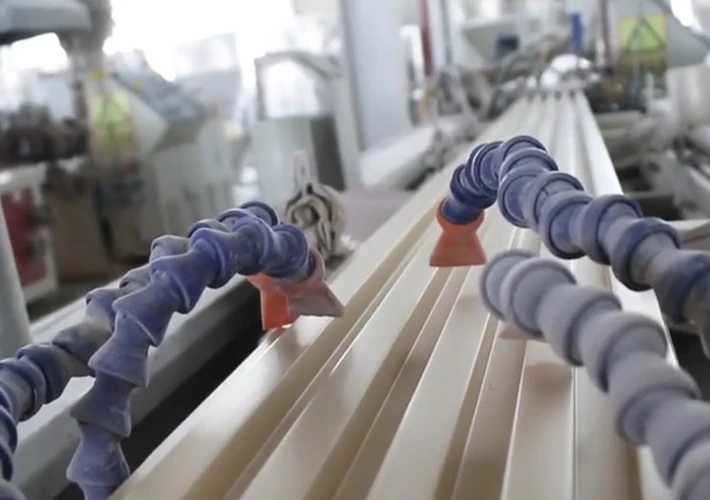
Extrusion parameters, surface embossing, lamination, printing, UV treatment, co-extrusion, and other production processes add manufacturing costs.
Premium exterior WPC products often use a protective outer layer or co-extrusion technology, which can improve resistance to UV exposure, moisture, staining, and weathering.
Consequently, exterior WPC cladding usually costs more than basic indoor decorative WPC panels.
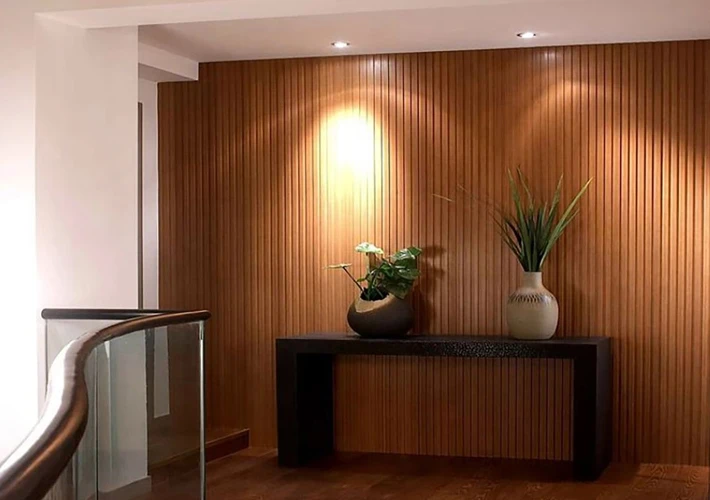
How Much Does It Cost to Install WPC Wall Panels?
The panel price is only one part of the total project cost.
The actual installed cost can include:
Panels + accessories + adhesive/fixings + labor + wall preparation + wastage + transportation
Recent 2026 installation-cost references estimate professional installation at roughly USD $8–$25 per square meter in some markets, while more complex installations can cost considerably more depending on local labor rates and wall conditions.
For a simple commercial project, a general calculation could look like this:
| Cost Item | Example Cost |
|---|---|
| WPC Wall Panels | $15/m² |
| Accessories | $2–$5/m² |
| Adhesive/Fixings | $1–$3/m² |
| Installation | $8–$20/m² |
| Wastage | 5–10% |
| Estimated Installed Cost | About $27–$45+/m² |
This is only an example. Actual costs vary significantly by country and project.
What Accessories Are Needed?
Depending on the installation system, accessories may include:
- Aluminum or WPC trims
- Corner profiles
- Edge profiles
- Connecting profiles
- Clips
- Screws
- Battens
- Adhesive
- Sealant
Accessories can represent a meaningful portion of the total cost, particularly for projects with many corners, openings, transitions, or complicated wall layouts.
A professional quotation should therefore specify whether accessories are included in the panel price.
What About Wall Preparation?
WPC wall panels are relatively convenient to install, but the condition of the existing wall matters.
If the wall is flat and stable, installation can be relatively straightforward.
If the wall is uneven, damaged, damp, or structurally unsuitable, additional preparation may be required.
Possible additional costs include:
- Wall leveling
- Battens
- Moisture treatment
- Surface repair
- Additional fixing systems
This is one reason why the same WPC panel can have different installed costs in different projects.
How Much Does It Cost to Import WPC Wall Panels from China?
For B2B buyers, factory price is only the starting point.
When purchasing WPC wall panels from China, the total landed cost may include:
- Factory price
- Packaging
- Inland transportation
- Export documentation
- Ocean freight
- Port charges
- Customs clearance
- Import duties and taxes
- Local transportation
- Warehouse or distribution costs
For example, assume a distributor purchases 1,000 m² of standard WPC wall panels at a factory price of $12/m².
The product value would be:
1,000 × $12 = $12,000
But the final landed cost will be higher after adding freight, insurance where applicable, customs-related expenses, and local logistics.
This is why international buyers should compare landed cost per square meter, rather than simply comparing EXW or FOB prices.
Why Buy WPC Wall Panels Directly from a Chinese Factory?
China has a mature manufacturing supply chain for decorative wall panels, plastics, composite materials, extrusion products, and related accessories.
Buying directly from a factory can provide several advantages:
- More competitive factory pricing
- Direct communication with production teams
- OEM/ODM customization
- Flexible color selection
- Private-label options
- Consistent production
- Better control over specifications
- One-stop accessory sourcing
- Container-loading optimization
For distributors, buying directly from the manufacturer can also make it easier to develop a private-label WPC wall panel product line.
AesthEdge works with international B2B customers looking for WPC wall panels for distribution, renovation projects, hotels, offices, retail spaces, and other commercial applications.
How to Reduce Your WPC Wall Panel Cost per Square Meter
The cheapest quotation is not always the cheapest solution.
For B2B buyers, the goal should be to achieve the lowest reasonable total cost while maintaining the required product quality.
Here are several practical ways to reduce procurement costs.
1. Increase Order Quantity
Larger orders can often receive better factory pricing because production, packaging, and administrative costs can be distributed across more units.
For distributors and wholesalers, container-level purchasing is generally more cost-effective than buying small quantities repeatedly.
Ask the manufacturer for several quantity levels, such as:
- 100 m²
- 500 m²
- 1,000 m²
- 3,000 m²
- Full-container quantity
This makes the volume discount easier to evaluate.
2. Use Standard Designs
Customized colors, special textures, new molds, and private-label packaging can increase costs.
If your market does not require customization, choosing an existing factory design can reduce both lead time and development costs.
Standard products are particularly suitable for:
- Distributors
- Building-material wholesalers
- Online sellers
- Renovation contractors
- Standard residential projects
3. Optimize Container Loading
WPC wall panels are relatively long products, so packaging and container utilization are important.
An experienced manufacturer can optimize:
- Panel packing
- Carton dimensions
- Pallet configuration
- Loading sequence
- Accessory packaging
Better container utilization can reduce transportation costs per square meter.
4. Purchase Accessories from the Same Supplier
Buying panels, trims, connectors, and installation accessories separately can create additional logistics and management costs.
A factory that supplies the complete system can potentially simplify:
- Purchasing
- Quality control
- Packaging
- Shipping
- Inventory management
5. Compare Equivalent Specifications
This is one of the most important purchasing principles.
Never compare:
$8/m² Panel A
against
$15/m² Panel B
without checking their specifications.
Compare:
- Same thickness
- Same dimensions
- Similar weight
- Same core structure
- Similar surface treatment
- Same application
- Similar packaging
- Similar trade terms
Only then can you determine which supplier actually offers the better value.
Is WPC Wall Panel Worth the Cost?
For many interior applications, WPC wall panels offer a balance between appearance, installation convenience, maintenance requirements, and cost.
Compared with traditional wall finishing methods, WPC can provide several practical advantages.
WPC vs. Paint
Paint usually has a low initial material cost, but walls may require:
- Surface preparation
- Multiple coats
- Periodic repainting
- Repair after impact or staining
WPC wall panels can provide a finished decorative surface immediately after installation and can reduce the need for frequent repainting.
WPC vs. Wallpaper
Wallpaper offers many design possibilities, but its performance can depend heavily on the environment and substrate.
WPC panels provide a more substantial wall-covering solution and are available in wood, stone, fluted, and other decorative appearances.
WPC vs. Ceramic Tile
Ceramic tile remains popular for bathrooms, kitchens, and other areas, but installation can involve:
- Tile adhesive
- Grout
- Cutting
- Leveling
- Longer installation time
- More labor-intensive preparation
WPC wall panels can provide faster installation for suitable applications.
However, buyers should select products specifically designed for the intended moisture conditions rather than assuming every WPC panel is suitable for every wet-area application.
WPC vs. Natural Wood
Natural wood provides an authentic appearance, but it may require more maintenance depending on the species and environmental conditions.
WPC combines a wood-inspired appearance with composite-material characteristics, making it attractive for buyers who want a decorative wood effect with reduced maintenance requirements.
How to Choose the Right WPC Wall Panel Supplier
Price is important, but supplier reliability can have an even greater impact on the total cost of a B2B project.
Before placing an order, buyers should evaluate the following.
Product Specification
Request a detailed specification sheet including:
- Panel dimensions
- Thickness
- Weight
- Material composition
- Surface finish
- Core structure
- Recommended application
- Installation method
Factory Capability
Ask whether the supplier is:
- A manufacturer
- A trading company
- A manufacturer with export experience
- An OEM/ODM supplier
For large orders, direct factory communication can make production control and customization easier.
Samples
Always request samples before approving a large order.
Samples allow buyers to check:
- Color
- Texture
- Surface quality
- Thickness
- Weight
- Dimensional accuracy
- Edge quality
- Overall appearance
For distributors, samples can also be used for market testing.
Quality Consistency
A good sample is not enough.
The manufacturer should be able to maintain consistent quality across large production batches.
Ask about:
- Production inspection
- Raw-material control
- Finished-product inspection
- Packaging inspection
- Loading inspection
OEM and Private Label
For wholesalers and distributors, OEM can be an important competitive advantage.
AesthEdge can support B2B buyers with customized solutions depending on product requirements, including colors, designs, packaging, and branding options.
This allows importers to build their own WPC wall panel product range instead of selling exactly the same product as competing distributors.
Frequently Asked Questions About WPC Wall Panel Prices
How much do WPC wall panels cost per square meter?
As a general 2026 wholesale reference, standard indoor WPC wall panels cost approximately $8–$15/m², while decorative fluted and 3D products are commonly around $12–$30/m². Premium solid and exterior products can reach $20–$45/m² or more depending on specifications.
What is the cheapest WPC wall panel?
Basic hollow-core or lower-density indoor WPC wall panels are usually among the most economical options. However, buyers should compare thickness, weight, material composition, and surface quality before choosing the cheapest product.
Are WPC wall panels cheaper than tiles?
They can be competitive when considering the complete project cost because installation may be faster and less labor-intensive. However, actual costs depend on local labor rates, wall preparation, panel quality, and tile specifications.
Does WPC wall panel price include installation?
Usually, quoted factory prices do not include installation. When purchasing directly from a manufacturer, buyers should confirm whether the quotation is EXW, FOB, CIF, or another trade term.
How much WPC wall panel do I need?
Calculate the wall area first:
Wall Area = Wall Length × Wall Height
Then subtract large openings such as doors and windows if appropriate.
Finally, add approximately 5–10% extra material for cutting, fitting, and installation waste. Complex layouts may require a higher allowance.
Is WPC suitable for commercial projects?
Yes. WPC wall panels are widely used for decorative applications in hotels, offices, restaurants, retail stores, residential developments, and other commercial interiors.
For commercial projects, buyers should select products according to the specific requirements for moisture resistance, fire performance, durability, cleaning, and local building regulations.
Can I buy WPC wall panels directly from China?
Yes. International distributors, contractors, importers, and project buyers can purchase WPC wall panels directly from Chinese manufacturers.
Direct sourcing can provide competitive factory pricing and OEM/ODM options, but buyers should calculate the complete landed cost, including freight, customs, taxes, and local delivery.
Get a Factory-Direct WPC Wall Panel Quote from AesthEdge
The cost of WPC wall panels per square meter depends on much more than the product name.
A realistic purchasing calculation should consider:
Panel specification + quantity + accessories + packaging + shipping + installation + wastage = total project cost
For most B2B buyers, standard indoor WPC wall panels can be sourced at a relatively competitive factory price, while premium decorative, solid, co-extruded, and exterior products require a higher budget.
The best supplier is therefore not necessarily the one offering the lowest price. It is the manufacturer that can provide the right specification, stable quality, competitive factory pricing, reliable production, suitable packaging, and consistent supply.
AesthEdge is a China-based manufacturer and supplier of decorative wall panels and interior building materials, providing WPC wall panels for global wholesalers, distributors, contractors, architects, and commercial projects.
If you are sourcing WPC wall panels for your market, send us your required quantity, panel size, thickness, design, application, and destination country. Our team can recommend suitable products and provide a factory-direct quotation based on your actual requirements.
Looking for competitive WPC wall panel prices from China? Contact AesthEdge for samples, specifications, OEM/ODM solutions, and a project-specific quotation.