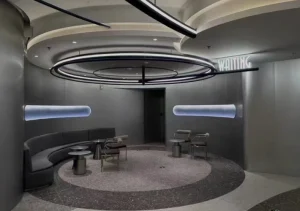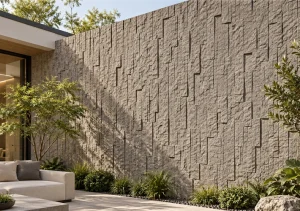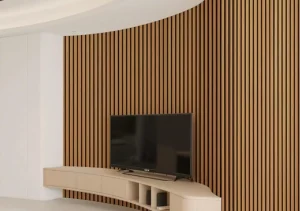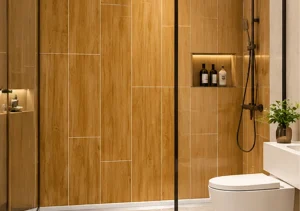
If you are remodeling a home, fitting out a hotel, or planning a commercial fit-out, you have almost certainly seen carbon crystal wall panels (also sold as bamboo charcoal wall panels or WPC carbon crystal boards) trending in 2026. They look like premium timber or marble, go up far faster than tile or drywall, and ship at a fraction of the cost of the real materials they imitate.
The catch is that pricing is confusing. A quick search shows panels advertised anywhere from $3.79 per square meter at a Chinese factory to $220 per square meter fully installed in a US bathroom. Both numbers are real — they just describe different points in the supply chain. This guide breaks down exactly what carbon crystal wall panels cost in the USA, the UK, and Australia in 2026, what actually moves the price, and how to buy them without paying retail markup for a product that Chinese factories, like our own Aesthedge, manufacture for a few dollars a panel.
What Are Carbon Crystal Wall Panels?
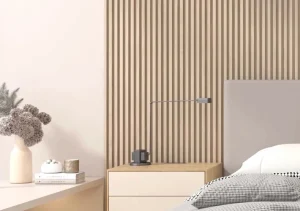
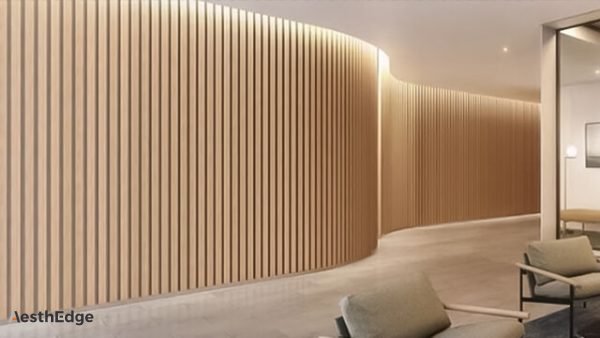
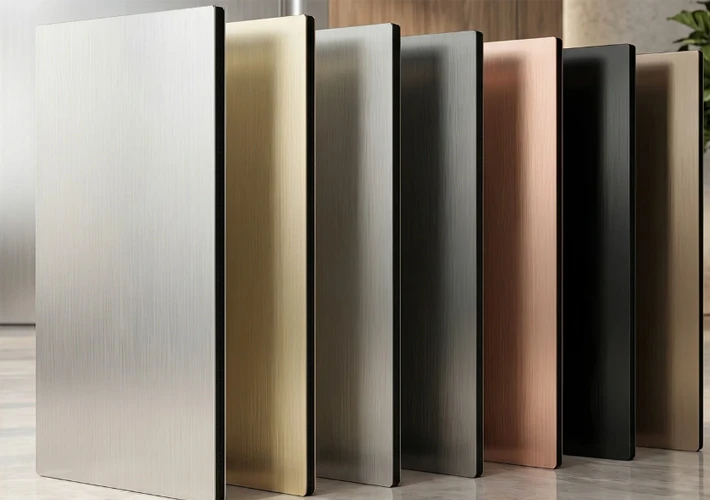
Before we talk money, it helps to know exactly what you are buying. Carbon crystal wall panels are engineered interior cladding boards. The core is a WPC (wood-plastic composite) or bamboo charcoal fiber base, typically 3–9 mm thick, fused with a decorative surface film that can mimic wood veneer, marble, brushed metal, or fluted 3D textures. They are sold in standard sizes — most commonly 1220 × 2800 mm — and are designed to be installed with adhesive or clips over a flat substrate, with tongue-and-groove or seamless joint systems.
Three properties explain their popularity in the 2026 market:
- Moisture resistance. The composite core does not swell, warp, or rot the way real timber does in bathrooms, basements, and coastal climates.
- Fire resistance. High-quality boards carry fire-rated core formulations and surface finishes that pass standard interior lining tests, which matters for commercial and hospitality projects.
- Speed of install. A panel covers roughly 3.4 m² in one lift, so a room that would take days to tile can be finished in hours.
It is worth distinguishing carbon crystal panels from cheaper PVC/PET single-layer cladding and from solid timber or aluminum. Carbon crystal sits in the middle of the market: more premium than basic PVC (which can feel hollow and thin), yet a fraction of the price of hardwood veneer or metal systems. Understanding that positioning is the first step to judging a quote — you are comparing against WPC and engineered composites, not against granite.
The 2026 Price Landscape at a Glance
Here is the honest headline: the same panel that leaves a Chinese factory for US$4–7 per square meter (FOB) typically reaches a US homeowner’s wall at US$75–110 per square meter installed, or about US$7.50–9.50 per square foot. The gap is not a markup conspiracy — it is freight, duty, distribution, trade margins, accessories, labor, and waste. Understanding each layer lets you decide where in the chain it makes sense to buy.
Let me give you the benchmark ranges first, then unpack them market by market.
| Market | Factory FOB (per m²) | Landed material (per m²) | Fully installed (per m²) |
|---|---|---|---|
| USA | $4.00 – $7.00 | $12 – $22 | $75 – $110 (≈ $7.50–9.50/sq ft) |
| UK | £3.20 – £5.60 | £9 – £17 | £55 – £95 |
| Australia | A$6.50 – A$11 | A$19 – A$34 | A$90 – A$150 |
A few notes on reading this table. The FOB numbers reflect 2026 quotes for carbon crystal WPC boards from Chinese manufacturers, with pricing tiered by order volume — boards run roughly US$4.60–6.89 per square meter at typical factory order sizes. The “installed” figures are full project costs including panels, trims, adhesive, labor, and a standard wastage allowance, taken from current US and Australian project benchmarks. Your number will land inside these bands depending on finish, panel thickness, and installer rates — which is exactly what the next section explains.
What Drives the Price: 7 Factors That Decide What You Pay
Nobody sells “a carbon crystal panel” at one universal price, because the product varies more than it appears. Seven factors move the number more than any single price list.
1. Core material and density. Budget boards use a lighter recycled composite that can feel flimsy and dent easily. Premium boards use denser virgin WPC or bamboo charcoal fiber, which costs more per kilo and visibly improves rigidity and sound insulation. This is the single biggest cost driver at the factory gate.
2. Surface finish and film quality. A plain matte wood-grain costs the least; marble, brushed metal, and textured fluted finishes use higher-grade PET films that cost more and command higher retail prices. A metal-surface carbon crystal board, for example, typically prices higher than a standard wood-grain in the same product line.
3. Thickness and dimension. A 5 mm board is cheaper per square meter than an 8–9 mm board, but the thicker panel is stiffer and hides substrate imperfections better, so installers often prefer it on large flat walls. Watch out: a low price per square meter may simply mean a thinner, flimsier board.
4. Certifications. Panels destined for the US, UK, or Australia increasingly need fire-rating documentation, formaldehyde-emission certificates (ENF/E0), and lab test reports. Certified boards cost more at the factory but save you enormous pain at customs and with building inspectors.
5. Order volume and MOQ. This is where the biggest price swing happens. Factory pricing is steeply tiered. A small order of a few hundred square meters pays the top of the range; committing to 1,000–5,000+ m² can drop the unit price by 20–40%. If you are a contractor or importer, volume is your strongest negotiating lever.
6. Freight and logistics. Carbon crystal panels are bulky but not heavy, which makes shipping costs oddly significant. The material price per cubic meter is low relative to the freight you pay on that cubic meter — so logistics can add more to your landed cost than the factory price difference between two suppliers.
7. Supply chain position. This is the factor most buyers overlook. The identical board costs roughly US$4–7/m² FOB at a Chinese factory, US$8–15/m² to a US/UK distributor, and US$20–40/m² at retail. You are not paying for a better product at each step; you are paying for inventory risk, marketing, and margin. Buyers who source directly from a manufacturer like Aesthedge skip two layers of that markup.
Carbon Crystal Wall Panel Prices in the USA (2026)
The US is the biggest and most competitive market for engineered wall panels in 2026, and also the one with the widest price spread — from bargain import lots to fully serviced installed systems.
At the factory gate. Chinese manufacturers quote carbon crystal WPC boards at roughly US$4.00–6.89 per square meter FOB, with metallic and marble finishes at the higher end. These are export prices before ocean freight, duty, and inland delivery, and they assume a commercial order volume.
As landed material. After ocean freight (LCL runs roughly **US$35–90 per cubic meter** port-to-port in early 2026, with FCL containers from about US$2,850 for a 40HQ), duty, and domestic trucking, a US importer typically lands carbon crystal panels at US$12–22 per square meter. At this stage the buyer is usually a distributor or a large contractor with a freight operation.
At retail. Once panels sit on a showroom or e-commerce shelf, prices climb to roughly US$20–40 per square meter. This is what a DIY homeowner pays when buying panels individually.
Fully installed. If you hire a contractor, the project cost is what actually reaches your walls. Industry benchmarks for 2026 put installed WPC and engineered panel systems at about US$7.50–9.50 per square foot (US$75–110 per square meter) for a standard interior application. For a paneled bathroom, full material-plus-labor budgets typically run US$95–220 per square meter depending on finish and prep work — still 30–50% cheaper than a comparable tile installation in most markets.
The practical US takeaway: if you are a DIY renovator, buying panels retail and installing them yourself lands you around US$20–40/m²** for material. If you want contractor-installed, budget **US$75–110/m² for a standard room. And if you import or buy in volume, you can reach the US$8–15/m² landed level that makes engineered paneling dramatically cheaper than most alternatives.
Carbon Crystal Wall Panel Prices in the UK (2026)
The UK market is price-sensitive and distribution-driven, with most panel sales happening through builders’ merchants and online cladding specialists. The pattern is the same, but the currency and the retail culture shift the numbers.
At the factory gate. UK-bound orders from Chinese factories price at roughly £3.20–5.60 per square meter FOB, again tiered by volume and finish. UK-focused PVC and WPC cladding lines are among the most established export categories from Chinese manufacturers, so competition keeps the factory end efficient.
As landed material. Once freight, UK import duty, and VAT are applied, landed material for a UK importer typically lands at £9–17 per square meter. Because UK buyers often order in pallet or container lots through wholesalers, the landed band stays reasonably tight.
At retail. UK builders’ merchants price PVC and engineered cladding panels competitively. As a reference point, a standard timber cladding board at a major merchant sells around £31–39.50 per length, and PVC shower/bathroom cladding panels run US$3.50–6 per square meter at factory export and roughly £15–30 per square meter at retail once merchant margins and VAT apply. Engineered carbon crystal boards with premium finishes sit at the upper end of that retail band.
Fully installed. A typical UK interior paneling project, including trims, adhesive, and a tradesperson’s labor, runs £55–95 per square meter. As in the US, a paneled bathroom works out 30–50% cheaper than tiling, which is why UK renovators have embraced cladding so strongly.
The UK takeaway: retail material will cost you roughly £15–30/m²; a contractor-installed room runs £55–95/m². For traders and builders, buying direct from a factory at £3.20–5.60/m² and either installing or reselling is where the real saving
Carbon Crystal Wall Panel Prices in Australia (2026)
Australia is the outlier in a good way for buyers: it is a high-labor-cost market with expensive imported alternatives, so engineered panels look especially good on paper. It is also a market with strict compliance expectations, which raises the entry bar for importers.
At the factory gate. Australian-bound carbon crystal panels quote at roughly A$6.50–11 per square meter FOB, slightly higher than US/UK equivalents because Australian buyers more often specify thicker boards and require certification documentation (including fire and formaldehyde test reports) that add factory cost.
At retail. Australian hardware and lining-board retail pricing runs higher than the US for comparable products. As a benchmark, internal lining boards at a major Australian retailer sit around A$38–95 per square meter** retail — and that is for basic timber/PVC products, before you reach engineered carbon crystal with premium finishes, which sits at the upper end or above. Retail carbon crystal panels in Australia commonly land at **A$30–60 per square meter once you include freight, duty, GST, and merchant margin.
Fully installed. With Australian labor rates among the highest in the developed world, a contractor-installed paneled wall typically runs A$90–150 per square meter**, and bathrooms with premium finishes can push toward **A$180–220/m² fully installed. Even so, this remains substantially cheaper than tiling a comparable area.
The Australia takeaway: the fully installed premium is real, but so is the opportunity. A builder who imports direct can buy panels at A$6.50–11/m² FOB**, land them at **A$19–34/m², and either install for a healthy margin or resell at retail. The main gatekeeper is compliance — make sure your supplier provides the documentation Australian certifiers expect.
Import Costs, Shipping & Tariffs: The Real Landed Price
The factory price is only the beginning. If you are buying in volume — as a contractor, importer, or serious renovator — the number that matters is your landed cost. Here is what gets added between the factory gate and your site in 2026.
Ocean freight. For less-than-container (LCL) loads, sea freight runs roughly US$35–90 per cubic meter port-to-port, with the true all-in rate closer to US$50–180/CBM once origin and destination handling are included. Above about 15 CBM, a full container (FCL) becomes more economical: a 40HQ container runs about US$2,850–4,200** depending on route and carrier, and per-kilo ocean rates for building materials sit around **US$0.08–0.12/kg. Transit times to the US and Australia run roughly 18–28 days.
Duty and taxes. This varies sharply by destination and by the current tariff environment. US and UK importers should expect a duty rate on PVC/WPC composite panels plus, in the US, the additional tariffs applied to Chinese-origin building products in recent years — always verify the current HS-code rate with your forwarder before quoting a final price to a customer. The UK applies import VAT, Australia applies GST on landed value, and none of these are avoidable.
Accessories and installation consumables. Trims, corner pieces, adhesive, and clips typically add 8–15% to the material budget, and a 5–10% wastage allowance is standard for a real installation.
The strategic point. Because the freight, duty, and distribution layers often add more to a square meter than the factory price itself, the smartest buying decision in 2026 is not “which brand of panel” but “where in the supply chain do I buy.” Buy from a distributor and you pay their margin on top of freight and duty. Buy direct from a manufacturer — the approach we offer at Aesthedge — and you compress the chain to factory → freight → you.
How to Buy Smart: Get the Best Factory Price Direct
You now know what the panels cost at every stage. Here is how to actually capture the saving, and where a Chinese factory like ours, Aesthedge, fits into the picture.
1. Match the product to the market. Tell your supplier where the panels are going. US, UK, and Australian projects have different compliance expectations, and a factory that ships to all three (as Aesthedge does) will recommend the right thickness, finish, and documentation for your destination rather than selling you a one-size-fits-all board.
2. Leverage volume, but respect MOQs. Factory pricing drops 20–40% as you step from 300 m² to 5,000 m². If you are a one-time renovator, pay the higher per-meter rate from a distributor and accept it. If you are a builder, importer, or contractor, buy direct and in volume — that is the only way to hit the landed-cost band that makes engineered paneling dramatically cheaper than tile.
3. Ask for certification and test reports up front. Any credible supplier can provide fire-rating documentation, formaldehyde (E0/ENF) test reports, and material safety data. If a quote arrives without them, you are buying a compliance risk, not a bargain.
4. Get a landed-cost quote, not a FOB quote. A good manufacturer will give you FOB, CIF, and DDP options so you can compare apples to apples after freight and duty. This is where “cheap” and “expensive” quotes finally become comparable.
5. Insist on samples before committing. Order sample boards of your chosen finish at your destination thickness. No spec sheet tells you whether a wood-grain film looks cheap in real light or whether a 5 mm board feels flimsy — the sample does.
Aesthedge is a Chinese wall-panel factory that ships carbon crystal panels, bamboo charcoal fiber boards, and WPC cladding to the US, UK, and Australia. Because we manufacture, we can quote FOB, CIF, or DDP, provide the certification files your destination expects, and price tiered by volume — typically within the US$4–7/m² FOB band you saw earlier. The point of buying direct is not brand loyalty; it is cutting the two distribution margins that otherwise sit between you and the factory.
A quick sanity checklist before you pay: confirm the core type and density, the film quality and finish, the exact thickness, the fire and formaldehyde certificates, the freight incoterm, and the lead time — in writing. A supplier who answers all six clearly is worth the price premium over one who only quotes a low number.
FAQ & Final Verdict: Should You Buy Carbon Crystal Panels in 2026?
Is the factory price or the installed price the “real” price? Both are real; they describe different stages. Factory FOB is US$4–7/m², fully installed is US$75–110/m² in the US. Know which one you are being quoted before you compare.
Are carbon crystal panels cheaper than tile in 2026? Yes, in almost every market. Paneled bathroom budgets typically run US$780–1,380 versus US$1,850–3,100 for mid-range tile — a 30–50% saving — while installing in a fraction of the time.
Do I need fire-rated panels? For commercial and hospitality projects, almost always. For homes, check your local code. Always buy certified boards so you are not surprised at inspection.
Can I install them myself? Yes, on a flat, dry substrate, with clips or adhesive. DIY buyers should buy retail (US$20–40/m² in the US) and accept they pay the distribution margin. Contractors should buy direct and in volume.
What is the biggest pricing mistake buyers make? Comparing a factory FOB price to a retail installed price and assuming one is being overcharged. Compare like-for-like — FOB to FOB, installed to installed — and the market suddenly looks far more honest.
The verdict for 2026. Carbon crystal wall panels remain one of the best value interior cladding options in the US, UK, and Australia — but the price you see depends entirely on where you stand in the supply chain. Renovators should buy retail or a small-project kit and install themselves to reach the US$20–40/m² band. Builders, contractors, and importers should buy direct from a manufacturer like Aesthedge in volume to reach the US$4–7/m² FOB level and the resulting US$12–22/m² landed cost. Whichever path you choose, verify the certification, order a sample, and get a landed-cost quote before you commit. Do that, and you will almost certainly pay less than the alternatives — with a finish that looks like a lot more.