PVC marble sheets are gaining popularity due to their aesthetic appeal, durability, and practicality. While they are primarily used for wall coverings, countertops, and other decorative applications, many people are curious whether they can also be used for flooring. This is an important question to consider, especially from a business or construction perspective, as the right materials for flooring can significantly affect the functionality and aesthetic of a space. Let’s dive into the question: Can PVC marble sheets be used for flooring?
Quick Answer – Are PVC Marble Sheets Suitable for Flooring?
PVC marble sheets can be used for flooring only when the specific product has been designed and tested for floor applications. Standard PVC marble sheets are primarily manufactured for wall decoration, bathroom walls, countertops, and interior cladding. Their surface appearance and water resistance do not automatically make them suitable for continuous foot traffic.
For flooring projects, buyers should evaluate several technical factors, including panel thickness, surface wear resistance, impact resistance, slip resistance, dimensional stability, and compatibility with flooring adhesives. A product designed for vertical wall installation may not provide sufficient performance under repeated walking, furniture movement, or concentrated loads.
For importers, wholesalers, and construction contractors, the most important consideration is to distinguish between decorative PVC marble wall panels and PVC flooring products. Both may feature realistic marble patterns, but their structures, performance requirements, and intended applications can be significantly different.

Understanding PVC Marble Sheets
Before we explore the possibility of using PVC marble sheets for flooring, it’s essential to first understand what PVC marble sheets are.
PVC (Polyvinyl Chloride) marble sheets are synthetic panels that mimic the appearance of natural marble but are made from a combination of PVC and other additives. They are often designed with a marble-like finish that offers the visual appeal of marble at a fraction of the cost. These sheets are available in a wide range of colors, patterns, and finishes, making them versatile for various applications.
Key Features of PVC Marble Sheets:
- Lightweight: PVC marble sheets are considerably lighter than natural marble, which makes them easier to handle and install.
- Water-resistant: PVC is naturally resistant to water, making it ideal for use in high-moisture environments like kitchens and bathrooms.
- Durability: PVC marble sheets are durable and resistant to impacts and abrasions, although they are not as durable as real marble.
- Cost-effective: Compared to natural marble or other premium materials, PVC marble sheets are a more affordable alternative.
- Easy Maintenance: These sheets are relatively easy to clean and maintain, as they do not require sealing or special treatments like natural stone.
PVC Marble Wall Panels vs. PVC Flooring – What Is the Difference?
Although PVC marble wall panels and PVC flooring products may share similar decorative patterns and polymer-based materials, they are not necessarily interchangeable.
The main difference lies in their intended application and performance requirements.
PVC marble wall panels are generally designed for vertical surfaces. Their primary functions include decorative enhancement, moisture protection, and easy surface maintenance. They are commonly installed in bathrooms, hotel interiors, commercial spaces, and residential feature walls.
PVC flooring products, on the other hand, must withstand repeated foot traffic, friction, furniture pressure, and daily mechanical wear. Their construction may include specialized wear layers, reinforced cores, and surface treatments developed specifically for floor applications.
Buyers should consider the following differences:
| Evaluation Factor | PVC Marble Wall Panels | PVC Flooring Products |
|---|---|---|
| Primary application | Vertical wall decoration | Horizontal floor surfaces |
| Wear resistance | Depends on decorative surface coating | Designed for repeated foot traffic |
| Load requirements | Mainly wall installation requirements | Must withstand walking and furniture loads |
| Slip resistance | Not necessarily tested for flooring | Should meet applicable flooring requirements |
| Installation | Wall-compatible adhesives or fixing systems | Flooring-compatible installation systems |
| Main purchasing concern | Appearance, dimensions, surface finish | Wear performance, stability, safety |
Therefore, a marble-like appearance alone is not sufficient to determine whether a PVC panel is appropriate for flooring. Buyers should always request application-specific technical documentation from the manufacturer.
Traditional Flooring Materials and Their Limitations
When choosing flooring materials, several factors come into play, including:
- Durability: The material must be able to withstand heavy foot traffic, impacts, and wear over time.
- Water Resistance: Particularly in spaces like kitchens, bathrooms, and basements, water resistance is essential.
- Aesthetic Appeal: The flooring should match the desired aesthetic of the space, whether it’s modern, rustic, or luxurious.
- Ease of Maintenance: Materials that require less maintenance are often preferred in both residential and commercial spaces.
Traditional flooring materials such as ceramic tiles, marble, hardwood, and vinyl are commonly used, but each comes with its own set of advantages and drawbacks:
- Ceramic tiles: Durable, water-resistant, and easy to clean but can be cold, hard underfoot, and require grouting that can stain.
- Natural marble: Elegant, luxurious, and highly durable, but expensive, heavy, and susceptible to staining and scratching.
- Hardwood: Adds warmth and aesthetic appeal but is sensitive to water and can be easily scratched.
- Vinyl: Affordable and versatile, but might not have the same luxurious look or long-term durability as higher-end materials.
Given these limitations, it’s important to evaluate whether PVC marble sheets can overcome some of these challenges while delivering the desired flooring qualities.

Advantages of Using PVC Marble Sheets for Flooring
PVC marble sheets offer several potential advantages as flooring materials, particularly when compared to traditional flooring options:
a) Cost-effectiveness
One of the most significant benefits of using PVC marble sheets for flooring is their cost-effectiveness. Natural marble is often prohibitively expensive due to the cost of quarrying and shipping. On the other hand, PVC marble sheets provide the same luxurious look but at a fraction of the price. For commercial projects or large residential spaces, this can result in substantial cost savings.
b) Water Resistance
PVC marble sheets are inherently water-resistant, making them an ideal option for areas prone to moisture, such as bathrooms, kitchens, and laundry rooms. Unlike natural stone or hardwood, which can absorb water and swell, PVC marble sheets do not suffer from water damage. This makes them an excellent choice for spaces that need both aesthetic appeal and practical functionality.
c) Lightweight and Easy to Install
PVC marble sheets are lightweight and relatively easy to install, even for DIY enthusiasts. Traditional flooring materials like natural stone or ceramic tiles can be heavy and require professional installation. PVC marble sheets can often be installed with adhesive and do not require the heavy machinery or specialized tools that other flooring materials may demand. This can make installation faster and more cost-efficient.
d) Variety of Designs
PVC marble sheets come in a wide array of colors, patterns, and finishes, including those that resemble traditional marble, stone, or even wood. This allows for flexibility in design, enabling users to achieve the look they desire without compromising on functionality. For those who want the look of marble flooring but cannot afford the expense or maintenance, PVC marble sheets are a perfect alternative.
e) Low Maintenance
Unlike natural marble or other porous flooring materials, PVC marble sheets do not require sealing or special maintenance. Regular cleaning with mild detergents is typically enough to maintain their appearance. Natural marble, for example, requires regular sealing to prevent staining and damage. PVC marble sheets, being non-porous, are much easier to care for.
Important Technical Factors Before Choosing PVC Marble Sheets for Floor Applications
Before specifying PVC marble sheets for flooring, project buyers should evaluate the following technical characteristics.
Surface Wear Resistance
Floor surfaces are exposed to continuous friction from shoes, furniture movement, cleaning equipment, and other daily activities. A decorative coating designed primarily for wall applications may not withstand this type of repeated abrasion.
Buyers should request abrasion or wear-resistance test results relevant to the intended flooring application.
Thickness and Structural Strength
Panel thickness alone does not determine flooring performance. Material density, internal structure, composition, and mechanical properties also influence load-bearing behavior.
For commercial projects, the manufacturer should provide technical specifications and clarify whether the product is suitable for the expected traffic level and furniture loads.
Slip Resistance
Slip resistance is particularly important in bathrooms, kitchens, hotel corridors, and other areas where water or cleaning agents may be present.
A glossy marble-effect surface may look attractive but should not automatically be considered safe for flooring. Buyers should request relevant slip-resistance test results before approving the material for horizontal installation.
Dimensional Stability
Temperature fluctuations and environmental conditions can influence the dimensional stability of PVC-based materials.
For flooring applications, dimensional stability is important because excessive expansion, contraction, or deformation may cause gaps, surface irregularities, or installation problems.
Adhesive Compatibility
The adhesive must be compatible with the specific PVC material and the substrate. Using an unsuitable adhesive can result in lifting, movement, or bonding failure.
These technical considerations help importers and contractors avoid selecting decorative wall panels for applications that require specialized flooring performance.
Limitations of PVC Marble Sheets for Flooring
Despite their many advantages, there are some limitations to using PVC marble sheets for flooring, particularly when compared to traditional flooring options.
a) Durability Concerns
Although PVC marble sheets are durable, they may not match the long-term durability of natural marble or high-quality ceramic tiles. While they are resistant to scratches and impacts to some extent, heavy furniture or high traffic areas can still cause wear over time. Natural marble, on the other hand, can last for decades, even centuries, with proper care.
b) Heat Resistance
PVC materials are not as heat-resistant as natural stone. While they are generally safe to use in most environments, placing hot pots or pans directly onto the floor can potentially cause damage. Natural marble or ceramic tiles have superior heat resistance, making them better suited for high-heat environments like kitchens.
c) Environmental Concerns
PVC is a synthetic material, and while it is recyclable, its production can have a larger environmental impact compared to natural materials like stone or wood. For environmentally-conscious consumers, this could be a point of concern. Additionally, the long-term durability of PVC marble sheets in comparison to stone materials, which can last for centuries, should also be considered.
d) Limited Thickness
PVC marble sheets are generally thinner than traditional flooring materials like ceramic tiles or stone slabs. While this makes them easier to install, it can also mean they are less robust in terms of weight-bearing capacity. In very high-traffic areas or spaces where heavy objects will be placed, the thinner nature of PVC marble sheets might be a limitation.

Can PVC Marble Sheets Be Used for Flooring?
The short answer is yes, PVC marble sheets can be used for flooring, but with certain caveats. They are a great option for residential and commercial spaces where cost, aesthetics, and ease of installation are primary considerations. They work especially well in low- to medium-traffic areas and spaces where moisture resistance is critical.
However, for high-traffic areas or places where durability and long-term performance are crucial, you may want to consider more traditional flooring options like natural stone or high-end vinyl. PVC marble sheets are best suited for:
- Bathrooms and kitchens
- Retail spaces or showrooms
- Residential spaces with moderate foot traffic
- Offices or commercial environments
Best Applications and Applications That Require Caution
The suitability of PVC marble sheets depends on the product specification rather than appearance alone.
For standard decorative PVC marble wall panels, recommended applications generally include:
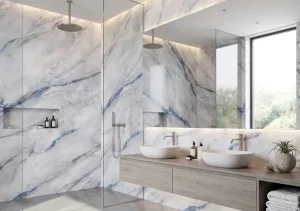
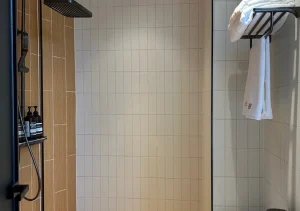
- Bathroom and shower-area wall decoration.
- Kitchen backsplashes and decorative wall surfaces.
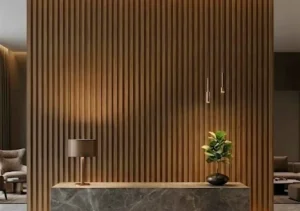
- Hotel reception backgrounds and feature walls.
- Retail showrooms and commercial interior decoration.
- Residential living room and bedroom wall cladding.
- Office and hospitality interior renovation projects.
Applications requiring additional technical verification include:
- High-traffic commercial floors.
- Hotel corridors and public walkways.
- Areas exposed to frequent furniture movement.
- Wet floors where slip resistance is essential.
- Floors exposed to heavy equipment or concentrated loads.
If the project specifically requires a marble-effect PVC floor, buyers should consider products manufactured for flooring applications rather than assuming that standard PVC marble wall sheets can perform the same function.
This distinction is particularly important for large-scale hospitality, retail, and commercial construction projects, where material performance directly affects maintenance costs and long-term project quality.
Best Practices for Installing PVC Marble Sheets as Flooring
If you decide to use PVC marble sheets for flooring, here are some best practices to ensure a successful installation:
- Ensure the Subfloor is Clean and Level: Before installation, ensure that the subfloor is clean, dry, and level. Any imperfections could affect the appearance and durability of the PVC marble sheets.
- Use Appropriate Adhesives: Use adhesives specifically designed for PVC materials. This will help ensure the sheets bond securely to the subfloor and reduce the risk of lifting or shifting.
- Allow for Expansion and Contraction: Like other synthetic materials, PVC can expand and contract with temperature changes. Make sure to leave an expansion gap along the edges of the floor to accommodate these changes.
- Use Protective Finish: While PVC marble sheets are relatively low-maintenance, using a protective floor finish can help increase their lifespan and resistance to wear and tear.

What Should Importers Check When Purchasing PVC Marble Sheets from China?
For international importers, wholesalers, and project contractors, selecting a reliable PVC marble sheet manufacturer involves more than comparing prices and decorative patterns.
The following factors should be considered before placing a bulk order.
1. Manufacturing Capability
Evaluate whether the supplier has stable production capacity, consistent product quality, and experience supplying international markets. A professional factory should be able to provide product specifications, production information, and quality inspection details.
2. Product Specifications
Confirm the panel dimensions, thickness, surface finish, weight, material composition, and available decorative patterns. These specifications should be clearly documented to avoid inconsistencies between samples and bulk production.
3. Quality Control
Ask about raw material inspection, production monitoring, surface quality checks, dimensional accuracy, and finished-product inspection. Consistent quality is especially important for distributors handling repeat orders.
4. Customization Services
For distributors and project contractors, customized colors, marble patterns, dimensions, and surface finishes can help meet different regional market requirements.
5. Packaging and Shipping
PVC marble sheets should be properly protected against scratches, edge damage, and deformation during transportation. Buyers should confirm packaging methods, loading capacity, and export shipping arrangements before ordering.
6. Application Guidance
A professional supplier should clearly distinguish between wall-grade decorative panels and products approved for flooring applications. Technical documentation and installation recommendations help buyers select the correct material for each project.
At AesthEdge, we focus on supplying decorative interior materials to international B2B customers, including importers, wholesalers, distributors, and construction project contractors. Our product range includes PVC marble sheets and other decorative wall materials, with different designs and specifications available for various interior applications.
For buyers evaluating PVC marble sheets, requesting product samples, detailed specifications, and application recommendations is a practical way to assess product suitability before committing to a container order.
Frequently Asked Questions About PVC Marble Sheets for Flooring
Can standard PVC marble wall sheets be installed on floors?
Standard PVC marble wall sheets are not automatically suitable for flooring. They should only be used on floors if the manufacturer confirms that the specific product has been designed and tested for horizontal floor applications.
Are PVC marble sheets waterproof?
PVC-based marble sheets generally have good water resistance. However, the overall moisture performance of an installation also depends on joints, edges, adhesive selection, and substrate preparation.
Are PVC marble sheets suitable for bathroom floors?
Standard decorative PVC marble wall panels should not be assumed suitable for bathroom floors. Bathroom flooring requires appropriate slip resistance, wear performance, and moisture-resistant installation details.
What is the difference between PVC marble sheets and SPC flooring?
PVC marble sheets are commonly used as decorative wall panels, while SPC flooring is engineered for floor applications. SPC flooring typically features a rigid stone-polymer composite core and a wear layer designed to withstand daily foot traffic.
Are PVC marble sheets cheaper than natural marble?
PVC marble sheets are generally more affordable than natural marble, particularly for decorative wall applications. However, a meaningful cost comparison should include material specifications, installation expenses, transportation, and expected service life.
What should importers request from a PVC marble sheet supplier?
Importers should request product specifications, samples, surface-finish options, quality inspection information, packaging details, and confirmation of the product’s intended application. If flooring is required, application-specific performance test reports are essential.
Conclusion
PVC marble sheets can absolutely be used for flooring, offering a cost-effective, water-resistant, and stylish alternative to more traditional materials. They are particularly useful in areas where moisture resistance and ease of installation are prioritized. However, they may not offer the same long-term durability or heat resistance as natural stone or high-end vinyl options. Understanding these limitations and advantages can help you make the best decision for your flooring needs.
Ultimately, whether or not PVC marble sheets are right for your flooring project depends on the specific requirements of your space, budget, and aesthetic preferences.