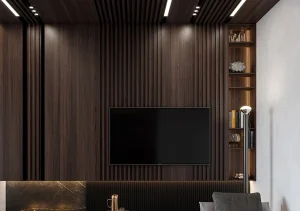
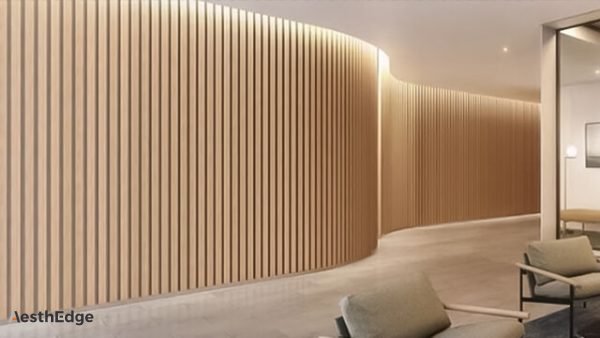
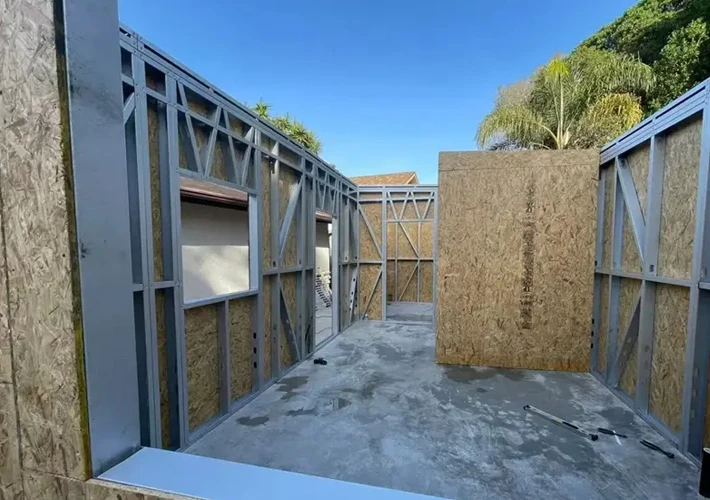
In hotels, bathrooms, basements, coastal buildings, tropical residential projects, hospitals, and commercial spaces, high humidity is one of the most underestimated yet destructive environmental factors. Over time, excessive moisture does far more than affect comfort—it directly compromises the structural stability, service life, and maintenance costs of wall systems.
Many projects begin to show serious wall problems within just one to two years after completion:
bulging panels, mold growth, peeling surfaces, deformation, unpleasant odors, and even system failure.
In most cases, the root cause is not workmanship, but incorrect material selection for long-term humid conditions.
So the real question is:
In consistently high-humidity environments, which wall systems remain truly stable—and which materials only appear moisture-resistant on the surface but fail over time?
This article provides a comprehensive, engineering-based analysis of wall systems that perform best in high-humidity environments, covering material structure, water absorption rates, environmental adaptability, real project performance, and B2B selection logic.
Why High Humidity Is a Serious Threat to Wall Systems
Humidity in construction is not simply about visible water. It is a long-term, cumulative stress factor that interacts with temperature changes, ventilation conditions, and building usage.
1.1 What Defines a High-Humidity Environment?
In practical construction terms, a space is considered high-humidity when it meets one or more of the following conditions:
- Relative humidity consistently above 70%
- Frequent temperature fluctuations causing condensation
- Poor ventilation or enclosed spaces
- Risk of water vapor penetration or capillary moisture
Typical high-humidity applications include:
- Hotel bathrooms, spa areas, and swimming pools
- Basements and underground commercial spaces
- Coastal apartments and island resorts
- Tropical and subtropical residential buildings
- Hospitals, laboratories, and food processing facilities
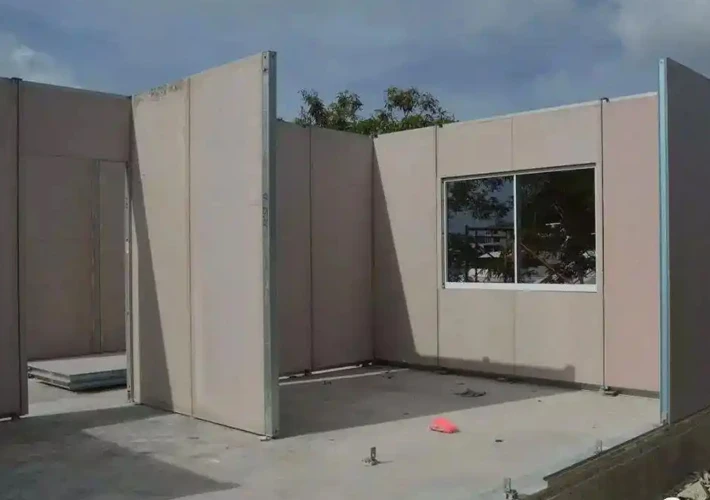
1.2 How High Humidity Damages Wall Systems
Long-term exposure to moisture affects wall systems in several critical ways:
(1) Water Absorption and Expansion
Porous materials absorb moisture, expand, and deform, leading to warping, bulging, and cracking.
(2) Loss of Structural Integrity
Moisture weakens substrates and adhesives, causing delamination and detachment.
(3) Mold and Microbial Growth
Organic materials provide nutrients for mold in humid conditions, posing health and aesthetic risks.
(4) Rising Maintenance and Renovation Costs
Frequent repairs disrupt hotel operations and increase lifecycle costs.
This is why material stability matters more than surface appearance in humid environments.
Key Criteria for Evaluating Wall System Stability
When selecting wall systems for high-humidity projects, professional buyers and developers focus on measurable performance indicators rather than marketing claims.
2.1 Water Absorption Rate
- ≤0.5% – Excellent long-term stability
- 0.5%–2% – Acceptable with proper system design
- ≥5% – High risk, not recommended for humid areas
2.2 Material Composition
- Inorganic or polymer-based materials offer superior moisture resistance
- Natural fibers or wood-based materials require heavy modification to remain stable
2.3 System Integrity
- Is it a complete moisture-resistant system?
- Are substrates and joints properly protected?
- Does the installation allow for thermal movement?
2.4 Proven Project Performance
- Has the system been used in hotels or commercial projects?
- Has it been tested in long-term humid conditions?
The Most Stable Wall Systems for High-Humidity Environments
3.1 SPC Wall Panels – The Benchmark for Humid Stability
SPC (Stone Plastic Composite) wall panels are widely regarded as one of the most stable wall systems available for high-humidity environments.
Material Structure
- Composition: Calcium carbonate + PVC resin
- No wood fibers or organic materials
- Dense core with near-zero water absorption
Performance in Humid Conditions
- No swelling, warping, or deformation
- Mold-resistant and odor-free
- Stable dimensions even in constant humidity
Typical Applications
- Hotel guest rooms and bathrooms
- Coastal residential developments
- Hospitals and healthcare facilities
- Overseas projects in tropical climates
From an engineering perspective, SPC wall panels offer one of the lowest risk profiles for high-humidity wall systems, especially for projects requiring fast installation and minimal maintenance.
3.2 PVC Marble Sheets – High Stability with Decorative Flexibility
PVC marble sheets are increasingly used in hotels and commercial interiors due to their balance of aesthetics and moisture resistance.
Why PVC Marble Sheets Perform Well
- PVC core does not absorb water
- UV-coated surface forms a sealed protective layer
- Dense structure limits microbial growth
Suitable Applications
- Hotel feature walls
- Commercial interiors
- Dry zones adjacent to wet areas
Installation Considerations
- Moisture-resistant substrates are essential
- Joint treatment determines long-term performance
With proper system design, PVC marble sheets provide a cost-effective and stable wall solution for humid environments.
3.3 Ceramic Tiles and Sintered Stone – Traditional but Extremely Stable
Ceramic tiles and sintered stone remain among the most moisture-resistant wall finishes.
Advantages
- Extremely low water absorption
- Long service life
- High resistance to mold and chemicals
Limitations
- Labor-intensive installation
- Higher construction costs
- Difficult to renovate or modify
These systems are ideal where maximum durability outweighs speed and cost concerns.
3.4 Aluminum and Metal Composite Wall Systems
Metal-based wall systems perform exceptionally well in high-humidity environments.
Key Benefits
- No moisture absorption
- Stable dimensions
- Easy to clean and disinfect
Drawbacks
- Higher material costs
- Industrial aesthetic
- Limited acoustic comfort
Commonly used in hospitals, laboratories, and high-end commercial spaces.
Wall Systems with High Risk in Humid Environments
4.1 Traditional Wood Veneer Panels
- High water absorption
- Prone to warping and cracking
- Significant mold risk
Even with surface treatments, wood veneer systems are not suitable for long-term humid conditions.
4.2 WPC Wall Panels with High Wood Content
WPC panels perform well in standard interiors but may present risks in constantly humid environments:
- Wood fibers still absorb moisture
- Long-term stability depends heavily on formulation
Better suited for semi-humid areas, not bathrooms or basements.
4.3 Gypsum Board Systems
Gypsum board remains one of the least stable options in humid environments:
- Gypsum core absorbs moisture
- Paper facing supports mold growth
- Short service life under high humidity
Even moisture-resistant gypsum boards are unsuitable for continuous humidity exposure.
Stability Is a System, Not a Single Material
Wall performance in humid environments depends on the entire system, not just the panel:
- Substrate moisture resistance
- Installation method (dry vs wet)
- Expansion allowance
- Joint sealing quality
For example, SPC wall panels combined with moisture-resistant substrates and dry installation systems outperform many traditional materials even at a higher initial cost.
Practical B2B Selection Advice
For hotel developers, contractors, and international buyers:
- Look beyond “waterproof” labels—evaluate long-term dimensional stability
- Prioritize inorganic or polymer-based systems in high-humidity zones
- Choose materials with proven hotel and commercial project references
- Consider total lifecycle cost, not just material price
Conclusion: Stability Is the True Value in High-Humidity Projects
In high-humidity environments, wall system stability determines:
- Whether renovations are frequent or avoidable
- Whether hotel operations remain uninterrupted
- Whether long-term maintenance costs remain under control
Based on real project performance, SPC wall panels, PVC marble sheets, ceramic tiles, and metal wall systems are currently the most stable and reliable solutions for humid environments.
For projects prioritizing fast delivery, long-term durability, and low maintenance, choosing the right wall system is not just a design decision—it is a strategic investment.
If you are sourcing wall systems for hotels, residential developments, or overseas projects in humid climates, selecting the right system from the start can significantly reduce risk and protect long-term project value.