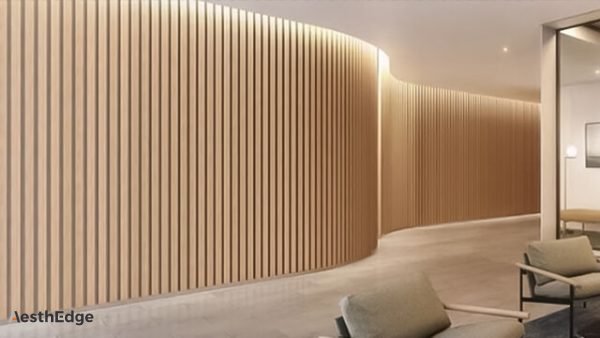
PU stone panels—also called polyurethane stone panels, PU faux stone panels, or PU decorative wall cladding—have become one of the most popular lightweight wall materials in today’s global building and decoration industry. They offer the realistic appearance of natural stone while greatly reducing weight, installation cost, and transportation risks. As demand grows across North America, Europe, the Middle East, Southeast Asia, and Africa, more buyers want to understand one key topic:
What exactly is PU stone panel made of?
This article provides a complete and professional explanation of PU stone panel materials, production structure, material properties, and why these components together create a durable yet lightweight decorative product. Designed for importers, wholesalers, architects, and project contractors, this guide helps you fully understand PU stone materials before buying from China.
Overview: What Is PU Stone Panel?
PU stone panel is a synthetic decorative wall panel manufactured from polyurethane (PU) foam, surface UV coating, and high-definition stone texture film. It mimics the natural appearance of stone, slate, brick, or marble while offering:
- Light weight
- Strong durability
- Thermal insulation
- Waterproof and fire-retardant properties
- Easy installation
- Low transportation cost
Unlike natural stone, PU stone panels do not require mining, cutting, or heavy cement mortar. This makes them a preferred eco-friendly alternative in both interior and exterior decoration.
Many construction companies choose PU stone panels for hotel projects, house facades, garden walls, prefabricated buildings, modular homes, RV interiors, shops, and restaurants.
To understand its performance, let’s break down the material composition.
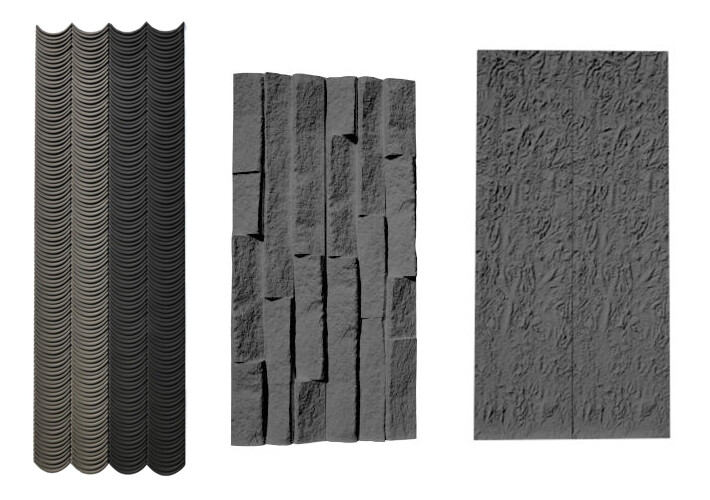
Main Components of PU Stone Panels
PU stone panels are made of three key layers:
High-density PU (polyurethane) foam core
High-definition stone texture film or sprayed surface
Protective UV coating / anti-scratch layer
Below is a deep explanation of each material.
2.1 Polyurethane Foam (PU Core Material)
What is PU?
Polyurethane is a polymer created by reacting polyol and isocyanate with added blowing agents. PU foam can be rigid or flexible depending on the formulation. For stone panels, manufacturers use high-density rigid PU foam.
Why PU Foam Is Used in Stone Panels
PU foam offers several unique advantages:
- Lightweight: Density ranges between 35–55 kg/m³, nearly 10–20 times lighter than natural stone.
- Strong thermal insulation: Excellent insulation values of 0.024–0.030 W/(m·K).
- Waterproof: PU has a closed-cell structure that blocks water absorption.
- Anti-corrosion: Resistant to moisture, fungi, and insects.
- Shock absorption: Protects walls from impact.
- Long service life: 10–20 years when used outdoors.
Chemical Composition
The PU core typically consists of:
- Polyols
- Isocyanates (MDI)
- Foaming agents
- Flame retardants
- Stabilizers
- Catalysts
This formulation is injected into molds where it expands to form a 3D stone texture.
2.2 Stone Texture Surface Layer
The second layer gives the PU panel the realistic stone appearance.
There are two main technologies:
(1) HD Stone Texture Film (Transfer Film)
This method uses high-definition printed PVC film that transfers realistic stone patterns onto the panel. Patterns can replicate:
- Granite
- Marble
- Slate
- Limestone
- Travertine
- Brick
- Cement stone
Film thickness is usually 0.15–0.25 mm, providing excellent detailing and color accuracy.
(2) Sprayed Stone Texture (Handcrafted)
Some manufacturers spray multi-layer coatings directly onto the PU foam:
- Base color
- Stone texture particles
- Gradient tones
- Protective sealing
This technique creates a more natural, rough texture similar to real stone.
Benefits of the Surface Layer
- Ultra-realistic appearance
- UV resistance
- Anti-yellowing
- Scratch resistance
- Customizable textures and colors
2.3 UV Protective Coating (Outer Surface Layer)
The final layer is a transparent UV coating that protects the surface from environmental damage.
Key Functions
- Prevent fading and yellowing under sunlight
- Improve scratch and abrasion resistance
- Enhance anti-stain performance
- Extend outdoor lifespan
Most factories use UV-curing acrylic resin, which provides a hard, glossy, and durable surface.
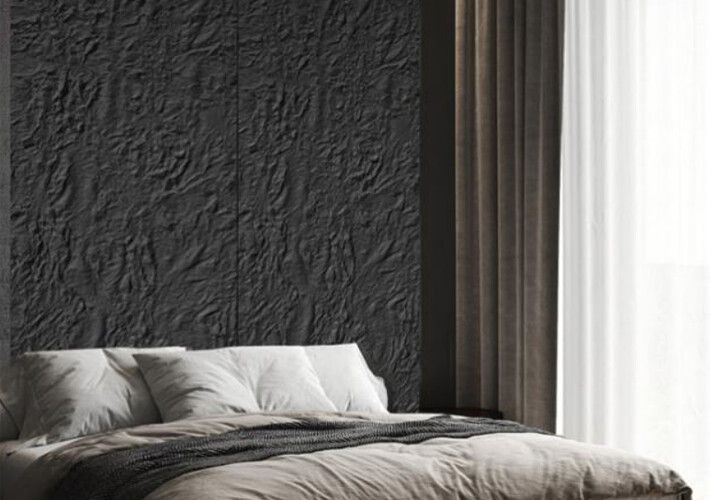
Internal Structure of PU Stone Panel
A typical PU stone panel consists of 3 main layers and optional additives.
(1) Outer UV Coating
Hard, glossy or matte protective layer.
(2) Stone Texture Surface
Printed film or sprayed color.
(3) PU Foam Core
Main structure, providing insulation and lightweight strength.
Optional Additives
- Fire retardant
- Soundproofing particles
- Reinforced mesh
- Waterproof treatment
- Emboss texture layer
This multi-layer structure makes PU stone panels stronger and more durable than most foam decorative panels.
Why These Materials Make PU Stone Panels Superior
Because of its material combination, PU stone panel offers unique benefits that natural stone, PVC stone panels, and WPC wall panels cannot achieve.
Below is a detailed comparison.
4.1 Lightweight Yet Strong
- PU density: 35–55 kg/m³
- Natural stone density: 2400–2600 kg/m³
This means PU stone panels are 95% lighter than real stone.
A single PC of PU panel weighs only 1–3 kg, allowing use in:
- Prefab houses
- Interior decoration
- Old building renovation
- High-rise installation
No reinforcement required, reducing labor cost.
4.2 Excellent Thermal and Sound Insulation
PU foam is one of the best insulating materials in construction, widely used in:
- Cold storage
- Refrigerators
- Insulation boards
- Prefabricated walls
PU stone panels therefore reduce energy consumption in buildings.
4.3 Waterproof and Moisture-Proof
The closed-cell PU structure is naturally water-resistant. This prevents:
- Mold growth
- Material swelling
- Water absorption
It performs perfectly in humid areas such as:
- Basements
- Bathrooms (non-direct water areas)
- Coastal regions
4.4 Long-Lasting Outdoor Durability
Thanks to the UV layer and PU stability, PU stone panels resist:
- Sunlight
- Rain
- Snow
- High temperatures
- Low temperatures
Outdoor lifespan can reach 10–20 years with proper installation.
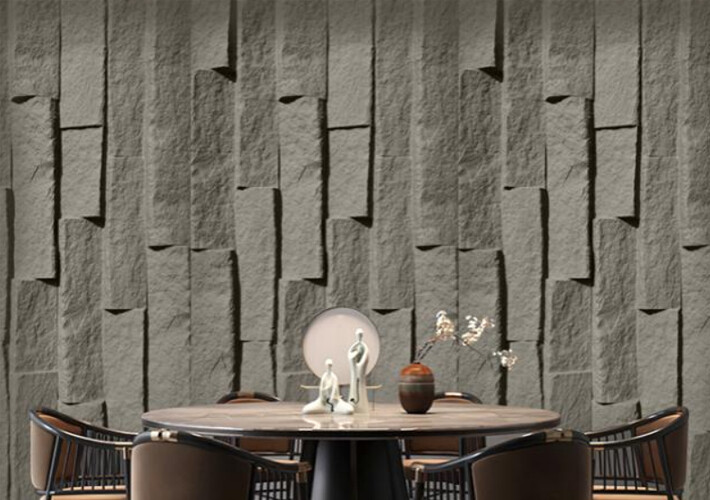
4.5 Easy & Fast Installation
Materials allow:
- Nail fixation
- Glue fixation
- Joint-free installation
- DIY installation
An average worker can install 20–35 m² per day.
4.6 Environmental Advantages
Compared with real stone, PU stone panels:
- Reduce mining
- Reduce transportation emissions due to lower weight
- Use recyclable PU material
- Contribute to sustainable decoration solutions
Raw Materials Used in PU Stone Panel Production
Here is a detailed list of the materials used in the manufacturing process.
5.1 PU Chemical Materials
Polyol: Base chemical providing flexibility
MDI (Isocyanate): Reacts with polyol to form PU foam
Foaming agent: Produces the lightweight internal structure
Catalyst: Controls reaction speed
Surfactant: Ensures stable foam
Fire retardant additives: Improve safety standards
5.2 Coating & Surface Materials
- PVC decorative film
- Acrylic paint
- Stone texture powder
- Metallic pigments
- Primer coating
- Sealant coating
5.3 Protective Materials
- UV-curable resin
- Hard coating additives
- Anti-scratch particles
5.4 Structural Additions (Optional)
- Fiberglass mesh
- Anti-crack layer
- Waterproof topcoat
How PU Stone Panels Are Manufactured
Understanding the materials also means understanding the production process.
Below is a simplified production flow.
6.1 Mold Preparation
- Aluminum or steel molds
- 3D engraved stone texture
- Heat-controlled mechanisms
Molds determine pattern, size, and realism.
6.2 PU Injection & Foaming
PU mixture (polyol + MDI + foaming agent) is:
Injected into the mold
Expanded and cured
Formed into a solid foam shape
This step defines:
- Density
- Strength
- Texture depth
6.3 Surface Application
Depending on the manufacturer:
Method A: HD Printing Film Transfer
- Film placed onto surface
- Heat transfer process
- Color fixed onto PU panel
Method B: Multi-Layer Spraying
- Primer sprayed
- Texture layer applied
- Natural color sprayed
- Artistic detailing added
6.4 UV Coating Application
After the surface is ready:
- UV coating sprayed
- UV curing machine hardens surface
- Anti-scratch layer formed
6.5 Quality Inspection
Tests include:
- Color consistency
- Surface hardness test
- Drop test
- Water absorption test
- UV aging test
- Fire retardant level
6.6 Cutting, Packaging & Shipping
Panels are:
- Trimmed
- Checked
- Packed with bubble film
- Loaded into cartons
- Palletized for export
Technical Specifications of PU Stone Panels
Typical parameters:
| Item | Value |
|---|---|
| Density | 35–55 kg/m³ |
| Thickness | 15–40 mm |
| Length | 1000–3000 mm |
| Width | 300–600 mm |
| Waterproof | Yes |
| Thermal Conductivity | 0.024–0.030 W/(m·K) |
| Fire Rating | B1/B2 (depends on additives) |
| UV Resistance | 2000–3000 hours |
| Life Span | 10–20 years |
Why Global Buyers Choose PU Stone Panels
Because of the material advantages, PU stone panels are now widely used in:
- Villa exterior walls
- Prefabricated house construction
- Garden landscape walls
- Hotel interior decoration
- Retail and coffee shop decoration
- Boutique and restaurant walls
- Community fences
They combine aesthetics, durability, and cost efficiency—making them ideal for importers and project contractors.
Key Material Advantages Compared to Other Wall Materials
Here is a comparison of PU stone panel materials with other materials:
| Material | Weight | Waterproof | Insulation | Realistic Texture | Price |
|---|---|---|---|---|---|
| PU Stone Panel | ★★★★★ | ★★★★★ | ★★★★★ | ★★★★☆ | Medium |
| Natural Stone | ★★☆☆☆ | ★★★★★ | ★★☆☆☆ | ★★★★★ | High |
| PVC Panel | ★★★☆☆ | ★★★★☆ | ★★☆☆☆ | ★★★☆☆ | Low |
| WPC Panel | ★★★★☆ | ★★★☆☆ | ★★☆☆☆ | ★★★☆☆ | Medium |
| Fiber Cement Panel | ★★★☆☆ | ★★★☆☆ | ★★★☆☆ | ★★★☆☆ | Medium |
PU stone panels offer the most balanced cost-performance ratio.
Conclusion: What PU Stone Panels Are Made Of
To summarize, PU stone panels are primarily made of:
High-density polyurethane (PU) foam core
High-definition stone texture film or sprayed coating
UV protective layer
These materials together create:
- Lightweight structure
- Realistic stone appearance
- Thermal insulation
- Waterproof performance
- Long-lasting durability
- Easy installation
This makes PU stone panel a superior alternative to natural stone and traditional wall materials for modern architecture and decoration.