
Introduction: Why Acoustic Panels Matter More Than Ever
Noise pollution has become a growing problem in modern living and working environments. Whether it is an open-plan office, a home recording studio, a hotel conference room, a restaurant, or a home theater, poor acoustics can significantly reduce comfort, productivity, and sound clarity.
This is why acoustic panels for soundproofing have become an essential building and interior solution worldwide. However, many people misunderstand what acoustic panels actually do. They are often confused with soundproof walls or insulation materials.
In reality, acoustic panels are designed to control sound inside a space, not merely block sound from entering or leaving. They absorb unwanted noise, reduce echo and reverberation, and dramatically improve speech intelligibility and audio quality.
In this comprehensive guide, we will answer one key question in depth:
What are the best acoustic panels for soundproofing, and how do you choose the right one for your project?
This article covers:
- Acoustic panel principles
- Performance indicators
- Material comparisons
- Best panel types for different applications
- Installation strategies
- Common mistakes to avoid
- Professional and commercial solutions
What Are Acoustic Panels and How Do They Work?
1.1 Definition of Acoustic Panels
Acoustic panels are sound-absorbing materials installed on walls, ceilings, or other surfaces to reduce noise reflection and reverberation within a space. Their primary purpose is sound absorption, not sound blocking.
They are widely used in:
- Recording studios
- Home theaters
- Offices and meeting rooms
- Schools and classrooms
- Hotels and commercial buildings
- Restaurants and public venues
1.2 Acoustic Panels vs Soundproofing
This distinction is critical for buyers and project planners:
| Function | Acoustic Panels | Soundproofing Materials |
|---|---|---|
| Purpose | Absorb sound | Block sound transmission |
| Target | Echo, reverb, internal noise | External noise |
| Typical Materials | Foam, PET, fiberglass, mineral wool | Concrete, gypsum, mass-loaded vinyl |
| Best Use | Improving sound quality | Noise isolation |
For true soundproofing, acoustic panels should be combined with structural isolation solutions such as double walls, floating floors, or insulation systems.

How Acoustic Panels Absorb Sound
Acoustic panels work by converting sound energy into heat energy through porous absorption.
When sound waves hit a porous surface:
Sound enters the tiny pores in the material
Air particles vibrate inside the structure
Friction dissipates energy as heat
Reflected sound is reduced
This process is highly effective for mid- and high-frequency sounds, which are responsible for echo, speech clarity issues, and harsh noise.
Low-frequency sound (bass) requires thicker materials or bass traps for effective control.
Key Performance Indicators of Acoustic Panels
3.1 NRC (Noise Reduction Coefficient)
The NRC value measures how much sound a material absorbs.
| NRC Value | Absorption Performance |
|---|---|
| 0.90 – 1.00 | Excellent |
| 0.70 – 0.89 | Very good |
| 0.50 – 0.69 | Moderate |
| Below 0.50 | Limited |
For professional applications, panels with NRC ≥ 0.80 are recommended.
3.2 Thickness and Density
- Thicker panels absorb lower frequencies
- Higher density materials absorb sound more effectively
- Air gaps behind panels improve performance
For example:
- 25 mm panels → speech & echo control
- 40–50 mm panels → music & broadcast rooms
- 75–100 mm panels → studios & performance halls
3.3 Fire Rating and Safety
In commercial projects, fire resistance is mandatory.
Common standards include:
- Class A fire rating
- EN 13501
- ASTM E84
Materials like PET fiber, mineral wool, and fiberglass are widely used for their fire safety compliance.

Types of Acoustic Panels: Materials Comparison
4.1 Acoustic Foam Panels
Overview
Foam panels are one of the most common entry-level acoustic solutions.
Advantages
- Lightweight
- Affordable
- Easy DIY installation
- Effective for mid-high frequencies
Disadvantages
- Weak low-frequency control
- Lower durability
- Limited fire resistance (unless treated)
Best for
- Home studios
- Gaming rooms
- Temporary setups
4.2 Fiberglass & Mineral Wool Acoustic Panels
Overview
These are the industry standard for professional acoustic treatment.
Advantages
- High NRC (0.90+)
- Wide frequency absorption
- Excellent fire resistance
- Long service life
Disadvantages
- Higher cost
- Heavier weight
- Professional installation recommended
Best for
- Recording studios
- Theaters
- Concert halls
- Broadcast rooms
4.3 PET Fiber Acoustic Panels
Overview
PET panels are made from recycled polyester fibers and are increasingly popular worldwide.
Advantages
- Eco-friendly & recyclable
- Odorless and safe
- Lightweight
- Good design flexibility
- Fire-rated options available
Disadvantages
- Less effective for low frequencies
- Mid-range pricing
Best for
- Offices
- Schools
- Commercial interiors
- Hotels and co-working spaces
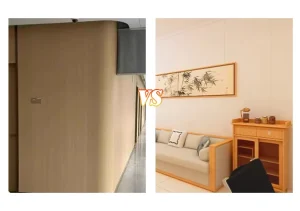
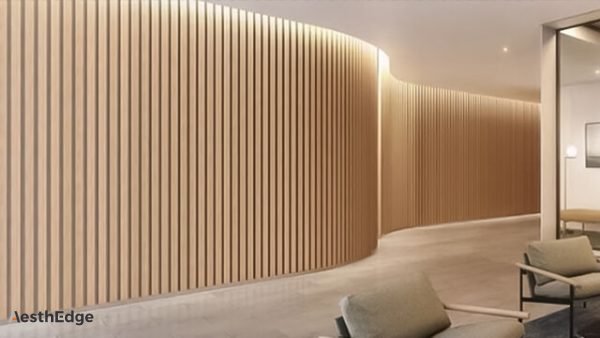
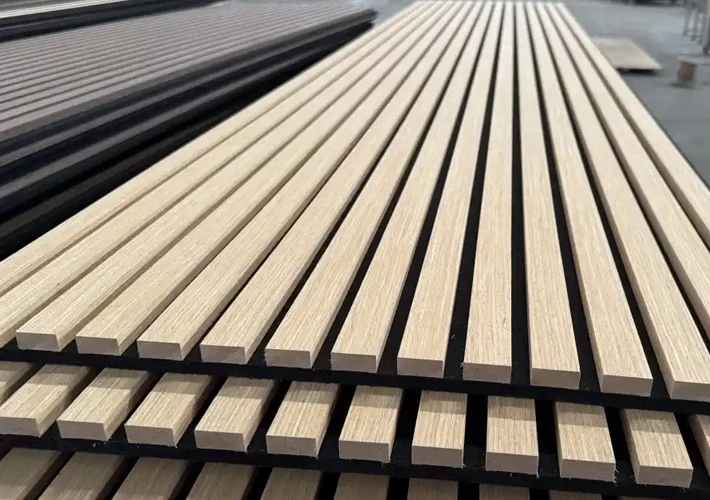
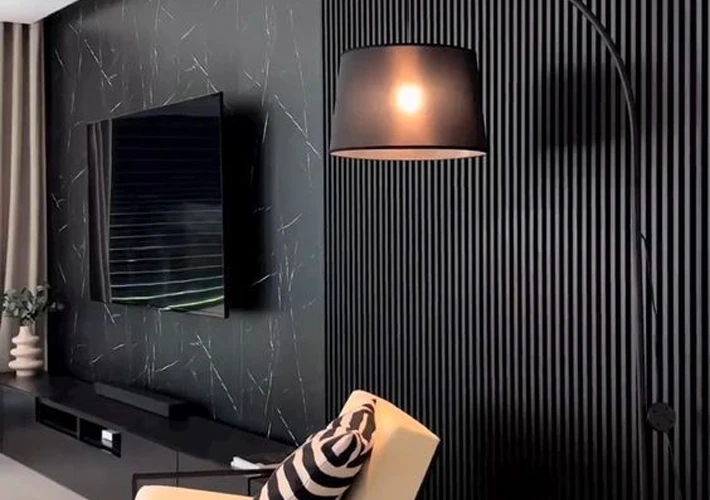
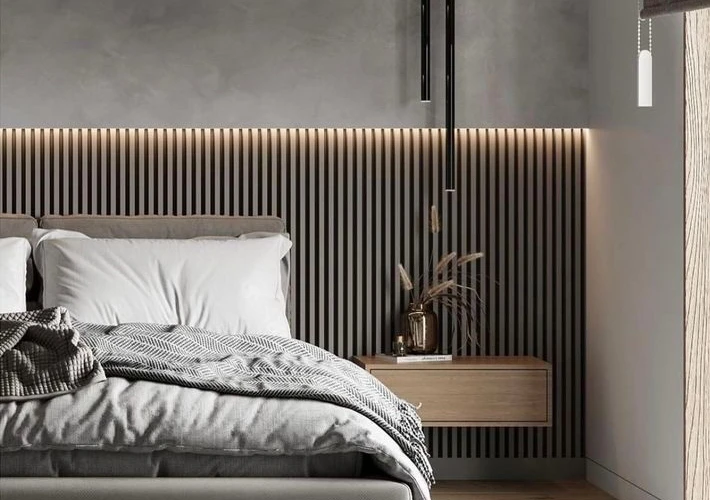
4.4 Wood Slat & Decorative Acoustic Panels
Overview
Decorative panels combine aesthetics with sound absorption.
Advantages
- High visual appeal
- Architectural integration
- Balanced absorption & diffusion
Disadvantages
- Higher cost
- Not as absorbent as mineral wool alone
Best for
- Luxury interiors
- Hotels
- Conference rooms
- Residential feature walls

Best Acoustic Panels for Different Applications
5.1 Home Theaters
Recommended:
- PET fiber panels
- Fabric-wrapped fiberglass panels
- Ceiling acoustic clouds
Goal:
- Reduce echo
- Improve dialogue clarity
- Control reflections from speakers
5.2 Recording Studios & Music Rooms
Recommended:
- High-density fiberglass panels
- Bass traps in corners
- Ceiling absorbers
Goal:
- Flat frequency response
- Minimize coloration
- Control low-frequency resonance
5.3 Offices & Commercial Spaces
Recommended:
- PET acoustic panels
- Wall-mounted or suspended panels
- Partition acoustic panels
Goal:
- Reduce speech noise
- Improve focus
- Increase productivity
5.4 Restaurants & Public Venues
Recommended:
- Decorative acoustic panels
- Ceiling baffles
- Wood slat panels
Goal:
- Reduce crowd noise
- Improve customer comfort
- Maintain design aesthetics
Installation Tips for Maximum Performance
6.1 Strategic Placement
Focus on:
- First reflection points
- Opposite parallel walls
- Ceiling reflection zones
- Room corners (for bass traps)
6.2 Air Gap Matters
Leaving a 20–50 mm air gap behind panels can improve absorption efficiency by up to 30%.
6.3 Combining Solutions
Best results come from combining:
- Acoustic panels
- Bass traps
- Sound-isolating construction
Common Mistakes to Avoid
Confusing soundproofing with sound absorption
Using panels that are too thin
Ignoring low-frequency treatment
Over-decorating without acoustic planning
Not considering fire safety standards
Are Acoustic Panels Worth the Investment?
Absolutely.
Benefits include:
- Improved sound clarity
- Better speech intelligibility
- Reduced fatigue
- Enhanced user experience
- Higher property value
- Professional acoustic compliance
For commercial projects, acoustic treatment is no longer optional—it is a design and performance requirement.
Frequently Asked Questions (FAQ)
Q1: Can acoustic panels fully soundproof a room?
No. They absorb sound inside the room but do not block sound transmission through walls.
Q2: How many acoustic panels do I need?
Typically, treating 20–40% of wall and ceiling surfaces provides effective results.
Q3: Are thicker panels always better?
Thicker panels absorb lower frequencies better, but placement and material quality are equally important.
Conclusion: Choosing the Best Acoustic Panels
There is no single “best” acoustic panel for all situations. The best choice depends on:
- Space function
- Noise type
- Budget
- Design requirements
- Fire and safety regulations
For professional and commercial projects, high-density PET fiber panels, fiberglass panels, and engineered decorative systems offer the best balance between performance, safety, and aesthetics.
When properly selected and installed, acoustic panels can transform any noisy space into a comfortable, functional, and acoustically optimized environment.