Introduction
In modern hospitality design, material selection plays a critical role in balancing aesthetics, durability, safety, and lifecycle cost. Hotels, especially high-traffic areas such as lobbies, corridors, elevator halls, and public restrooms, demand wall materials that can withstand continuous use while maintaining visual quality. In recent years, Wood Plastic Composite (WPC) wall panels have emerged as a leading solution for hotel interior applications.
Unlike traditional wall finishes such as natural wood, paint, wallpaper, or even some plastic panels, WPC wall panels combine wood fibers and thermoplastic polymers, delivering a hybrid material engineered for durability and low maintenance. Their increasing adoption across commercial buildings, airports, hospitals, and hotels reflects a broader shift toward lifecycle-efficient construction materials.
For hotel investors, procurement managers, and interior designers, choosing low-maintenance wall systems directly impacts operational costs, guest experience, and brand positioning. This article provides a comprehensive analysis of why low maintenance WPC wall panels are ideal for high traffic hotel environments, including durability performance, cost efficiency, design flexibility, installation benefits, and long-term return on investment.
What Is WPC
Wood Plastic Composite (WPC) is an engineered material made by combining wood fibers (or wood flour) with thermoplastic polymers. This combination creates a material that retains the natural appearance of wood while significantly improving performance characteristics such as moisture resistance, pest resistance, and structural stability.
WPC panels are manufactured using high-temperature extrusion or pressing processes, resulting in dense, stable structures that resist cracking, warping, or splitting compared to natural wood.
Key composition elements include:
- Recycled wood fibers
- Recycled or virgin polymers
- UV stabilizers
- Fire retardants (optional for commercial-grade panels)
- Color pigments and surface coatings
Because WPC panels can be produced using recycled materials, they also support sustainable construction initiatives, which is increasingly important for hotel brands pursuing ESG certifications and green building standards.
Why Hotels Need Low Maintenance Materials
Hotel environments are fundamentally different from residential or low-traffic commercial spaces. Materials must perform consistently under:
- Constant guest movement
- Luggage impact
- Cleaning chemical exposure
- Temperature and humidity fluctuations
- Frequent maintenance cycles
Traditional materials present limitations:
Natural Wood
Requires sealing, painting, and termite treatment regularly. Maintenance can be required 1–2 times per year.
Paint and Wallpaper
Susceptible to scratching, staining, peeling, and moisture damage.
PVC Panels
Lower initial cost but may fade or crack over time in some environments.
In contrast, WPC panels are engineered for commercial durability and require minimal ongoing maintenance, making them particularly suitable for hospitality environments.
Durability in High Traffic Areas
High traffic hotel areas require wall materials that resist daily wear from luggage wheels, carts, cleaning equipment, and guest contact.
WPC panels offer strong resistance to:
- Scratches
- Dents
- Impact damage
- Wear from cleaning operations
The composite structure ensures the panels maintain structural integrity even after years of heavy use, unlike wood which can split or rot.
Additionally, WPC is resistant to:
- Termites and insects
- Moisture and humidity
- UV exposure (with stabilizers)
- Temperature fluctuation damage
These features make WPC panels especially valuable for hotel corridors, lift lobbies, and entrance areas where traffic is constant.
Long Service Life
Lifecycle performance is one of the strongest selling points of WPC wall panels in commercial hospitality projects.
Typical lifespan benchmarks:
- Indoor commercial use: 20–30+ years
- General indoor range: 20–25 years
- Premium systems: up to 35 years in optimal conditions
Compared to alternatives:
| Material | Typical Lifespan | Maintenance |
|---|---|---|
| WPC | 20–30 years | Low |
| PVC | 10–20 years | Low |
| Wood | 10–20 years | High |
For hotel operators, this translates into fewer renovation cycles and lower long-term material replacement costs.
Low Maintenance Advantages
The defining advantage of WPC panels is their extremely low maintenance requirement.
Typical maintenance routine:
- Occasional cleaning with mild detergent
- No painting or sealing required
- No polishing or refinishing needed
In most cases, simple wiping with a damp cloth is sufficient for daily maintenance.
This significantly reduces:
- Labor costs
- Material costs
- Hotel room downtime during maintenance
- Operational disruption
For large hotel chains, maintenance savings across hundreds of rooms can be substantial.
Moisture and Waterproof Performance
Hotels constantly face moisture challenges in areas such as:
- Bathroom corridors
- Spa zones
- Swimming pool surroundings
- Coastal resorts
- Humid climates
WPC panels are inherently water-resistant due to their polymer content and do not absorb moisture like wood or MDF.
This prevents:
- Swelling
- Rotting
- Mold growth
- Surface deformation
Many commercial WPC panels are also available with fire-retardant certification, improving building safety compliance.
Cost Efficiency Over Time
Although WPC panels can have higher upfront costs than PVC or paint, they often deliver better lifecycle cost performance.
Typical price ranges:
- WPC: $50–$150 per m²
- PVC: $30–$100 per m²
- Wood: $40–$300 per m²
However, long-term cost factors favor WPC:
- No repainting
- Minimal repair
- Longer replacement cycles
- Lower maintenance labor
Over extended project timelines, WPC is often the most cost-effective option.
Design Flexibility for Hotel Branding
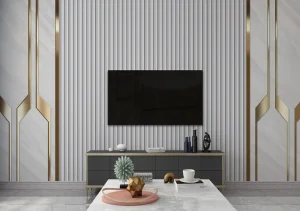
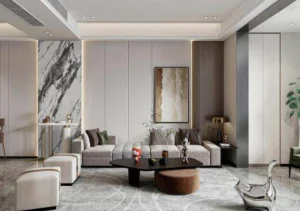
Hotels require strong visual identity across spaces. WPC panels support this through wide design versatility.
Available design options include:
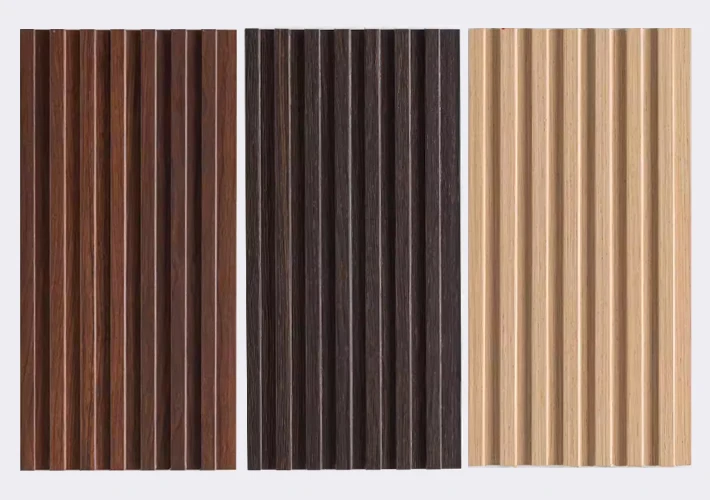
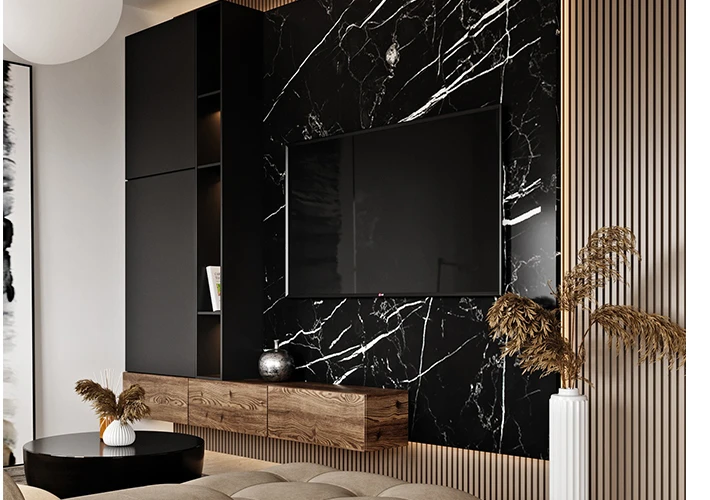
- Wood grain textures
- Marble effects
- Stone finishes
- Matte and gloss surfaces
- 3D embossed patterns
This allows designers to create:
- Luxury lobby aesthetics
- Warm guest room environments
- Modern corridor concepts
- Thematic resort interiors
Sustainability Benefits
Modern hotel brands prioritize sustainability and environmental responsibility.
WPC supports sustainability through:
- Use of recycled plastic and wood waste
- Reduced deforestation pressure
- Lower replacement frequency
- Reduced lifecycle waste
WPC can reduce replacement material usage significantly over long project timelines.
This aligns with green building certifications such as LEED and BREEAM.
Installation Efficiency for Hotel Projects
Large hotel projects require materials that support fast installation.
WPC installation advantages:
- Lightweight compared to concrete or stone alternatives
- Tongue-and-groove systems available
- Faster installation time
- Reduced labor cost
Fast installation is especially valuable for hotel renovation projects where downtime directly impacts revenue.
Ideal Hotel Applications
WPC wall panels perform exceptionally well in:
Lobby Walls
Provide premium aesthetics with durability.
Corridors
Resist luggage and trolley impact.
Elevator Surrounds
Maintain appearance under frequent contact.
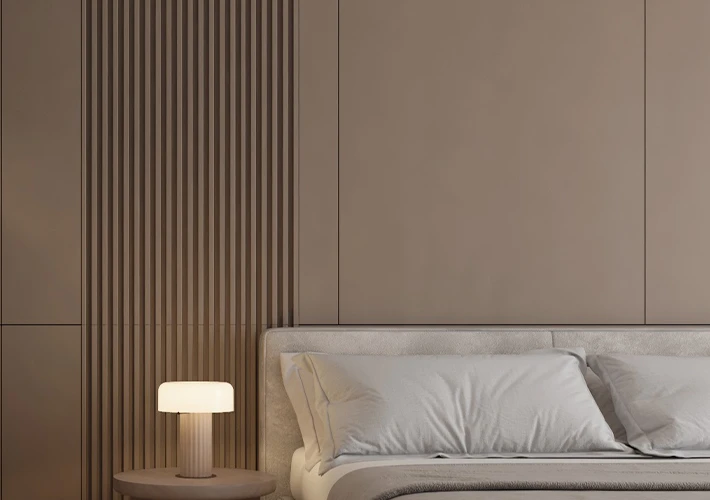
Guest Room Feature Walls
Enhance design while minimizing maintenance.
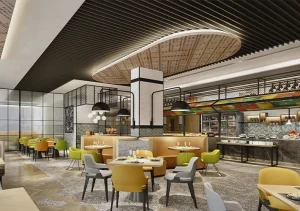
Restaurant and Lounge Areas
Combine aesthetics and easy cleaning.
Spa and Wellness Areas
Provide moisture resistance and durability.
Future Trends in Hotel Wall Materials
Industry trends indicate increasing adoption of WPC in hospitality due to:
- Rising labor costs globally
- Sustainability regulations
- Lifecycle cost focus
- Modular construction growth
- Demand for faster renovation cycles
WPC fits well into modern prefabricated interior construction models.
How to Choose Quality WPC Panels for Hotels
Key selection factors include:
Material Density
Higher density generally equals better durability.
UV Protection
Important for areas with natural light exposure.
Fire Rating
Essential for commercial compliance.
Surface Coating Quality
Impacts scratch and stain resistance.
Manufacturer Capability
Factory experience impacts consistency and performance.
Conclusion
Low maintenance WPC wall panels represent one of the most practical and cost-efficient wall solutions for high traffic hotel environments. Their combination of durability, moisture resistance, long service life, and minimal maintenance requirements makes them ideal for hospitality projects focused on lifecycle value.
As hotels continue prioritizing sustainability, operational efficiency, and premium guest experience, WPC wall panels are expected to play an increasingly important role in future interior material strategies.
For hotel developers, procurement managers, and designers, choosing WPC is not just about aesthetics — it is a strategic investment in long-term building performance and cost control.