Designing a hotel bathroom is far more complex than selecting fixtures and finishes. For hotels—where rooms are used intensively and maintenance costs directly influence profitability—choosing the right waterproof materials is the foundation of durability, safety, hygiene, and guest satisfaction. Whether for luxury hotels, resorts, boutique hotels, or budget accommodations, the materials selected will determine maintenance cycles, water damage risks, mold prevention, and even the overall aesthetics.
This comprehensive guide explains how to choose waterproof materials for hotel bathroom design, covering types of materials, technical requirements, performance indicators, installation considerations, cost factors, and supplier selection—especially when sourcing from professional Chinese factories.
Why Waterproofing Matters in Hotel Bathroom Design
Hotel bathrooms face extreme environmental conditions that residential bathrooms do not. Moisture, steam, and water exposure are constant, and cleaning cycles are more frequent. As a result, hotel owners must select waterproof materials that meet the following demands:
1.1 High-frequency usage
Hotel rooms are used by different guests every day. Showers, bathtubs, and sinks are constantly exposed to splashes, condensation, and cleaning chemicals.
1.2 Moisture-related risks
Water infiltration can damage structural layers, cause swelling of substrates, and lead to mold growth and odor—issues that significantly affect guest experience.
1.3 Maintenance & long-term costs
Poor-quality materials may require repair or replacement within 1–2 years. Strong waterproof materials can extend the renovation cycle to 8–15 years, reducing long-term operational cost.
1.4 Hygiene & safety requirements
Hotel bathrooms must meet hygiene standards. Waterproof materials should resist bacteria, mold, and chemical cleaners without deterioration.
1.5 Aesthetics & brand image
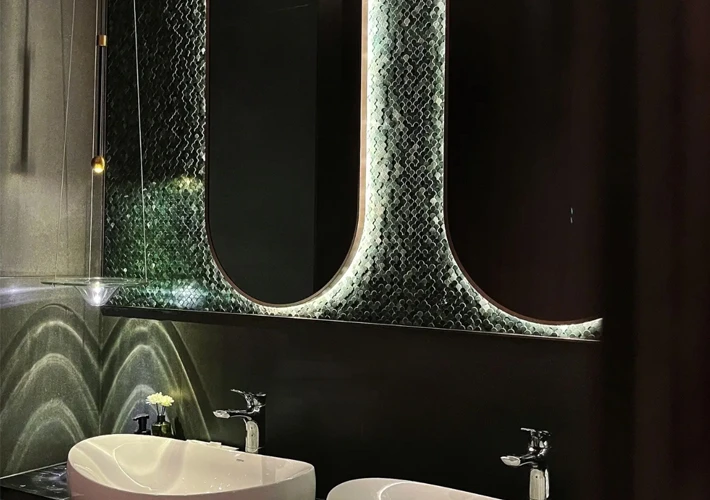
Bathroom design significantly affects star ratings and guest reviews. Many hotels choose marble-look panels, stone textures, or modern minimalist waterproof wall panels to enhance aesthetics.
Because of these reasons, selecting the right waterproof materials is one of the most important decisions for hotel construction and renovation.
Key Factors to Consider When Selecting Waterproof Materials
Selecting bathroom materials is not only about appearance. Hoteliers, designers, and contractors must evaluate the following technical and functional indicators:
2.1 Waterproof performance (Core Requirement)
Materials should offer true waterproof and moisture-proof properties, not just water-resistant surfaces.
Key indicators include:
Water absorption rate
– Should be extremely low (ideal < 0.5%)
Hydrostatic pressure resistance
– Material should not deform under long-term water exposure
Seam sealing capacity
– Good compatibility with sealants and corner strips
2.2 Durability & lifespan
Hotel bathrooms should ideally not need major renovation for 8–10 years.
Evaluate:
- Impact resistance
- Surface hardness
- Anti-scratch performance
- Resistance to chemical cleaning agents
- Deformation resistance in humid environments
2.3 Anti-mold & antibacterial properties
To maintain hygiene, choose materials that are:
- Non-porous
- Resistant to mold
- Easy to disinfect
- Certified with antibacterial coatings (optional)
2.4 Slip resistance (floor materials)
Flooring must be anti-slip, especially in wet areas such as:
- Shower zones
- Bathtub surroundings
- Toilet areas
Common rating: R10–R12 slip resistance.
2.5 Aesthetic versatility
Hotels need:
- A modern, clean appearance
- Multiple style options
- Harmony with overall interior design themes
This is why PVC marble sheets, WPC wall panels, and SPC waterproof panels are increasingly used in hotels.
2.6 Installation speed
Hotels prefer materials with fast installation, especially during renovations where rooms need to return to service quickly.
2.7 Fire resistance
Materials should meet local fire safety certifications such as:
- B1 (China standard)
- Class A/B (international standard)
2.8 Cost & ROI
Designers need to balance:
- Material cost
- Labor cost
- Installation time
- Long-term maintenance savings
Best Waterproof Materials for Hotel Bathroom Design
Below are the top waterproof materials widely used in modern hotel bathroom designs, including their features, pros, and cons.
3.1 PVC Marble Sheets (PVC Laminated Stone Look Panels)
PVC marble sheets have become extremely popular in hotel bathrooms because they provide the luxurious appearance of marble without the cost or maintenance issues.
Advantages
- 100% waterproof
- Lightweight and easy to install
- Cost-effective alternative to marble
- Strong impact resistance
- Chemical-resistant surface
- Mold-proof
- Suitable for walls and ceilings
- Wide range of marble, stone, wood, and textured finishes
- Seamless installation using click-lock or adhesive
Applications
- Shower room walls
- Toilet area walls
- Bathroom ceilings
- Basin backsplash
Why hotels love PVC marble sheets
They significantly reduce renovation time, offer a premium look, and minimize future maintenance issues.
Why source from Chinese manufacturers
As a China-based factory specializing in PVC marble sheets and hotel wall panels, we provide:
- OEM customization
- Competitive pricing
- Fast production cycles
- Stable quality control
- International shipping support
3.2 SPC Waterproof Wall Panels
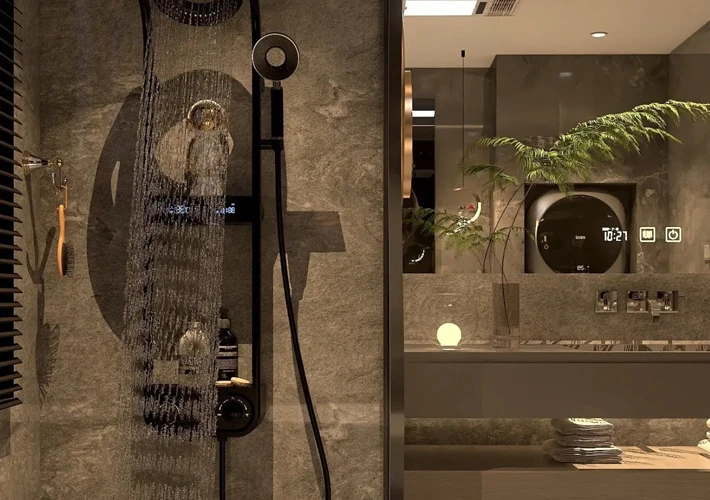
SPC (Stone Plastic Composite) wall panels are known for exceptional durability.
Features
- 100% waterproof
- Extremely rigid and strong
- Excellent mold and mildew resistance
- Fire rating up to B1
- Non-deforming
- Easy to clean
- Realistic 3D textures
Where SPC is used in hotels
- Bathroom wet areas
- Feature walls
- Renovation of old bathrooms without demolition
- Public restroom shower partitions
3.3 WPC Waterproof Wall Panels
WPC (Wood Plastic Composite) wall panels offer both aesthetic warmth and moisture resistance.
Benefits
- Waterproof and moisture-proof
- Eco-friendly and recyclable
- Good sound absorption
- Suitable for ceilings and decorative walls
- Available in wood textures and modern designs
Used in
- Hotel bathroom ceilings
- Dry zone walls
- Vanity walls
- Toilet room partitions
3.4 Aluminum Composite Panels (ACP) for Bathrooms
ACP panels are sometimes used in hotel bathrooms for their durability.
Advantages
- Waterproof
- Rust-proof
- Long lifespan
- Excellent fire resistance
- Suitable for ceilings and wall cladding
But their appearance can be too industrial for luxury hotels unless special coatings are selected.
3.5 Ceramic Tiles
Traditional but still widely used.
Pros
- Waterproof
- Heat-resistant
- Durable
Cons
- High installation labor cost
- Slow installation
- Dirty grout lines
- Mold risk in grout joints
- Hard to repair
Modern hotels are increasingly replacing tiles with PVC marble sheets or SPC panels to avoid grout maintenance.
3.6 Natural Marble & Stone
Premium-looking but not always practical.
Pros
- Luxurious aesthetics
- High hotel rating appeal
Cons
- Expensive
- Requires sealing
- Can absorb stains
- Heavy and difficult to install
- Higher structural load
For these reasons, PVC and SPC marble-look panels are replacing stone in many mid-to-high-end hotels.
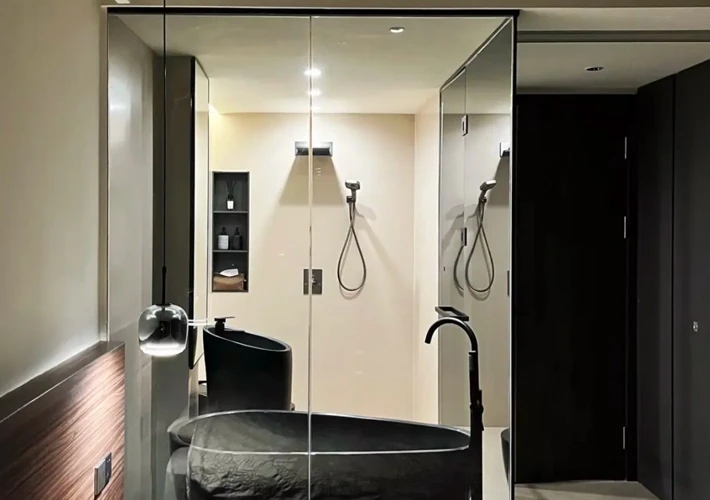
Waterproof Materials for Different Hotel Bathroom Areas
Different areas require different levels of waterproofing. Here is a recommended material selection guide:
4.1 Shower Area
Recommended materials:
- SPC wall panels
- PVC marble sheets
- Large format ceramic tiles
- Waterproof aluminum panels
Avoid materials:
- Wood veneer
- MDF panels
- Regular wallpaper
- Low-quality PVC sheets
4.2 Bathroom Ceilings
Preferred:
- PVC ceiling panels
- WPC ceiling panels
- Aluminum waterproof ceiling boards
Ceilings must resist humidity and prevent mold growth.
4.3 Vanity Wall (Basin Area)
Top choices:
- PVC marble sheets (easy to wipe water spots)
- SPC panels
- Waterproof acrylic panels
This area faces splash water; therefore, stain resistance is critical.
4.4 Toilet Area
Recommended materials:
- WPC wall panels
- PVC marble sheets
- SPC panels
Humidity is lower but cleanliness is important.
4.5 Bathroom Flooring
Hotel bathroom floors must be anti-slip and durable.
Best materials:
- Anti-slip ceramic tiles
- SPC flooring with slip-resistant coating
- Textured porcelain tiles
Avoid smooth glossy tiles for safety.
Common Mistakes to Avoid When Selecting Waterproof Materials
Even luxury hotels sometimes make the wrong material choices. Here are mistakes to avoid:
5.1 Choosing materials only based on appearance
A beautiful surface does not guarantee waterproof performance or longevity.
5.2 Using wood or MDF in wet zones
These materials absorb moisture and deform easily.
5.3 Selecting porous stone without sealing
Natural stone absorbs water unless treated.
5.4 Ignoring maintenance requirements
Grout, for example, needs frequent cleaning.
5.5 Not considering installation time
Hotels under renovation prefer fast installation materials like PVC marble sheets.
How to Evaluate a Waterproof Material Supplier (Especially in China)
When sourcing waterproof bathroom materials from China, evaluate the supplier based on:
6.1 Factory capacity
- Do they have their own production line?
- How many extrusion machines?
- Daily or monthly capacity?
6.2 Quality control
- Thickness tolerance
- Surface film quality
- Waterproof testing reports
- Fireproof grade certificates
- Impact resistance testing
6.3 Product diversity
A reliable factory should offer:
- PVC marble sheets
- SPC wall panels
- WPC ceiling and wall panels
- Hotel decorative panels
- Accessories (corners, profiles, sealants)
6.4 Export experience
Hotels require stable supply and timely delivery.
Check:
- Export countries
- Hotel project case studies
- OEM service ability
- Packaging & logistics experience
6.5 Price transparency
Avoid suppliers that give unstable or overly low prices—quality may not be guaranteed.
6.6 Customization capability
Hotels often require:
- Custom colors
- Custom sizes
- Fire-rated versions
- Laminated textures
Factories like ours can offer custom OEM production based on hotel project requirements.
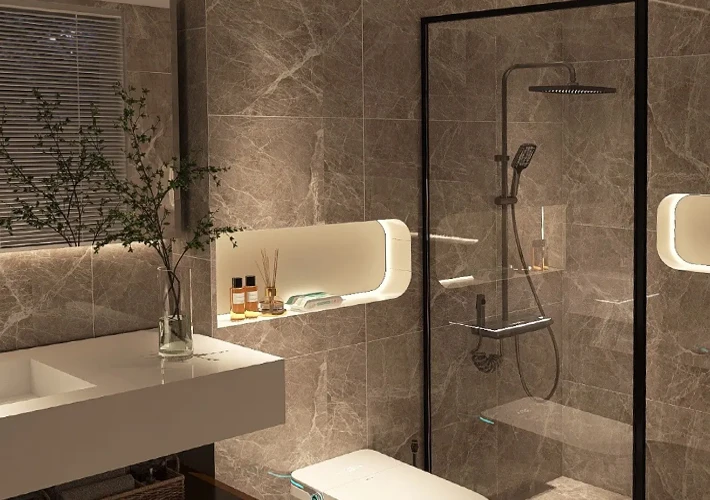
Why Many International Hotels Choose Chinese Waterproof Materials
Many global hotel chains now choose waterproof materials from Chinese manufacturers because of:
7.1 Cost savings
Material cost can be 20–60% lower than local suppliers.
7.2 Wide design variety
Thousands of surface textures, colors, and patterns.
7.3 Advanced production technology
Chinese factories have:
- Automated extrusion lines
- Hot-press laminating machines
- UV-coating machines
- CNC cutting lines
7.4 Fast delivery
Most factories maintain large inventory for fast shipments.
7.5 Stable quality
Export-oriented factories follow strict QC standards.
As a direct manufacturer specializing in hotel bathroom waterproof panels, we support global hotel projects with professional solutions.
Conclusion
Choosing waterproof materials for hotel bathroom design requires more than picking something that looks good. The right materials must be durable, hygienic, cost-effective, easy to maintain, and able to withstand high levels of moisture. Modern materials such as PVC marble sheets, SPC wall panels, and WPC ceiling panels have become mainstream solutions for hotels worldwide because they combine aesthetics, durability, and waterproof performance—while reducing installation time and overall renovation costs.
For hoteliers, designers, contractors, and procurement teams, sourcing from experienced Chinese manufacturers can significantly reduce project costs while ensuring consistent quality.
If you are planning a hotel construction or renovation project, choosing the correct waterproof materials will directly influence the long-term performance of your property.