Introduction: Why Hotel Interior Materials Matter in the European Market
Europe has one of the most mature and competitive hotel markets in the world. From luxury city hotels in Paris and London to resort hotels along the Mediterranean coast and business hotels in Germany and the Netherlands, hotel interior design in Europe is no longer just about aesthetics—it is about compliance, durability, sustainability, guest experience, and long-term operating efficiency.
For hotel owners, developers, and contractors, selecting the right hotel decoration materials is a strategic decision that directly affects:
- Guest satisfaction and online reviews
- Long-term maintenance and renovation costs
- Compliance with EU fire, environmental, and safety regulations
- Project timelines and budget control
In recent years, an increasing number of European hotel projects have started sourcing interior decoration materials directly from professional manufacturers in China, driven by cost efficiency, stable quality, large-scale customization capability, and improved international standards compliance.
This article provides a comprehensive overview of hotel decoration materials for European hotel interior projects, focusing on material types, performance requirements, European standards, design trends, and how to work effectively with a qualified Chinese supplier.
Key Requirements for Hotel Decoration Materials in Europe
Before discussing specific materials, it is essential to understand the core requirements that European hotel projects place on interior decoration materials.
Fire Safety and Regulatory Compliance
European hotel interiors must comply with strict fire safety regulations, including:
- EN 13501 fire classification (B-s1, d0 commonly required for wall and ceiling materials)
- Smoke emission control
- Flame spread and heat release limitations
Materials used in public areas such as lobbies, corridors, and conference rooms are subject to higher fire-rating requirements than residential projects.
Environmental Protection and Sustainability
Sustainability is no longer optional in Europe. Hotel decoration materials are increasingly required to meet:
- Low VOC emission standards
- Formaldehyde-free or E0 / E1 standards
- REACH and RoHS compliance
- Recyclability and long service life
Eco-friendly materials are particularly important for hotel chains positioning themselves as green or ESG-focused brands.
Durability and Maintenance Efficiency
Hotels operate at high occupancy levels. Interior materials must withstand:
- Frequent cleaning and disinfection
- High foot traffic
- Luggage impact and abrasion
- Long-term color and surface stability
Materials that reduce maintenance costs and extend renovation cycles are highly valued by European hotel operators.
Wall Decoration Materials for European Hotel Interiors
Wall materials play a critical role in defining the overall atmosphere of a hotel interior. In European projects, the focus is on visual consistency, fire safety, and ease of installation.
SPC and PVC Wall Panels
SPC (Stone Plastic Composite) and PVC wall panels are widely used in European hotel rooms, corridors, and service areas due to their:
- Waterproof and moisture-resistant properties
- Stable performance under temperature changes
- Smooth, modern surface appearance
- Fast installation and low labor cost
Advanced SPC wall panels with stone, wood, or textile patterns can replace traditional materials such as ceramic tiles or wallpaper while offering better durability.
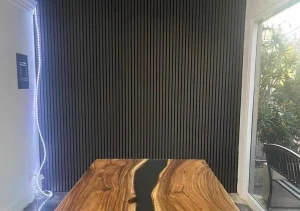
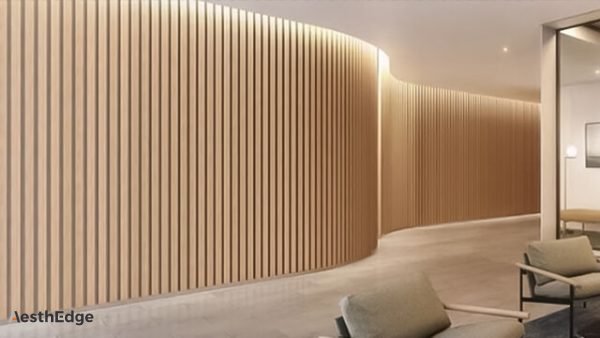
Bamboo Charcoal Wood Veneer Panels
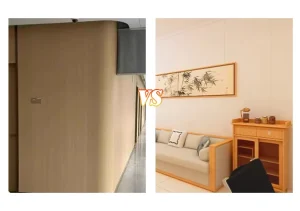
Bamboo charcoal wood veneer panels have gained popularity in mid-to-high-end European hotels because they combine natural aesthetics with functional performance.
Key advantages include:
- Improved indoor air quality through adsorption properties
- Warm, natural wood texture suitable for hospitality environments
- Compatibility with European minimalist and Scandinavian design styles
- Lightweight structure that reduces building load
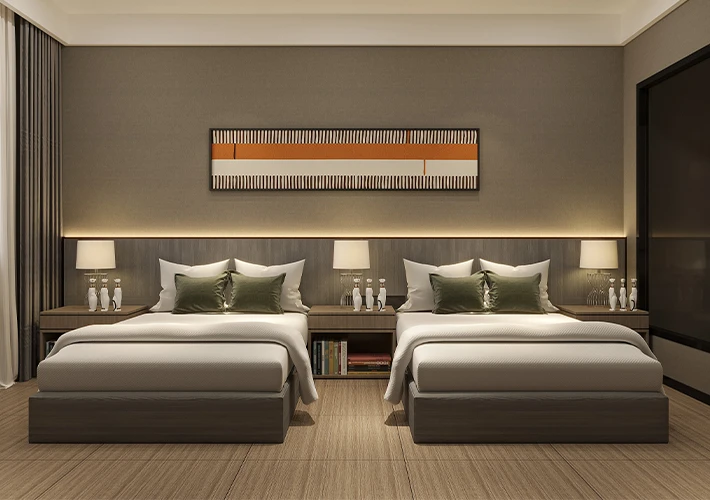
Many European designers prefer bamboo charcoal panels for feature walls, hotel room headboards, and lounge areas.
Decorative Acoustic Wall Panels
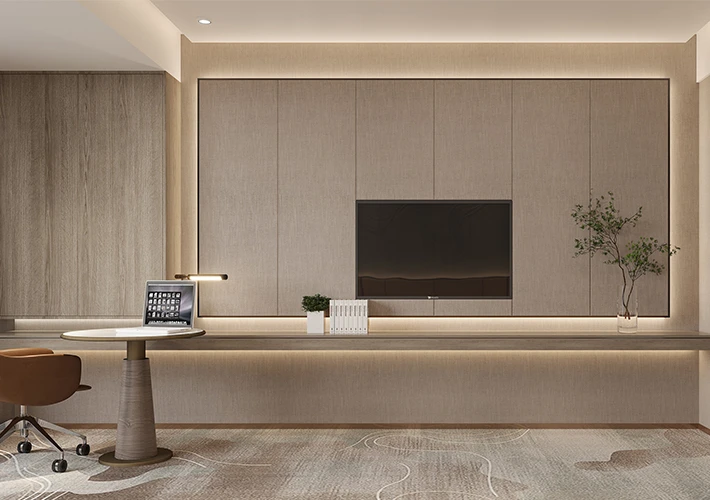
Acoustic performance is a major concern in European hotels, especially in urban locations. Decorative acoustic wall panels help:
- Reduce echo and noise transmission
- Improve guest comfort and privacy
- Meet acoustic performance expectations in public areas
Modern acoustic panels integrate sound absorption with aesthetic finishes, making them ideal for hotel lobbies, meeting rooms, restaurants, and corridors.
Flooring Materials Used in European Hotel Projects
Flooring materials must balance design consistency, slip resistance, wear resistance, and easy maintenance.
SPC and LVT Flooring
SPC and LVT flooring are among the most commonly specified materials in European hotel projects due to their:
- High abrasion resistance (AC4–AC5 levels)
- Excellent dimensional stability
- Waterproof performance suitable for bathrooms and corridors
- Realistic wood and stone visual effects
Compared with natural wood flooring, SPC flooring offers lower maintenance costs and better long-term performance.
Carpet Tiles for Hotel Rooms and Corridors
Carpet tiles remain popular in European hotel bedrooms and corridors because they provide:
- Superior acoustic absorption
- Warm underfoot comfort
- Easy replacement of damaged sections
Many European projects prefer modular carpet tiles with recycled fiber content to align with sustainability goals.
Ceiling and Decorative Surface Materials
Ceiling systems and decorative surfaces are often overlooked, but they significantly influence lighting performance, acoustic comfort, and overall design cohesion.
PVC and Composite Ceiling Panels
PVC and composite ceiling panels are widely used in bathrooms, corridors, and service areas due to their:
- Moisture resistance
- Mold and mildew prevention
- Easy cleaning and long lifespan
Decorative finishes such as matte white, wood grain, or stone texture allow seamless integration with wall and flooring materials.
Integrated Decorative Panels
Integrated wall-ceiling decorative systems are increasingly adopted in European hotel renovations, especially for fast-track projects. These systems reduce installation time while ensuring consistent quality across large hotel chains.
Hotel Furniture Surfaces and Decorative Boards
Beyond walls and floors, hotel interior projects require a wide range of decorative boards for furniture and built-in elements.
Decorative Panels for Furniture and Joinery
Common applications include:
- Wardrobes and cabinets
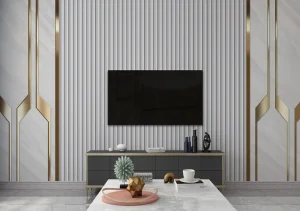
- TV background walls
- Minibar and reception counters
Decorative boards with scratch-resistant surfaces, moisture resistance, and stable color performance are preferred for European hotel furniture manufacturing.
Metal, Stone, and Hybrid Decorative Materials
European hotel interiors often combine different materials to create layered visual effects. Hybrid decorative panels that combine metal textures, stone patterns, and wood grain are increasingly used in modern hotel concepts.
European Design Trends Influencing Material Selection
Understanding European interior design trends helps suppliers and buyers make better material choices.
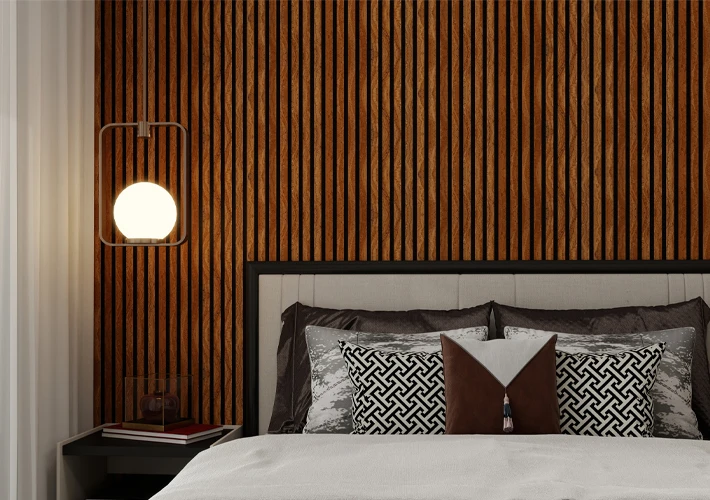
Minimalism and Natural Textures
European hotels increasingly favor:
- Neutral color palettes
- Natural textures such as wood, stone, and fabric
- Simple lines with high material quality
Materials that offer subtle texture and matte finishes are preferred over glossy or overly decorative surfaces.
Sustainability-Driven Material Choices
Hotels targeting environmentally conscious travelers prioritize materials that are:
- Recyclable or made from recycled content
- Low-emission and health-friendly
- Durable enough to reduce frequent replacement
This trend aligns well with modern Chinese manufacturing capabilities that focus on green production.
Why European Hotels Source Decoration Materials from China
Over the past decade, China has become one of the most important global suppliers of hotel decoration materials.
Manufacturing Scale and Cost Efficiency
Chinese suppliers offer:
- Large-scale production capacity
- Competitive pricing without compromising quality
- Stable supply for multi-hotel chain projects
This is especially attractive for European hotel groups managing multiple renovation projects across different countries.
Customization and OEM Capability
European hotel projects often require customized:
- Sizes and thicknesses
- Surface finishes and colors
- Fire-rating and performance specifications
Professional Chinese manufacturers are experienced in OEM and project-based customization, allowing materials to match specific hotel design concepts.
Improved Quality Control and Standards Compliance
Leading Chinese hotel decoration material suppliers now strictly follow:
- ISO quality management systems
- European fire and environmental standards
- International packaging and logistics requirements
This makes cooperation smoother and reduces project risks for European buyers.
How to Choose a Reliable Chinese Supplier for European Hotel Projects
Selecting the right supplier is critical for project success.
Key factors to evaluate include:
- Experience with European hotel projects
- Familiarity with EU standards and certifications
- Ability to provide test reports and compliance documents
- Stable production capacity and delivery timelines
- Professional communication and after-sales support
Working with a direct Chinese manufacturer rather than a trading company often results in better cost control, clearer technical communication, and more flexible customization.
Conclusion: Building Successful European Hotel Interiors with the Right Materials
Hotel decoration materials are a foundation of successful European hotel interior projects. From wall panels and flooring to ceilings and furniture surfaces, material selection affects not only design aesthetics but also safety, sustainability, guest experience, and long-term operational efficiency.
As European hotel markets continue to evolve, high-performance, eco-friendly, and cost-effective decoration materials will remain in strong demand. Professional Chinese suppliers play an increasingly important role by offering:
- Advanced manufacturing technology
- Flexible customization
- Competitive pricing
- Compliance with European standards
For European hotel developers, contractors, and designers, choosing the right materials—and the right supplier—can significantly improve project outcomes and long-term value.