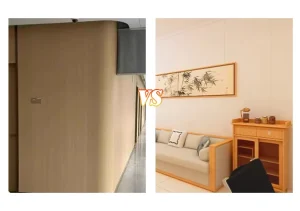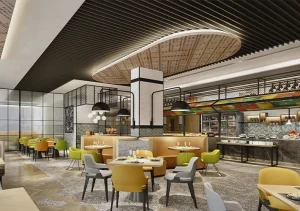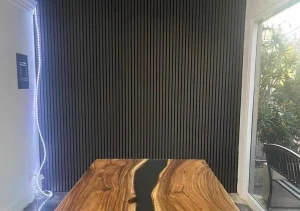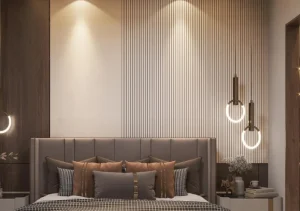
In the rapidly evolving interior decoration industry, wall panel materials have become a key decision factor for contractors, wholesalers, and project developers. Among the most popular options today are bamboo fiber wall panels and PVC wall panels. Both materials offer distinct advantages, but choosing the right one depends on project requirements, budget, environmental expectations, and performance needs.
This comprehensive guide will help you understand the differences between bamboo fiber wall panels and PVC panels from a B2B, engineering, and application perspective, so you can make the best procurement decision.
What Are Bamboo Fiber Wall Panels?
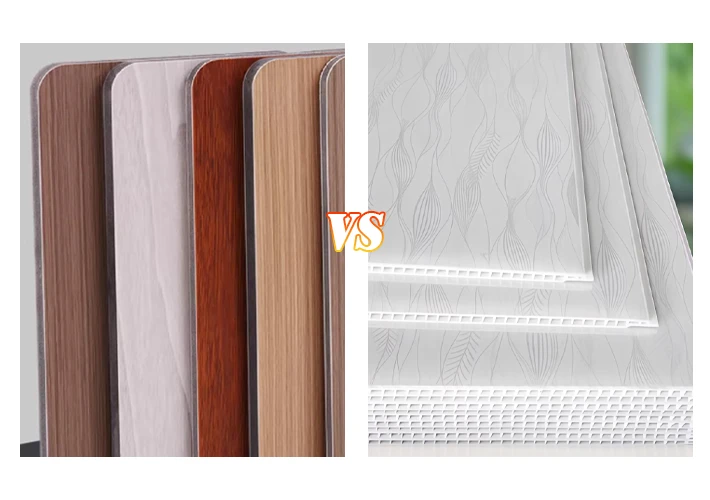
Bamboo fiber wall panels are eco-friendly composite materials made from bamboo/wood fibers mixed with resin and additives, forming a strong and lightweight structure.
They are typically manufactured using high-temperature extrusion and feature a multi-layer or hollow-core structure, which enhances insulation and reduces weight.
Key Characteristics:
- Natural fiber content (30%–70%)
- Wood-like texture and premium appearance
- Lightweight hollow structure
- Good thermal and acoustic insulation
- Eco-friendly and renewable raw material
What Are PVC Wall Panels?
PVC wall panels are made from polyvinyl chloride (a synthetic plastic polymer) and are widely used in interior decoration due to their affordability and water resistance.
They are typically produced through extrusion and can be designed in various colors, textures, and finishes.
Key Characteristics:
- 100% synthetic material
- Lightweight and flexible
- Waterproof and moisture-resistant
- Easy installation and maintenance
- Cost-effective solution
Key Differences Between Bamboo Fiber and PVC Panels
1. Material Composition
The most fundamental difference lies in the raw materials:
- Bamboo Fiber Panels: Natural bamboo/wood fibers + eco-friendly resin
- PVC Panels: Petroleum-based plastic (PVC resin)
👉 This difference directly impacts sustainability, performance, and environmental safety.
2. Environmental Impact
Bamboo fiber panels are widely recognized as a green building material:
- Bamboo is renewable (3–5 year growth cycle)
- Absorbs CO₂ and releases oxygen
- Lower carbon footprint in production
In contrast, PVC panels:
- Are derived from fossil fuels
- Require high energy consumption
- May release VOCs or harmful additives over time
✅ Conclusion:
For eco-conscious projects (hotels, commercial spaces, EU/US markets), bamboo fiber panels are clearly superior.
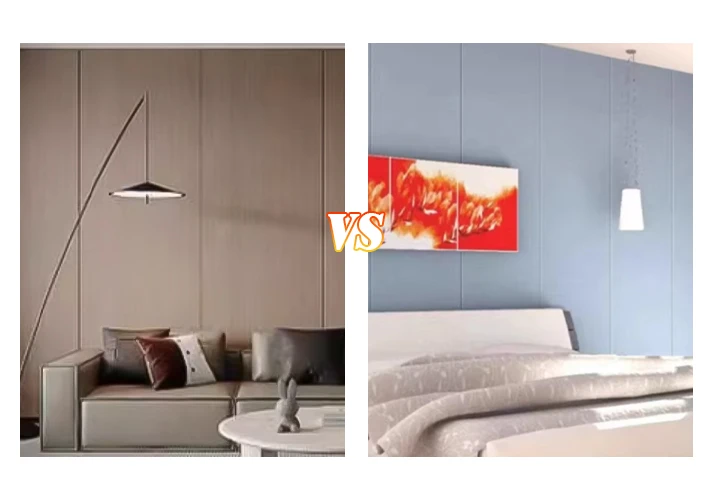
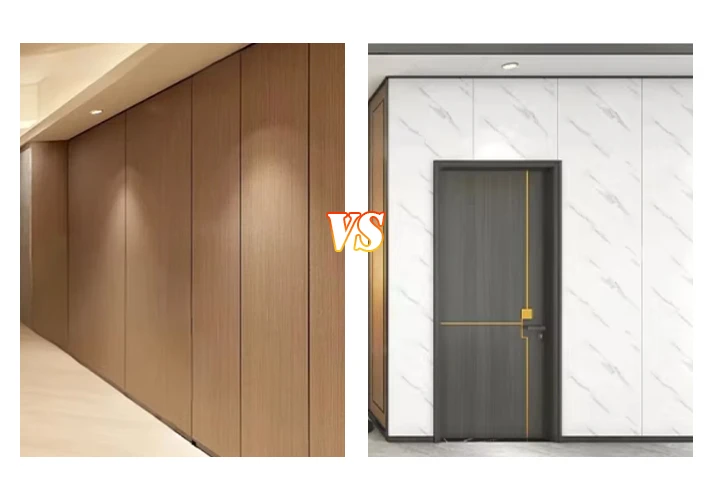
3. Appearance and Aesthetic Value
- Bamboo Fiber Panels:
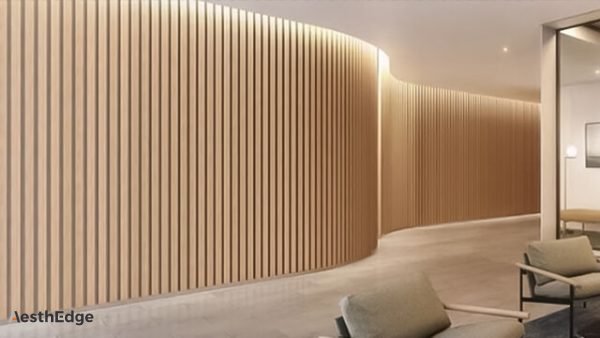
- Natural wood grain texture
- Warm, premium decorative effect
- Suitable for high-end interiors
- PVC Panels:
- Smooth, plastic-like surface
- Can imitate wood/marble but lacks depth
- Better for simple or functional spaces
👉 Bamboo fiber panels provide a more authentic and high-end finish.
4. Durability and Strength
Bamboo fiber panels:
- High tensile strength due to fiber reinforcement
- Better resistance to scratches and impacts
- Stable under temperature changes
PVC panels:
- Flexible but less rigid
- May deform under high temperature (>60°C)
✅ Conclusion:
Bamboo fiber panels perform better in long-term durability and structural stability.
5. Moisture Resistance
This is where PVC panels excel:
- PVC Panels:
- 100% waterproof
- Ideal for bathrooms, kitchens, humid areas
- Bamboo Fiber Panels:
- Can absorb moisture
- Risk of swelling or deformation in high humidity
✅ Conclusion:
For wet environments, PVC panels are the better choice.
6. Fire Resistance and Safety
- Bamboo fiber panels often include flame-retardant additives and offer better fire resistance in composite form
- PVC panels have a lower ignition point and may release toxic fumes when burned
👉 In commercial projects (hotels, offices), this difference is critical.
7. Installation and Construction Efficiency
Both materials are easy to install, but:
- PVC Panels:
- Lightweight
- Usually adhesive-based installation
- Faster and lower labor cost
- Bamboo Fiber Panels:
- Slightly heavier
- Often use clip or keel systems
- More stable but slightly higher installation cost
8. Cost Comparison
- PVC Panels:
- Low cost
- Ideal for budget projects
- Bamboo Fiber Panels:
- Higher initial cost
- Better long-term value
👉 Bamboo panels are more expensive due to raw materials and processing costs.
Application Scenarios: Which One Should You Choose?
Choose Bamboo Fiber Wall Panels If:
- You are targeting high-end residential or hotel projects
- Your clients value eco-friendliness and sustainability
- You need premium aesthetics and texture
- The environment is dry or climate-controlled
Choose PVC Panels If:
- You need cost-effective solutions
- The project involves wet or humid areas
- You want fast installation and low maintenance
- The project is large-scale with budget constraints
B2B Perspective: Import & Wholesale Considerations
From a global trade perspective, choosing between bamboo fiber and PVC panels involves more than performance:
Bamboo Fiber Panels (Premium Market)
- Higher profit margins
- Suitable for Europe, USA, Australia
- Strong demand in green building projects
- Branding advantage (eco-friendly positioning)
PVC Panels (Mass Market)
- High volume sales
- Suitable for developing markets
- Competitive pricing strategy
- Easier logistics due to lightweight nature
Future Trends in Wall Panel Materials
The global building materials market is shifting toward:
- Sustainable materials
- Low-carbon manufacturing
- Health-conscious interiors
Bamboo fiber panels align strongly with these trends, while PVC panels continue to dominate cost-driven markets.
👉 In the next 5–10 years:
- Bamboo fiber panels will grow in premium segments
- PVC panels will remain dominant in budget and functional applications
Final Verdict: Which Is Better?
There is no absolute “better” material—it depends on your project needs.
Quick Summary:
| Factor | Bamboo Fiber Panels | PVC Panels |
|---|---|---|
| Eco-friendliness | ⭐⭐⭐⭐⭐ | ⭐⭐ |
| Aesthetics | ⭐⭐⭐⭐⭐ | ⭐⭐⭐ |
| Durability | ⭐⭐⭐⭐ | ⭐⭐⭐ |
| Waterproof | ⭐⭐ | ⭐⭐⭐⭐⭐ |
| Cost | Higher | Lower |
| Application | High-end interiors | Wet & budget spaces |
Conclusion
If your goal is to deliver premium, sustainable, and high-value interior projects, bamboo fiber wall panels are the better choice.
If your priority is cost control, moisture resistance, and installation efficiency, PVC panels remain a practical and reliable solution.
If you are sourcing wall panels for wholesale or project supply:
- Looking for eco-friendly, high-end bamboo fiber panels?
- Or need competitive PVC panel solutions at scale?
👉 Partner with a reliable Chinese manufacturer to ensure:
- Stable quality
- Competitive pricing
- Custom OEM/ODM solutions
Contact us today to get catalogs, samples, and project quotations.