Introduction: Why Proper Installation Matters for Bamboo Charcoal Wood Veneer
Bamboo Charcoal Wood Veneer has rapidly become one of the most popular interior decorative materials in global commercial and residential projects. From hotels and apartments to offices, shopping malls, and high-end villas, this material is widely adopted for its environmental performance, modern aesthetics, ease of installation, and cost efficiency.
However, no matter how good the material quality is, incorrect installation can significantly reduce its lifespan, visual effect, and functional performance. Problems such as surface bubbling, joint cracking, warping, or uneven walls are almost always related to improper installation methods rather than material defects.
This Bamboo Charcoal Wood Veneer Installation Guide is written from a professional manufacturer and B2B supplier perspective, especially suitable for:
- Overseas wholesalers and importers
- Interior contractors and installers
- Hotel and commercial project owners
- Architects and designers
- Distributors sourcing from China factories
In this guide, we will explain the complete installation process, from surface preparation and material handling to different fixing methods, joint treatment, and post-installation maintenance. Whether you are installing bamboo charcoal veneer for the first time or managing large-scale projects, this article will help you avoid common mistakes and ensure professional results.
What Is Bamboo Charcoal Wood Veneer? (Quick Technical Overview)
Before discussing installation, it is essential to understand the structure of bamboo charcoal wood veneer, as its layered composition directly affects the installation method.
Typical Layer Structure
A standard bamboo charcoal wood veneer panel usually consists of:
1.Decorative surface film (wood grain, marble, fabric, metal texture, etc.)
2.PVC or PET wear-resistant layer
3.Bamboo charcoal fiber core layer
4.Stabilizing backing layer
Key Installation-Relevant Features
- Lightweight compared to stone or ceramic tiles
- Flexible but dimensionally stable
- Good wall adaptability, suitable for slightly uneven surfaces
- Can be cut with standard woodworking tools
- Supports multiple installation methods (glue, clip system, framing)
Because of these characteristics, bamboo charcoal veneer is widely used in renovation projects, where fast installation and minimal structural damage are required.
Tools and Materials Required Before Installation
Proper preparation saves time and reduces installation risks. Below is a professional checklist commonly used by installers and contractors.
Essential Tools
- Electric cutting saw or fine-tooth hand saw
- Utility knife
- Measuring tape and laser level
- Rubber hammer
- Caulking gun
- Putty knife or scraper
- Straight edge or aluminum ruler
Installation Materials
- Structural adhesive or eco-friendly wall panel glue
- Foam glue (for uneven surfaces, if needed)
- Aluminum or PVC trims (corner, edge, joint profiles)
- Expansion screws (if using keel or batten system)
- Cleaning cloth and alcohol wipes
Professional tip:
For overseas projects, many Chinese factories can pre-package installation accessories, trims, and matching adhesives together with bamboo charcoal veneer panels, reducing local sourcing difficulties.
Wall Surface Requirements and Preparation
Wall preparation is the most critical step in bamboo charcoal wood veneer installation. Even premium-grade panels cannot compensate for poorly prepared surfaces.
Acceptable Wall Types
Bamboo charcoal veneer can be installed on:
- Cement walls
- Concrete walls
- Gypsum board (drywall)
- Old ceramic tile walls (with proper treatment)
- Plywood or MDF surfaces
Wall Condition Requirements
The wall must be:
- Dry (moisture content below recommended limits)
- Clean (free from dust, oil, and loose particles)
- Structurally stable (no hollowing or cracking)
- Relatively flat (deviation within acceptable tolerance)
Surface Treatment Steps
Remove old wallpaper, peeling paint, or loose plaster
Repair cracks and holes with filler
Sand uneven areas
Clean the wall surface thoroughly
Apply primer if required (especially for dusty cement walls)
Important note:
Do not install bamboo charcoal veneer on walls with active moisture issues. Moisture control must be solved first.
Bamboo Charcoal Wood Veneer Installation Methods Explained
Depending on project scale, wall condition, and design requirements, bamboo charcoal wood veneer can be installed using different methods.
Method 1: Adhesive Installation (Most Common)
This is the most popular method for residential and commercial interior projects.
Steps:
- Apply structural adhesive in vertical or zigzag lines on the back of the panel
- Press the panel firmly against the wall
- Use a rubber hammer to tap gently for full contact
- Adjust alignment with a level before the glue sets
Advantages:
- Fast installation
- No need for additional framework
- Minimal space occupation
- Lower material cost
Suitable For:
- Flat cement or drywall surfaces
- Hotel rooms and apartments
- Renovation projects with tight schedules
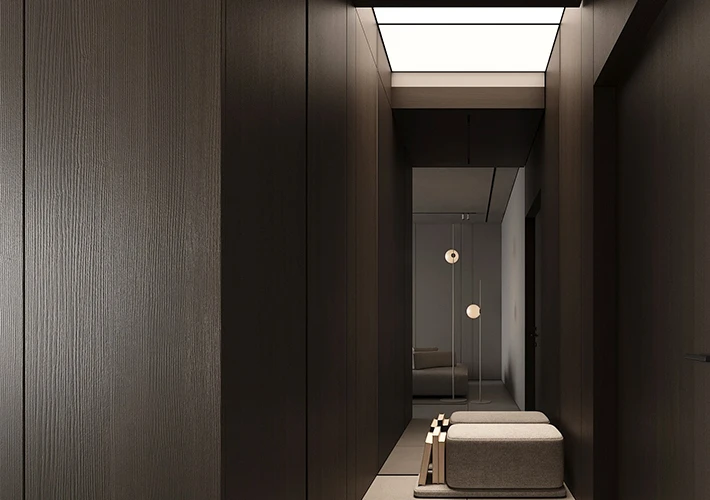
Method 2: Keel / Batten System Installation
This method uses metal or wooden battens fixed to the wall, with veneer panels installed on top.
Steps:
- Fix vertical or horizontal battens to the wall
- Ensure battens are level and evenly spaced
- Fix veneer panels onto battens using screws or clips
- Cover fixing points with trims or decorative strips
Advantages:
- Better wall leveling
- Allows space for wiring or insulation
- Higher structural stability
Suitable For:
- Uneven walls
- Large commercial spaces
- Projects requiring hidden wiring
Method 3: Clip or Locking System Installation
Some bamboo charcoal veneer products are designed with tongue-and-groove or locking systems.
Advantages:
- Clean appearance with no visible glue
- Faster standardized installation
- Easy panel replacement
Suitable For:
- High-end commercial projects
- Modular wall systems
- Export-oriented standardized products
Cutting, Fitting, and Corner Treatment
Accurate cutting and joint handling determine the final visual quality.
Panel Cutting Guidelines
- Measure twice before cutting
- Use fine-tooth saws for clean edges
- Cut decorative side facing up to avoid chipping
- Smooth edges with sandpaper if needed
Corner Solutions
- Internal corners: Butt joint or aluminum internal corner trim
- External corners: L-shaped metal or PVC corner trim
- Door and window frames: Use matching edge profiles for clean finishing
Professional installers prefer factory-matched trims, which ensure consistent color and texture.
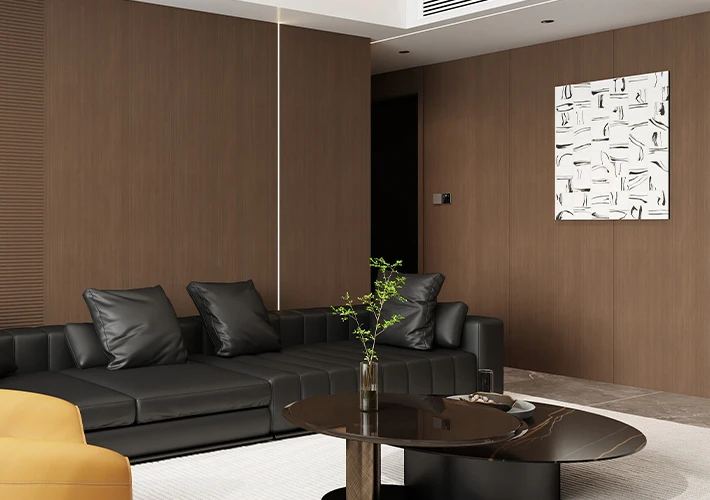
Joint Treatment and Seam Alignment
Proper joint treatment enhances both aesthetics and durability.
Recommended Joint Gap
- Typically 1–2 mm expansion gap between panels
- Slight gap allows thermal expansion and prevents warping
Joint Finishing Options
- Aluminum decorative strips
- PVC color-matched trims
- Invisible butt joints (for premium flat walls)
Avoid excessive force during panel alignment, which may damage surface films.
Installation in Different Application Scenarios
Residential Interiors
- Living room feature walls
- Bedroom headboards
- TV background walls
Adhesive installation is usually sufficient.
Commercial Spaces
- Offices
- Shopping malls
- Restaurants
Keel system or clip system is recommended for durability.
Hotel Projects
- Guest room walls
- Corridor walls
- Reception areas
Fast installation and replaceability are key advantages of bamboo charcoal veneer in hotel renovation projects.
Common Installation Mistakes and How to Avoid Them
- Installing on damp walls
→ Always test moisture levels - Using low-quality adhesive
→ Choose factory-recommended glue - Ignoring expansion gaps
→ Leave proper spacing - Uneven wall preparation
→ Level the wall before installation - Rushing alignment
→ Use laser levels and check frequently
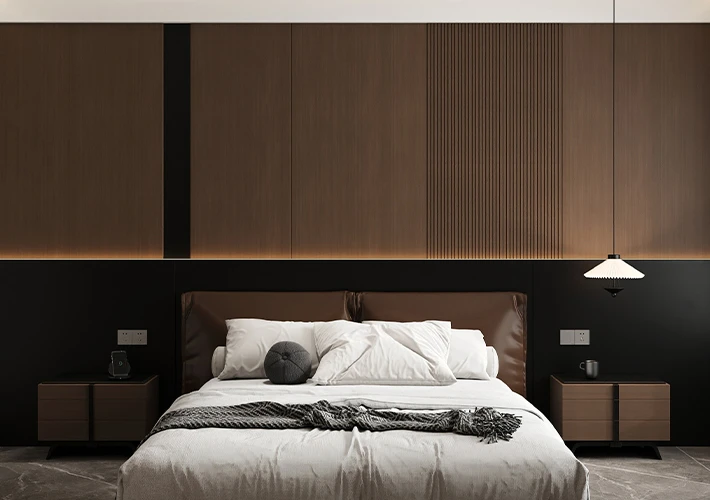
Post-Installation Inspection and Maintenance
Inspection Checklist
- Panel alignment and flatness
- Secure bonding
- Clean joints and trims
- No surface scratches
Maintenance Tips
- Clean with soft cloth and mild detergent
- Avoid abrasive cleaners
- Do not expose to direct water flow
- Regular dust removal maintains appearance
With proper installation and maintenance, bamboo charcoal wood veneer can maintain excellent appearance for 10–15 years or longer in interior environments.
Why Work with a Professional Bamboo Charcoal Wood Veneer China Factory
For global B2B buyers, sourcing directly from an experienced China factory offers clear advantages:
- Stable quality control
- Customized panel sizes and thickness
- Matching trims and accessories
- Bulk export packaging
- Technical installation guidance
Many Chinese manufacturers also provide installation manuals, videos, and remote technical support, helping overseas partners reduce after-sales issues and installation risks.
Conclusion: Professional Installation Ensures Maximum Value
Bamboo Charcoal Wood Veneer is a high-performance interior decorative solution, but its true value is only realized through correct installation practices. From wall preparation and adhesive selection to joint treatment and finishing details, every step matters.
This Bamboo Charcoal Wood Veneer Installation Guide is designed to serve as a practical reference for wholesalers, contractors, and project managers worldwide. By following professional installation standards and working with reliable manufacturers, you can ensure:
- Faster project delivery
- Superior visual results
- Long-term durability
- Higher client satisfaction
If you are sourcing bamboo charcoal wood veneer for international projects, choosing a professional China factory with export experience and technical support is one of the most effective ways to ensure installation success and commercial competitiveness.