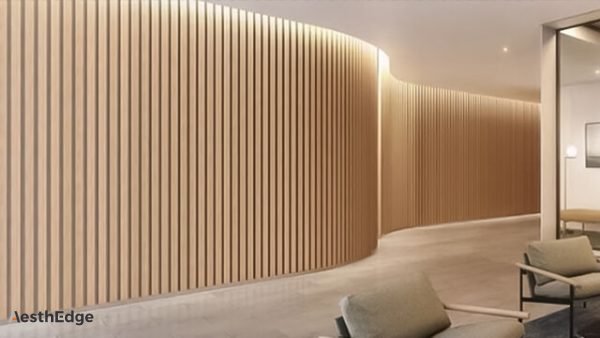
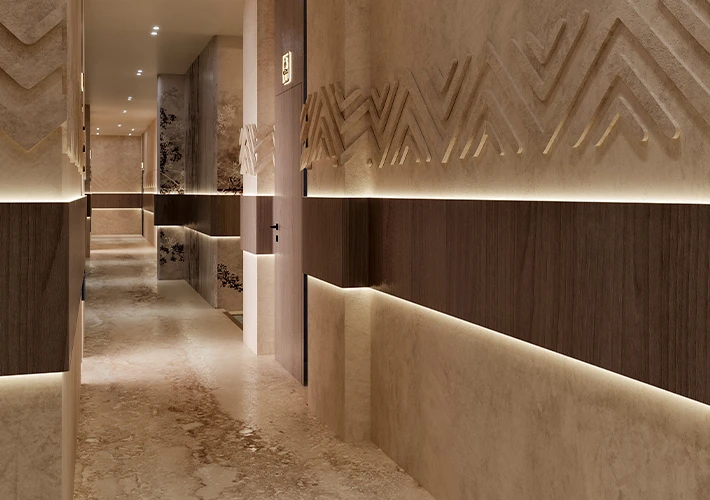
In recent years, the global hotel industry has undergone a significant transformation. From luxury resorts to business hotels and boutique hospitality projects, owners and developers are no longer satisfied with materials that only look good. Instead, they demand decorative solutions that integrate aesthetics, durability, environmental performance, indoor comfort, and long-term cost efficiency.
Against this backdrop, Bamboo Charcoal Wood Veneer has rapidly emerged as a preferred interior wall and ceiling material for hotel projects worldwide. Known for its natural texture, functional performance, eco-friendly attributes, and flexible customization, bamboo charcoal wood veneer is increasingly used in hotel lobbies, guest rooms, corridors, restaurants, conference halls, and wellness areas.
As a professional Chinese manufacturer, Aesthedge has been supplying bamboo charcoal wood veneer solutions to international hotel projects across Asia, Europe, the Middle East, and North America. This article provides a comprehensive, practical, and project-oriented guide to Bamboo Charcoal Wood Veneer for Hotel Use, helping hotel investors, architects, designers, and procurement teams understand why this material has become a strategic choice in modern hospitality design.
What Is Bamboo Charcoal Wood Veneer and Why It Fits Hotel Interiors
Bamboo charcoal wood veneer is a composite decorative panel produced by combining bamboo charcoal powder, high-density substrates, and advanced surface finishing technologies. Unlike traditional natural wood veneer, it is engineered for stability, consistency, and functional performance, making it particularly suitable for large-scale commercial applications such as hotels.
At its core, bamboo charcoal is produced through the high-temperature carbonization of bamboo. This process creates a porous internal structure capable of absorbing moisture, odors, and certain airborne pollutants. When integrated into wall and ceiling panels, these properties translate into improved indoor comfort and air quality, which are increasingly valued in hotel environments.
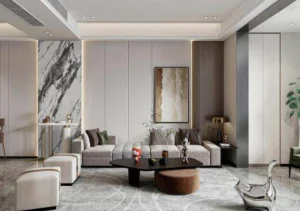
From a design perspective, bamboo charcoal wood veneer offers a wide range of surface options, including natural wood grain, stone texture, fabric effects, metallic finishes, and custom patterns. This allows hotel designers to achieve a premium visual appearance without relying on fragile or high-maintenance natural materials.
For hotels, the appeal lies in its balance of luxury appearance and engineering reliability. Unlike solid wood, bamboo charcoal wood veneer resists warping, cracking, and color inconsistency. Compared with traditional laminates, it delivers a warmer, more natural aesthetic with added functional benefits.
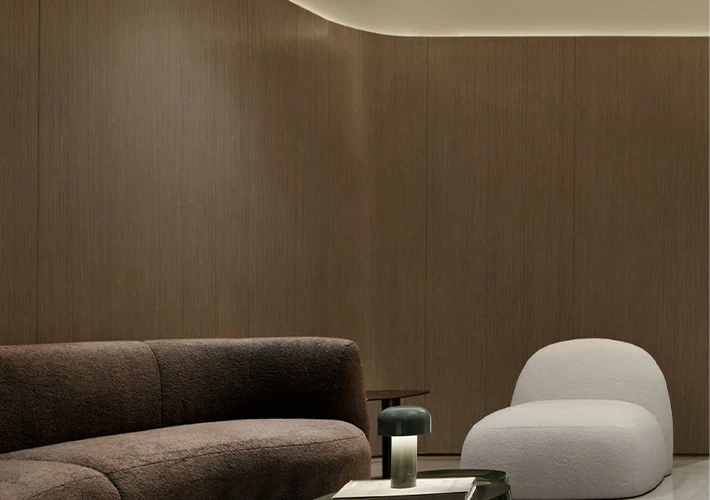
Key Performance Advantages for Hotel Projects
Hotels are high-traffic commercial environments that impose stricter requirements on interior materials than residential spaces. Bamboo charcoal wood veneer has gained popularity in hotel use because it aligns closely with these performance demands.
Moisture Resistance and Dimensional Stability
Hotels operate 24/7 and often face fluctuating humidity levels, especially in coastal regions or areas with strong seasonal changes. Bamboo charcoal wood veneer exhibits excellent moisture resistance, significantly reducing the risk of swelling, deformation, or delamination over time.
Fire Safety Performance
Fire safety is a critical concern for hotels worldwide. Bamboo charcoal wood veneer can be manufactured to meet international fire-retardant standards, including Class B or higher, depending on project requirements. This makes it suitable for use in corridors, guest rooms, and public areas where compliance is mandatory.
Sound Absorption and Acoustic Comfort
Guest satisfaction is closely linked to acoustic performance. Bamboo charcoal wood veneer panels can be combined with acoustic backing layers to help reduce noise transmission, especially in guest rooms, conference halls, and corridors.
Easy Maintenance and Long Service Life
Hotels prioritize materials that minimize maintenance costs. Bamboo charcoal wood veneer surfaces are resistant to stains and scratches and can be cleaned easily with standard hotel housekeeping procedures, contributing to a longer lifecycle and reduced operational expenses.
Applications of Bamboo Charcoal Wood Veneer in Hotel Spaces
One of the strongest advantages of bamboo charcoal wood veneer is its versatility across different hotel zones. It is not limited to a single decorative role but can be applied throughout the property to achieve design continuity.
Hotel Lobbies and Reception Areas
The lobby is the visual and emotional centerpiece of a hotel. Bamboo charcoal wood veneer panels with premium wood grain or stone textures create a strong first impression while reinforcing a sense of warmth and sophistication.
Guest Rooms and Suites
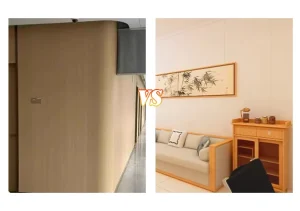
In guest rooms, bamboo charcoal wood veneer is commonly used on feature walls, headboard backgrounds, TV walls, and ceilings. Its air-purifying properties and natural appearance contribute to a healthier and more relaxing stay experience.
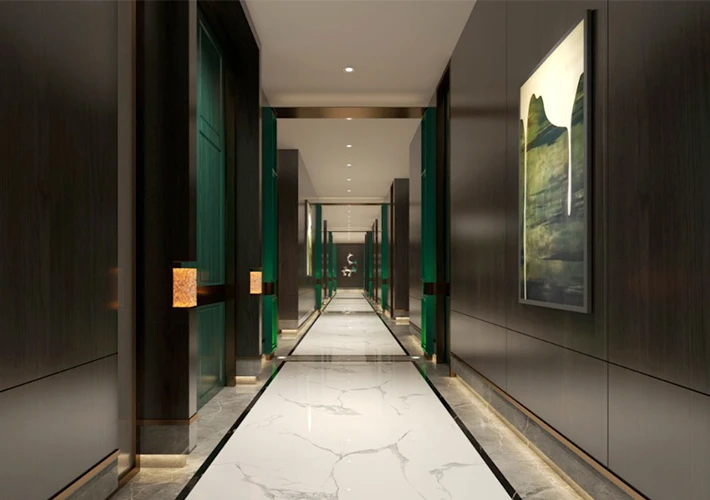
Corridors and Elevator Lobbies
These high-traffic areas require materials that are durable, fire-rated, and easy to clean. Bamboo charcoal wood veneer meets these requirements while maintaining a high-end visual standard.
Restaurants, Bars, and Cafés
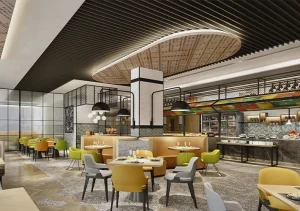
Hospitality dining spaces often emphasize atmosphere. Bamboo charcoal wood veneer helps create a cozy and elegant environment while resisting moisture and odors commonly associated with food service areas.
Conference Rooms and Business Centers
In business-focused hotels, bamboo charcoal wood veneer enhances acoustic performance and creates a professional, refined setting suitable for meetings and events.
Design Flexibility and Customization for Hotel Branding
Modern hotels increasingly rely on interior design to express brand identity. Bamboo charcoal wood veneer supports this trend by offering extensive customization options.
Manufacturers like Aesthedge provide custom colors, textures, panel sizes, thicknesses, and surface finishes tailored to specific hotel concepts. Whether the project aims for a minimalist Scandinavian style, a luxury Middle Eastern aesthetic, or a contemporary business hotel atmosphere, bamboo charcoal wood veneer can be adapted accordingly.
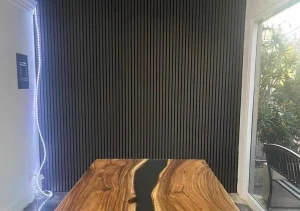
In addition, panels can be produced with integrated lighting grooves, concealed installation systems, and modular designs, making them compatible with complex architectural requirements. This flexibility allows hotel designers to balance creativity with practicality, especially in large-scale projects.
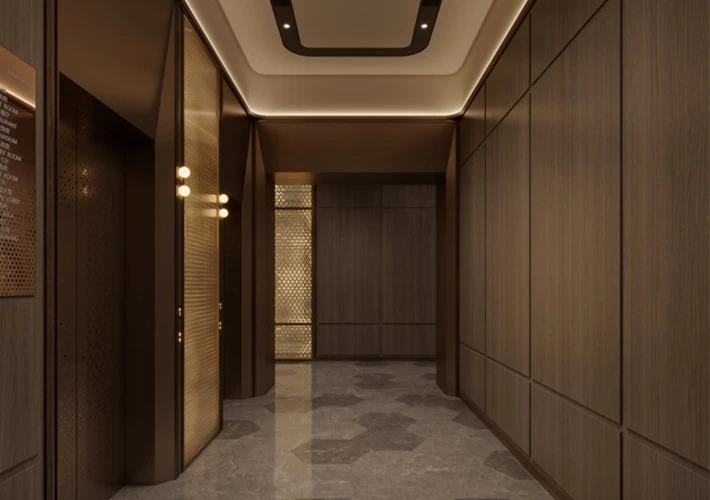
Sustainability and Green Building Value for Hotels
Sustainability is no longer optional in the hospitality industry. International hotel groups and independent developers alike are under pressure to reduce their environmental footprint while maintaining profitability.
Bamboo charcoal wood veneer aligns well with green building principles:
- Bamboo is a rapidly renewable resource with a short growth cycle
- The production process generates lower carbon emissions compared to solid wood harvesting
- Panels can be manufactured with low-VOC adhesives to improve indoor air quality
- Long service life reduces material replacement frequency and waste
For hotels seeking green certifications or positioning themselves as eco-conscious brands, bamboo charcoal wood veneer supports sustainability goals without compromising design quality.
Installation Efficiency and Project Cost Control
Time and cost control are critical in hotel construction and renovation projects. Bamboo charcoal wood veneer offers significant advantages in this area.
Panels are typically designed for dry installation systems, reducing on-site wet work and shortening construction schedules. This is particularly valuable for hotel renovation projects where downtime directly impacts revenue.
From a cost perspective, bamboo charcoal wood veneer provides a stable and predictable material cost compared to natural stone or solid wood, which are subject to market fluctuations. When factoring in durability, maintenance savings, and faster installation, the overall lifecycle cost becomes highly competitive.
Why Global Hotel Buyers Source Bamboo Charcoal Wood Veneer from China
China has become a global manufacturing hub for decorative building materials, and bamboo charcoal wood veneer is no exception. International hotel buyers choose Chinese suppliers for several strategic reasons:
- Mature supply chains and large-scale production capacity
- Advanced manufacturing equipment and surface finishing technology
- Strong customization capabilities for international projects
- Competitive pricing without sacrificing quality
- Experience with export standards and international compliance
Aesthedge, as a professional Chinese manufacturer, has established a reputation for supplying hotel-grade bamboo charcoal wood veneer with consistent quality, stable lead times, and comprehensive technical support. The company works closely with overseas clients to ensure material specifications align with local building codes and project requirements.
Choosing the Right Bamboo Charcoal Wood Veneer Manufacturer for Hotel Projects
Selecting the right supplier is crucial to the success of a hotel project. Beyond price, hotel buyers should evaluate manufacturers based on several key criteria:
- Production capacity and factory scale to support large-volume orders
- Quality control systems to ensure consistency across batches
- Customization capability to meet design and branding needs
- Export experience with international hotel projects
- After-sales support including technical documentation and installation guidance
Aesthedge emphasizes long-term partnerships rather than one-time transactions. By offering project-based solutions, sample support, and professional consultation, the company helps hotel developers reduce risks and improve overall project outcomes.
Conclusion: The Strategic Role of Bamboo Charcoal Wood Veneer in Modern Hotels
Bamboo Charcoal Wood Veneer is more than a decorative trend—it represents a strategic material choice for hotels seeking to balance design excellence, functional performance, sustainability, and cost efficiency.
Its growing adoption across global hotel projects reflects a shift toward materials that deliver value throughout the entire project lifecycle. From enhancing guest comfort and brand image to simplifying maintenance and supporting environmental goals, bamboo charcoal wood veneer has proven its suitability for modern hospitality environments.
As a trusted Chinese manufacturer, Aesthedge continues to support hotel projects worldwide with high-quality bamboo charcoal wood veneer solutions tailored to international standards. For hotel developers, designers, and procurement teams looking to elevate their interiors while maintaining control over quality and cost, bamboo charcoal wood veneer stands out as a smart and future-ready choice.