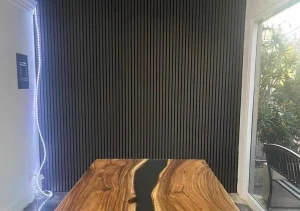
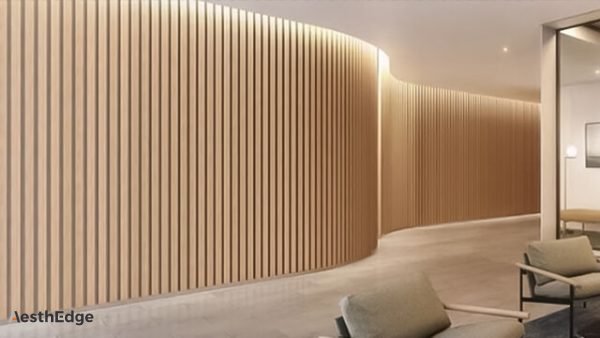
Introduction: Why 3D Wall Panels Are Redefining Modern Hotel Interiors
In the global hospitality industry, interior design is no longer just about aesthetics—it is about guest experience, brand identity, operational efficiency, and long-term value. As hotels compete for attention across online booking platforms and social media, visual differentiation has become a critical success factor. Among the many materials reshaping hotel interiors, 3D wall panels have emerged as one of the most impactful and versatile decorative solutions.
Unlike traditional flat wall finishes such as paint, wallpaper, or ceramic tiles, 3D wall panels introduce depth, texture, shadow, and architectural rhythm into hotel spaces. They transform walls from passive backgrounds into active design elements, capable of telling a brand story, guiding guest perception, and enhancing spatial quality.
From luxury resorts and boutique hotels to business hotels and chain properties, 3D wall panels are now widely used in lobbies, guest rooms, corridors, restaurants, conference areas, and wellness spaces. Their growing adoption is driven by several global trends: faster renovation cycles, demand for cost-effective luxury finishes, sustainability requirements, and the need for durable materials that perform well in high-traffic environments.
This article provides a comprehensive, global-oriented analysis of the application of 3D wall panels in hotel decoration. It explores their functional advantages, material types, design applications in different hotel zones, performance benefits, and long-term value for hotel projects worldwide.
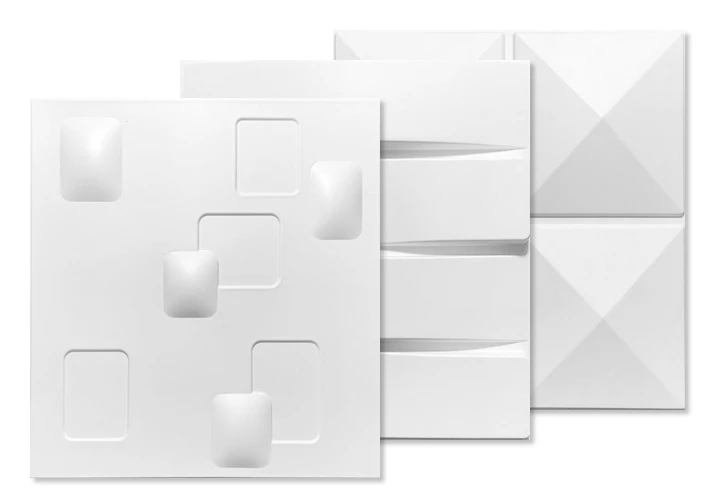
Understanding 3D Wall Panels: Definition, Structure, and Design Value
What Are 3D Wall Panels?
3D wall panels are decorative wall cladding products designed with three-dimensional surface patterns, creating visual depth and tactile texture. Unlike traditional wall coverings that rely solely on color or printed patterns, 3D panels physically alter the wall surface, producing light-and-shadow effects that change with viewing angle and lighting conditions.
They are typically manufactured in modular panels, allowing for consistent installation across large wall surfaces while maintaining design continuity.
Structural Characteristics
Most 3D wall panels consist of:
- A base structural layer that provides rigidity and dimensional stability
- A molded or extruded surface layer with geometric, organic, or custom patterns
- Optional protective coatings for moisture resistance, fire performance, and durability
Depending on the material, panels may also integrate acoustic absorption, thermal insulation, or fire-retardant properties, making them suitable for commercial hospitality environments.
Why 3D Panels Matter in Hotel Design
In hotel projects, walls account for a significant portion of visible interior surfaces. By introducing 3D wall panels, designers can:
- Elevate perceived luxury without excessive cost
- Create memorable visual identities
- Enhance spatial depth in compact areas
- Improve acoustic comfort
- Reduce long-term maintenance compared to painted or papered walls
This combination of design impact and functional value makes 3D wall panels particularly attractive for hotel decoration.
Global Trends Driving the Use of 3D Wall Panels in Hotels
Experience-Oriented Hospitality Design
Modern hotel guests value immersive experiences rather than standardized interiors. 3D wall panels allow hotels to express:
- Local cultural motifs
- Brand-specific design language
- Unique artistic themes
This aligns with the global shift toward experiential travel, where interior design becomes part of the destination itself.
Faster Renovation and Retrofit Cycles
Hotels often face tight renovation timelines to minimize room downtime. Compared with traditional stone, tile, or wet construction methods, 3D wall panels offer:
- Dry installation
- Minimal on-site labor
- Faster project completion
This is especially important for operating hotels undergoing phased renovations.
Cost-Controlled Luxury
High-end visual effects such as carved stone, solid wood paneling, or custom plasterwork are expensive and time-consuming. 3D wall panels provide a cost-effective alternative that delivers similar visual richness with better cost predictability.
Sustainability and Material Efficiency
Many modern 3D wall panels are produced using:
- Recyclable materials
- Low-VOC finishes
- Lightweight structures that reduce transportation emissions
This supports hotels seeking green building certifications or ESG compliance.
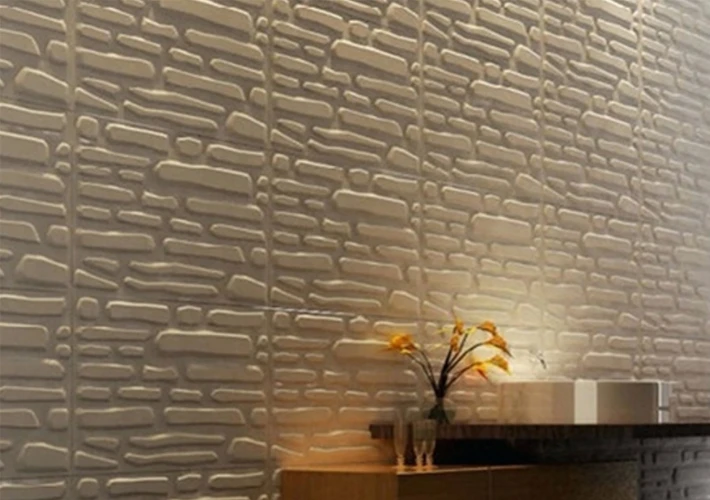
Key Advantages of 3D Wall Panels in Hotel Decoration
Strong Visual Impact and Brand Differentiation
The most immediate advantage of 3D wall panels is their visual presence. Through carefully selected patterns and finishes, hotels can:
- Create iconic lobby backdrops
- Highlight reception desks or feature walls
- Establish signature design elements across properties
This helps reinforce brand recognition and enhances guest memory.
Design Flexibility Across Styles
3D wall panels are available in a wide range of styles:
- Modern geometric
- Minimalist linear
- Organic wave patterns
- Classical relief-inspired designs
- Custom logo or motif panels
This flexibility allows designers to match panels with luxury, contemporary, industrial, or regional aesthetics.
Improved Acoustic Performance
In hotels, sound control is critical for guest satisfaction. Certain 3D wall panels—especially those with perforated or textured surfaces—help:
- Reduce echo in lobbies and corridors
- Improve speech clarity in conference rooms
- Enhance privacy in guest rooms
By combining decorative and acoustic functions, panels reduce the need for additional soundproofing materials.
Durability for High-Traffic Areas
Compared with paint or wallpaper, high-quality 3D wall panels offer:
- Better impact resistance
- Scratch and stain resistance
- Longer service life
This makes them ideal for corridors, elevators, and public areas where walls are frequently touched or exposed to luggage and cleaning equipment.
Easy Maintenance and Replacement
Most panels can be cleaned with simple methods and, if damaged, replaced individually without disturbing the entire wall system. This reduces long-term maintenance costs for hotel operators.
Common Materials Used for 3D Wall Panels in Hotels
PVC and Polymer-Based 3D Wall Panels
PVC-based panels are widely used in hotel projects due to their:
- Lightweight structure
- Moisture resistance
- Cost efficiency
- Easy installation
They are particularly suitable for:
- Budget and mid-range hotels
- Renovation projects
- Guest room feature walls
Advanced surface treatments allow PVC panels to imitate stone, wood, or fabric textures.
WPC (Wood Plastic Composite) 3D Panels
WPC 3D wall panels combine wood fibers with polymer materials, offering:
- Natural wood appearance
- Better dimensional stability than solid wood
- Resistance to humidity and insects
These panels are popular in:
- Resort hotels
- Boutique properties
- Wellness and spa areas
They create a warm, natural ambiance while maintaining commercial durability.
MDF and Engineered Wood Panels
MDF-based 3D panels are often used for:
- Interior dry areas
- Decorative feature walls
- Custom painted designs
They provide excellent detail for complex patterns and are commonly used in luxury hotels with controlled indoor environments.
PU (Polyurethane) 3D Panels
PU panels are lightweight and capable of highly detailed relief designs. They are often used to replicate:
- Classical moldings
- Sculpted stone effects
PU panels are suitable for thematic hotels or heritage-style interiors where traditional craftsmanship aesthetics are desired without heavy materials.
Acoustic Felt and Composite Panels
In spaces where sound control is a priority, 3D acoustic panels made from PET felt or composite materials offer both:
- Decorative texture
- Noise absorption
These panels are widely used in:
- Hotel conference rooms
- Business lounges
- Co-working areas
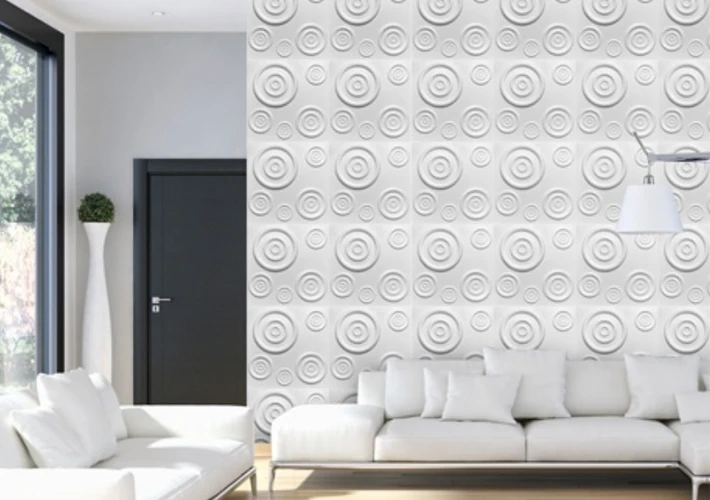
Application of 3D Wall Panels in Different Hotel Spaces
Hotel Lobby and Reception Area
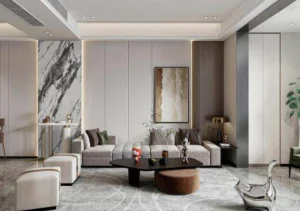
The lobby is the first point of contact between the guest and the hotel brand. 3D wall panels are often used to:
- Create a dramatic reception backdrop
- Highlight brand logos or signage
- Define spatial zones within open-plan lobbies
Large-format 3D panels with bold patterns can instantly elevate the perceived quality of the hotel.
Guest Rooms and Suites
In guest rooms, 3D wall panels are typically applied as:
- Headboard feature walls
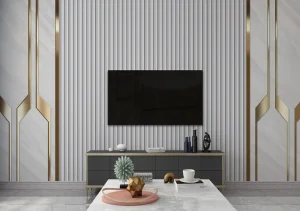
- TV background walls
- Accent walls behind seating areas
They add texture and depth without overwhelming the space, enhancing comfort and visual interest.
Corridors and Elevator Lobbies
Hotel corridors are high-traffic areas often overlooked in design. 3D wall panels help:
- Reduce monotony in long corridors
- Improve durability compared to painted walls
- Enhance wayfinding through pattern variation
In elevator lobbies, panels create a strong transition experience between floors.
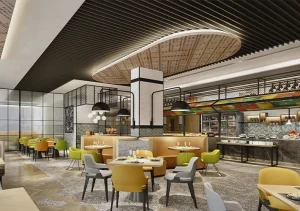
Restaurants, Bars, and Lounges
Hospitality F&B spaces benefit greatly from 3D wall panels due to their ability to:
- Create intimate atmospheres
- Support themed interior concepts
- Improve acoustics in busy dining environments
Panels can be combined with lighting to produce dynamic visual effects.
Conference Rooms and Business Centers
In meeting spaces, 3D acoustic wall panels contribute to:
- Improved sound quality
- Professional aesthetics
- Reduced need for additional acoustic treatments
This enhances the usability and perceived value of hotel business facilities.
Spas, Gyms, and Wellness Areas
In wellness environments, 3D panels with organic or wave-inspired designs help:
- Promote relaxation
- Create a sensory experience
- Withstand humidity when using suitable materials
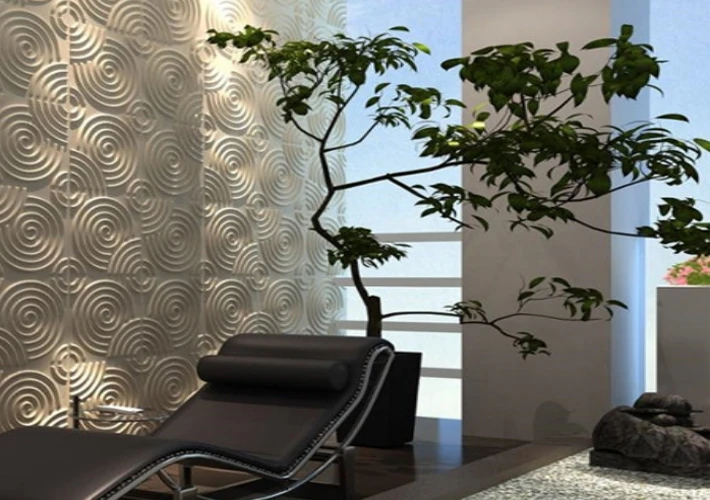
Lighting Integration with 3D Wall Panels
Lighting plays a critical role in maximizing the visual effect of 3D wall panels. Proper lighting design:
- Enhances shadow depth
- Highlights texture
- Creates mood variations
Common lighting approaches include:
- Wall washers
- Spotlights
- Integrated LED strips
The combination of 3D panels and architectural lighting significantly increases design impact with relatively low investment.
Installation Considerations for Hotel Projects
Substrate Preparation
Walls should be flat, clean, and structurally sound. Proper preparation ensures:
- Panel alignment accuracy
- Long-term adhesion
- Professional finish
Installation Speed and Labor Efficiency
One of the main reasons hotels choose 3D wall panels is installation efficiency. Modular systems allow:
- Faster project timelines
- Reduced labor costs
- Minimal disruption to hotel operations
Fire Safety and Compliance
For hotel applications, it is essential to select panels that meet:
- Local fire rating standards
- Smoke emission requirements
This is especially important in corridors, lobbies, and public areas.
Conclusion
The application of 3D wall panels in hotel decoration represents a powerful intersection of design creativity, functional performance, and commercial practicality. From enhancing brand identity to improving guest comfort and controlling renovation costs, 3D wall panels offer a comprehensive solution for modern hotel projects worldwide.
For hotel owners, designers, and developers operating in a competitive global market, investing in high-quality 3D wall panel systems is no longer a design trend—it is a strategic decision that directly impacts guest experience, operational efficiency, and long-term profitability.
As the hospitality industry continues to prioritize experience-driven spaces, 3D wall panels will play an increasingly important role in shaping the hotels of the future.