Introduction — Why Acoustic Slat Wall Panels Matter in the UK
In modern architectural environments, balancing aesthetics with acoustic comfort has become a core requirement across commercial buildings, cultural venues, educational facilities and hospitality interiors. Acoustic slat wall panels—linear, visually dynamic panels with integrated sound-absorbing properties—have emerged as a leading solution to reduce reverberation, enhance speech clarity, and elevate interior design quality.
In the UK market, acoustic performance is not only an architectural preference—it’s driven by stringent standards, building regulations and performance expectations. As a leading manufacturer and exporter from China, Aesthedge emphasizes compliance with British and European implementation criteria for acoustic slat systems, helping architects, contractors and end-users deliver reliable acoustic performance.
This article provides a comprehensive guide to acoustic slat wall panel implementation standards in the UK, including regulatory frameworks, key performance metrics, installation best practices and quality control considerations.
Understanding Acoustic Performance Requirements in the UK
Government and Regulatory Framework
In the UK, the acoustic performance of interior surfaces—including walls and ceilings—is governed by multiple standards and regulations such as:
- Building Regulations Part E (England & Wales): covers sound insulation performance in buildings, including internal partitions and surface treatments. It emphasizes reduction of airborne and impact noise in multi-occupancy buildings.
- BS 8233 – Sound Insulation and Noise Reduction for Buildings: Provides guidance on internal acoustic environments, recommended levels for dwellings, offices and public spaces.
- BB93 – Acoustic Design of Schools: A specialist standard for educational facilities in the UK, focusing on background noise, reverberation time (RT60) and speech intelligibility.
- CIBSE Guides: Represent industry guidance for building services engineers, including acoustics in performance specification.
For acoustic slat wall panel systems, compliance with BS 8233 and BB93 significantly influences product selection and implementation methodology.
Acoustic Metrics That Matter
When deploying acoustic slat wall panels, several key performance indicators (KPIs) must be evaluated:
- Sound Absorption Coefficient (αw): A dimensionless number representing how much sound is absorbed rather than reflected. UK design often targets higher absorption in mid to high frequencies for speech clarity.
- Noise Reduction Coefficient (NRC): Average of sound absorption coefficients at key frequencies (typically 250–4000 Hz). A higher NRC means better sound-absorbing performance.
- Reverberation Time (RT60): Time required for sound to decay 60 dB in a room. Acoustic slat panels are chosen to adjust RT60 into target ranges depending on space use.
Meeting these KPIs ensures compliance with acoustic criteria, enhances occupant comfort, and supports regulatory approval.
Material and Performance Standards for Acoustic Slat Wall Panels
Core Material Requirements
Acoustic slat wall panels consist of two main components:
1.Surface Slats: Typically timber, MDF, metal or composite material
2.Acoustic Backing: Mineral wool, PET felt, foam or other absorptive core
To satisfy UK implementation standards:
- Non-combustibility / Fire Performance: All components must comply with UK fire safety regulations, ideally achieving Class B-s1, d0 or better under EN 13501-1 when used in public buildings.
- Dimensional Stability: Materials must withstand humidity and temperature changes in UK climates without warping or delamination.
- Environmental Compliance: Certifications such as E0/E1 formaldehyde emission standards for indoor air quality are crucial, especially in schools and healthcare facilities.
At Aesthedge, we design acoustic slat panel solutions that meet or exceed these performance benchmarks, combining premium cores with certified surface materials for reliable UK performance.
Acoustic Test Standards
Before installation, panels should be tested in accredited labs using standards such as:
- ISO 354:2003 — Measurement of Sound Absorption in a Reverberation Room
- BS EN ISO 11654 — Rating of Sound Absorption
- ASTM C423 — Sound Absorption and Sound Absorption Coefficients
These testing protocols ensure repeatable, reliable performance data that can support compliance documentation within UK project submissions.
Design Criteria and Selection on UK Projects
Assessing Acoustic Targets
Design teams use acoustic models to determine how many panels and what configurations are needed to reach target criteria like RT60 and speech clarity index (C50-5000). Common project categories include:
- Offices: Focus on reducing noise distractions and improving speech privacy.
- Schools and Lecture Halls: Emphasis on background noise control and teacher voice intelligibility.
- Hospitality Spaces: Balancing aesthetics with general noise control for comfort.
Selecting acoustic slat panels requires collaboration between acousticians, architects and manufacturers to tailor panel density, slot width, absorptive core thickness and surface finish.

Aesthetic and Functional Balance
The UK market is design sensitive, where acoustic slat panels serve dual roles:
- Visual Texture: Linear patterns introduce rhythm and depth to wall surfaces.
- Functional Performance: Absorption targets mid and high frequencies for human speech.
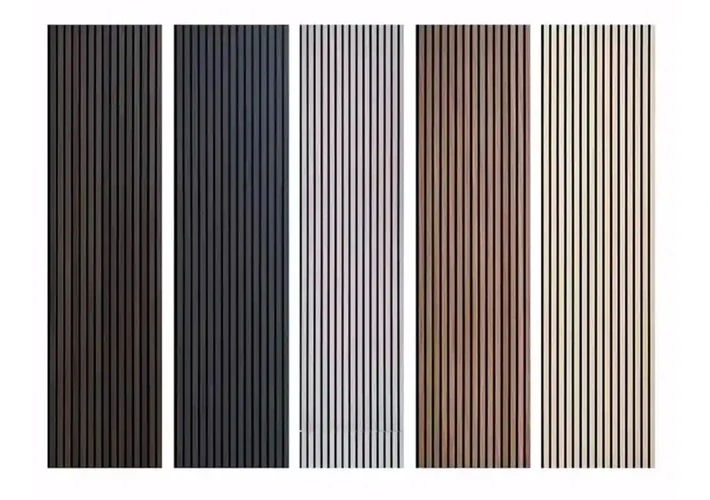
Finishes include natural timber veneers, painted MDF, PET felt wraps or powder-coated metal options. Aesthedge offers customizable finishes to suit UK architectural palettes while preserving acoustic efficacy.
Installation Standards and Best Practices
Pre-Installation Assessment
Before installing acoustic slat panels:
1.Site Acoustic Survey: Measure existing RT60 and noise levels.
2.Room Use Definition: Clarify occupancy patterns, expected noise sources and performance targets.
3.Substrate Inspection: Ensure walls are plumb, flat and free of moisture.
Acoustic slat walls are only as effective as the installation context.
Mounting Methods
Common mounting solutions include:
- Direct Fix: Panels fixed directly to existing gypsum or masonry substrates using concealed clips or screws.
- Furring Channel Support: Resilient channels to decouple panels from structural surfaces for improved acoustic isolation.
- Integrated Systems: Pre-assembled frames that simplify level alignment and expansion gaps.
Best practice in the UK prioritizes:
- Continuous Installation: Minimizing gaps to maintain acoustic continuity.
- Sealants at Perimeters: Fire-rated and acoustically inert sealants at edges to prevent flanking pathways.
- Access Panels: Where services must be accessed, panels are designed with removable segments without compromising performance.
Compliance with Health & Safety
During installation:
- CE / UKCA Marking: Components should carry appropriate compliance markings.
- Safe Work Practices: PPE for dust control and mechanical installation safety is mandatory, especially in public buildings.
Several UK projects involving Aesthedge panels have been successfully coordinated with site health & safety teams to ensure seamless delivery.

Quality Control and Verification on Site
Post-Installation Testing
Upon completion, testing can confirm performance against design expectations:
- RT60 Measurement: In-room testing before and after installation documents acoustic improvement.
- Visual Inspection: Ensuring alignment, finish integrity and any damage from handling is addressed.
Documentation for Certification
UK projects often require:
- Test Reports: Lab certificates for NRC, αw, fire classification.
- Installation Records: Drawings, photos and QA checklists.
- Maintenance Plans: Guidelines for ongoing care (dusting, touch-ups) to preserve performance.
Aesthedge provides detailed documentation packages that support project handovers and compliance submissions.
Maintenance and Longevity in UK Environments
Acoustic slat wall panels, when properly specified and installed, deliver long-term performance. UK environments—particularly heritage buildings and high humidity zones—require consideration for:
- Humidity Cycling: Wood and MDF must be sealed and acclimatized.
- Cleaning Protocols: Non-abrasive cleaners to preserve finish.
- Repairs: Modular panels allow localized repair without full wall replacement.
Aesthedge offers maintenance guides aligned with UK facility management practices.
Case Studies: UK Projects with Acoustic Slat Walls
Education Sector
In a UK secondary school, acoustic slat paneling was installed in multi-purpose halls to meet BB93 reverberation targets while maintaining a warm aesthetic finish. By collaborating with acousticians and prioritizing material selection, the project achieved both compliance and user satisfaction.
Corporate Offices
An open-plan London office required enhanced speech privacy. Aesthedge’s high-NRC acoustic slat solution, combined with absorptive cores, reduced headline noise and improved occupant comfort. Post-installation testing matched predicted acoustic models.
Hospitality & Retail
In restaurant environments, acoustic slat walls became focal design features while controlling ambient noise, meeting both design and regulatory expectations.
Why Choose Aesthedge Acoustic Slat Wall Panels for UK Projects
As a China-based factory and brand, Aesthedge combines:
- Manufacturing Efficiency: Cost-competitive production without quality compromise.
- Certified Performance: Pre-tested acoustic absorption and fire ratings tailored for UK standards.
- Customization Capability: Panel sizes, finishes, cores and mounting options adapted to project needs.
We support UK clients with technical data, installation consultancy and post-sale assistance to guarantee robust implementation.

Conclusion — Aligning Aesthetics, Acoustics and Compliance
Achieving optimal acoustic performance with slat wall panels in the UK requires:
- Understanding regulatory standards such as BS 8233, BB93 and Part E.
- Selecting materials with verified acoustic metrics and fire compliance.
- Collaborating with project stakeholders to tailor design and installation.
- Verifying on-site performance with measurement and documentation.
Acoustic slat wall panels go beyond decoration—they are a strategic solution to unlock better acoustic comfort in dynamic interior environments. With a manufacturer like Aesthedge grounded in quality, compliance and customization, UK architects and builders can confidently specify and implement high-performance acoustic solutions.